ENGLISH-UNIT-4-MSN-II-OPTHALMOLOGY AND OPTHALMIC NURSING-DISORDERS (PART-3)
OPTHALMOLOGY AND OPTHALMIC NURSING-DISORDERS OPTHALMOLOGY
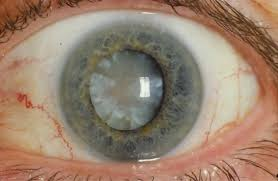
Define blepharitis
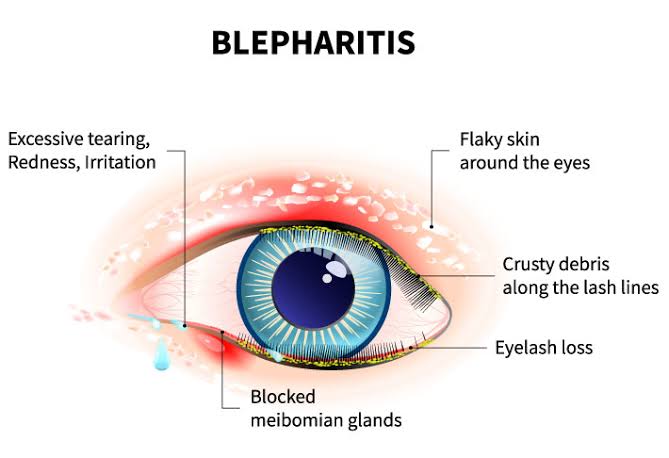
- Blepharitis is an ocular condition in which there is chronic inflammation of the eyelid margin.
- Inflammation of the eyelid is known as blepharitis.
- Blepharitis is a common eye disorder that is caused by bacteria or skin conditions.
Write causes of blepharitis
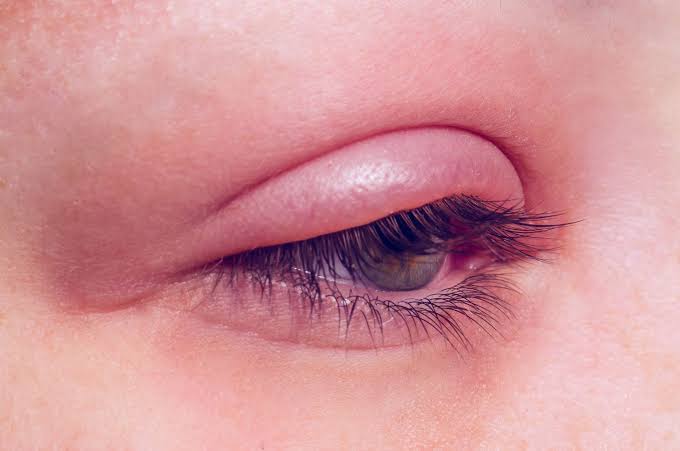
- Bacterial Infection (Staphylococcus)
- Malfunctioning of Oil Gland in the Eyelid
- Allergies
- Skin condition Seborrheic dermatitis, rosacea
- Dandruff on scalp
- Environmental factor
- Hormonal factor
Write clinical manifestations of blepharitis (Right Clinical Manifestation of Blepharitis)
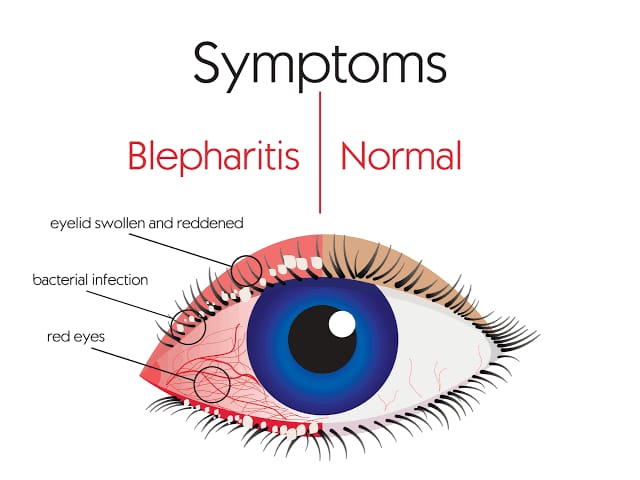
- Red, swollen eyelid
- Crusty or greasy eyelid
- Red eye
- Itching and irritation in eye
- Flacking Or scaling around the eyelids
- Gritty, burning and stinging sensation in the eye
- Sensitivity to light
- Watery eyes
- Blurred vision
- Loss of eyelashes
Write diagnostic evaluation of blepharitis
- History Collection
- Physical Examination
- Slit Lamp Examination
- Culture and Sensitivity Test
Write management of blepharitis (Write management of Blepharitis)
Eyelid hygiene, warm compresses, and certain medications are used to manage blepharitis.
Eyelid hygiene: Cleaning the eyelids regularly is essential to managing blepharitis. To clean the eyelids, add a mild cleanser (such as baby shampoo) to warm water and gently scrub the eyelids with it to remove debris and crusts.
Lead massage: Gently massage the eyelids to remove blockages in the oil glands and improve oil flow.
Warm compresses: Apply warm compresses to the eyes. Do this (5-10 minutes) which loosens debris and crusts and improves circulation to the eyelids. Use a clean warm cloth for warm compresses.
Medication: Use antibiotic ointment and steroid eyedrops that reduce inflammation and control bacterial overgrowth.
Avoid eye makeup: Avoid eye makeup to prevent eye irritation and block oil glands.
Define stye
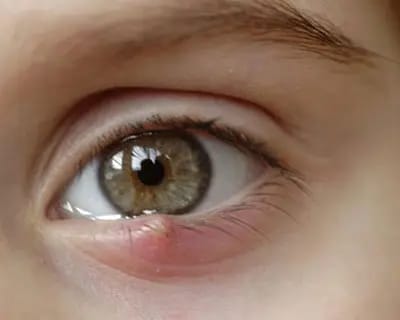
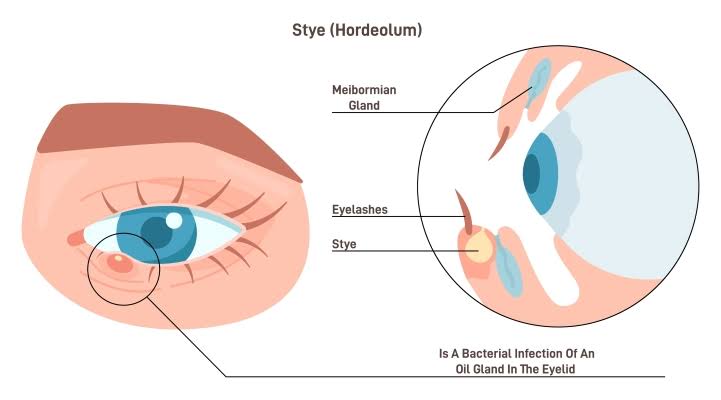
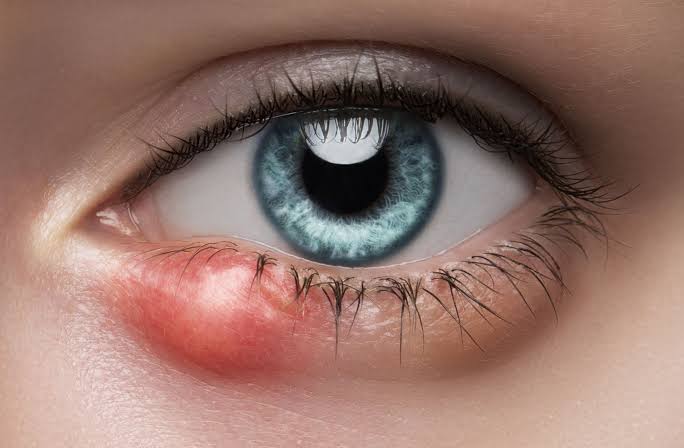
- A stye is also known as a ‘hordeolum’ .
- A stye is a small, red, painful bump found on the eyelid.
Write causes of stye
- Stye is mainly caused by the bacterial infection Staphylococcus aureus. Apart from this, it is seen due to the following factors.
- Improper eyelid hygiene
- Stress
- Hormonal changes
- Proper nutrition
- Using contaminated razors
Write clinical manifestations of stye
- Redness and swelling on the eyelid
- Tenderness and pain in the affected area
- Small pus filled bump on the eyelid
- Heaviness in the eyelid
- Watery eyes
- Sensitivity to light
- Feeling something in eye
- Discomfort in eye
Write diagnostic evaluation of stye
- History Collection
- Physical Examination
- Blood Test
- Culture and Sensitivity Test
Write management of stye
- Warm compresses–Warm compresses: Apply warm compresses to the affected eyelid for 10 to 15 minutes. Which reduces pain and swelling and improves the drainage system.
- Good eyelid hygiene–Good eyelid hygiene:Maintain eyelid hygiene and avoid frequent touching and rubbing of the affected area.
- Antibiotic ointment–Antibiotic ointment: Use antibiotic ointment and eye drops to treat bacterial infections To do.
- Pain relief: Use over-the-counter medications such as ibuprofen and acetaminophen to relieve pain.
- Avoiding contact lenses and eye makeup: Avoid contact lenses and eye makeup until the stye heals.
- Avoiding quizzing and popping–Avoiding quizzing and popping: Avoiding quizzing or popping the stain. Because popping a stye can spread the infection.
Write prevention of stye
- Maintain good hygiene.
- Avoid touching your eyes frequently.
- Wash your hands before touching your eyes. To do.
- Remove eye makeup before going to bed.
- Avoid sharing eye makeup.
- Use a clean towel.
- Maintain a healthy lifestyle.
- Avoid stress.
Define chalazion
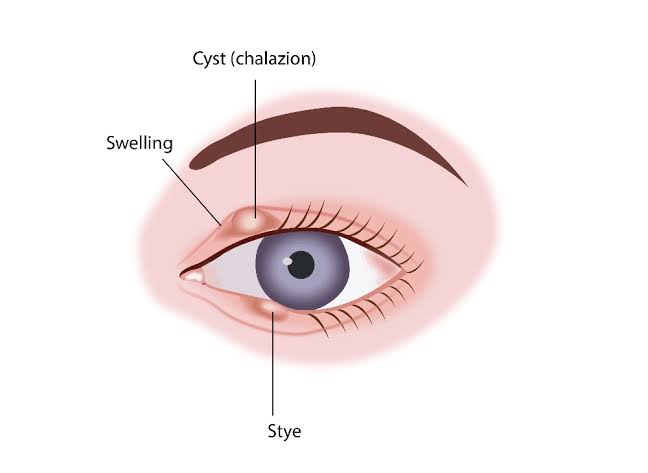
- A chalazion is a small painless bump that develops on the eyelid that is caused by a blocked meibomian gland.
- A small painless bump that appears on the eyelid is called a chalazion.
- A chalazion is a small painless bump that develops on the eyelid, so it is called a . Also known as Chalazion, a blockage of the Meibomian gland is also known as ”Meibomian Cyst” .
- Chalazin is mainly seen in people aged 30 to 50 years.
Write causes of chalazion
A chalazion is caused by a blockage of the meibomian gland and oil gland in the eyelid. These oil glands are found blocked due to the following reasons.
- Bacterial infection
- Chronic blepharitis
- Rosacea
- Seborrhea
- Meibomian gland dysfunction
Write clinical manifestations of chalazion
- Small painless bump or lump on the eyelid (upper & lower eyelid)
- Tenderness or swelling around the affected area
- Redness or irritation in the Eyelid
- Blurred vision
- Sensation of pressure and heaviness in the eyelid
- If it is infected, it will be painful.
Write diagnostic evaluation of chalazion
- History Collection
- Physical Examination
- Slit Lamp Examination
- Optical Coherence Tomography
- Biopsy
Write management of chalazion
- Warm compresses–Warm compresses: Apply warm compresses to the affected eyelid. Which softens the oil gland and promotes drainage and reduces inflammation.
- Eyelid massage–Eyelid massage: Gently massage the area of the eyelid around the chalazion. This helps drain the blocked gland.
- Topical medication: Topical medication is administered as antibiotic and corticosteroid ointments and eye drops. Which prevents secondary infection and reduces inflammation.
- Steroid injection–Steroid injection: In cases of larger chalazion, a corticosteroid injection is injected directly into the chalazion. Which reduces inflammation and promotes resolution.
- Incision and drainage–Incision and drainage:The surgical procedure incision and drainage is performed when conservative treatment fails to resolve the chalazion. In which local anesthesia is given to the affected area and a small incision is made there and the blocked content is drained.
- Excision–Excision :In rare cases, when other treatments fail to treat the chalazion, surgical excision is performed. In which the entire part of the chalazion is removed.
Define Entropion
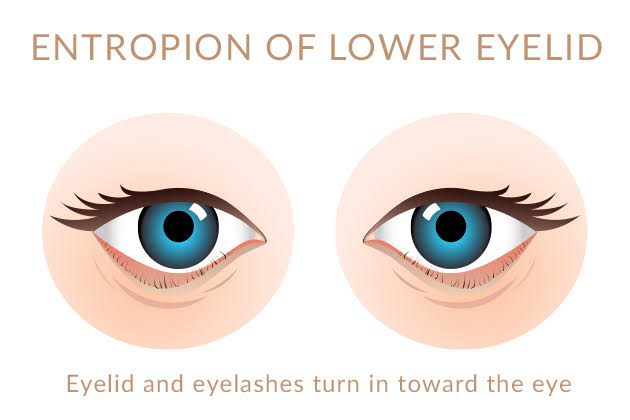

- Entropion is a medical condition in which the eyelid margin rolls inward (inward).
- Entropion is a medical condition in which the eyelid normally turns downward, inward, causing The eyelid and the skin there rub against the eye surface.
Write causes of Entropion
- Entropion is caused by various factors. Which are as follows.
- Age Related Changes in the Eyelid Tissue
- Scarring or Trauma to the Eyelid
- Genetic Predisposition
- Inflammation or Infection of the Eyelid
- Neurological Conditions That Affect the Eyelid
- Chronic eye conditions (blepharitis, chronic conjunctivitis)
- Previous eyelid surgery
Write types of entropion
Congenital entropion–Congenital entropion : Congenital entropion is a condition that is present at birth.
Involutional Entropion / Senile Entropion–Involutional Entropion / Senile Entropion: Involutional entropion is the most common type that occurs due to age-related changes in the eyelid tissue. Involutional entropion mainly affects the lower eyelid.
Cicatricial entropion–Cicatricial entropion: Cicatricial entropion is caused by the development of scar tissue at the eyelid margin.
Spastic entropion–Spastic entropion: The eyelid turns inward due to spasm of the muscles at the eyelid margin.
Write clinical manifestations of entropion
- Eye irritation
- Eye pain
- Redness in eye
- Epiphora (Watery Eyes)
- Foreign Body Sensation in Eye
- Photophobia
- Corneal Damage
Write management of entropion
For the management of entropion Conservative measures as well as surgical interventions are used.
Conservative measures (Conservative ):
-
- Lubricating eyedrops and ointments–Lubricating eyedrops and ointments: Lubricating eyedrops and ointments smooth the cornea and relieve discomfort.
-
- Tape or adhesive strip–Tape or adhesive strip: A tape or adhesive strip is applied to the eyelid. Which temporarily supports the eyelid and prevents it from turning inward.
-
- Botox injection–Botox injection:In some cases, Botox (botulinum toxin) injection is administered into the muscles around the eye, which temporarily relaxes the muscles and relaxes the eyelid so that it returns to its original position.
-
- Surgical intervention–Surgical intervention:
Surgical intervention is the treatment of choice because conservative measures provide temporary relief. Several surgical methods are used for the treatment of entropion. The surgical method to be used depends on the cause of the entropion and its anatomy.
- Eyelid tightening–Eyelid tightening: In eyelid tightening, the muscles and tissues of the eyelid are tightened and brought back to their normal position.
- Tarsorrhaphy–Tarsorrhaphy: In severe cases, when other surgical procedures are not possible or effective, the eyelid is partially sutured together to relieve symptoms and protect the cornea.
- Wheeler’s Operation–Wheeler’s Operation : Wheeler’s operation is mainly used to correct the lower eyelid. In which a segment of the lower eyelid is cut, which makes the eyelid shorter and the tissue there is tightened.
Define Ectropion
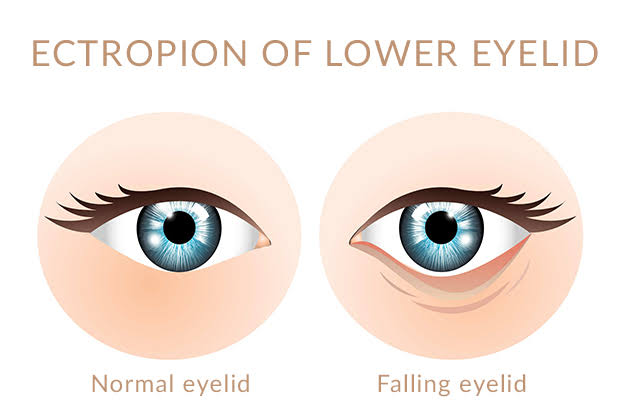
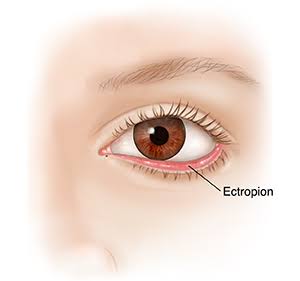
- In ectropion, the eyelid margin rolls outward.
- In ectropion, the lower eyelid is primarily affected.
Write causes of ectropion
- Age Related Changes
- Facial nerve palsy
- Scaring -Scarring
- Eyelid luxury
- Eyelid tumor
- Sun damage
- Previous eyelid surgery
Write types of ectropion (Write types of Ectropion)
Congenital ectropion–Congenital ectropion: Congenital ectropion is rare. In which an abnormality is seen in the eyelid at the time of birth.
Involutional Ectropion / Senile Ectropion–Involutional Ectropion / Senile Ectropion: This is the most common type which is seen due to age-related changes in the eyelid tissue.
Spastic Ectropion–Spastic Ectropion: In spastic ectropion, there is spasm in the orbicularis muscles It is seen due to the development of scar tissue near the eyelid margin. This scar tissue is seen due to trauma, injury.
Paralytic ectropion: Paralytic ectropion is seen due to paralysis in the orbicularis muscles.
Mechanical ectropion–Mechanical ectropion : Mechanical ectropion is caused by mechanical factors such as tumors, masses, and facial paralysis that cause the eyelid to turn outward.
Write clinical manifestations of entropion
- Eyelid turning Outward
- Redness and irritation
- Excessive tearing (epiphora)
- Foreign body sensation
- Blurry vision
- Eye irritation
Write management of ectropion
A conservative major
- Lubricating eyedrops and ointments (Lubricating eyedrops and ointments : Lubricating eyedrops and ointments smooth the cornea and relieve discomfort.
- Tape or adhesive strip: Tape or adhesive strip is applied to the eyelid. It provides temporary support to the eyelid and prevents it from turning outward.
- Botox injection: In some cases, Botox (botulinum toxin) injection is administered into the muscles around the eye, which temporarily relaxes the muscles and allows the eyelid to return to its original position.
- Eyelid tightening : In eyelid tightening, the muscles and tissues of the eyelid are tightened and brought to their normal position.
- Tarsorrhaphy (tarsorrhaphy): In severe cases, when other surgical procedures are not possible or effective, the eyelid is partially sutured together to relieve symptoms and protect the cornea.
- Wheeler’s Operation (Wheeler’s Operation): Wheeler’s operation is mainly used to correct the lower eyelid. In which a segment of the lower eyelid is cut, due to which the eyelid becomes short, and the tissue there is tightened is.
Dacryocystitis :-
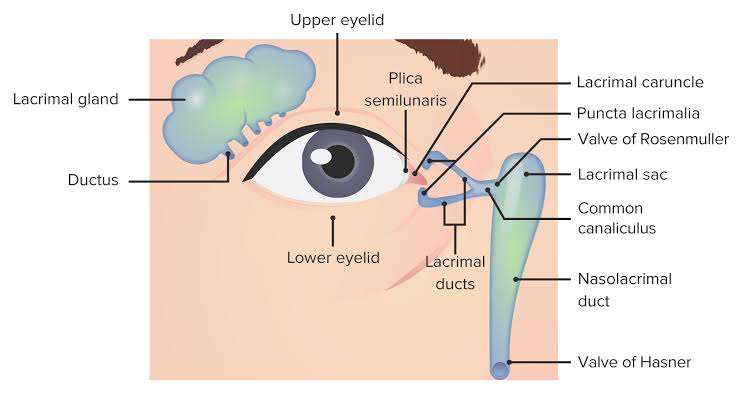
- Dacryocystitis is inflammation and infection of the lacrimal sac (the tear storage area of the eye), which is usually caused by narrowing or blockage of the nasolacrimal duct. This causes pain, swelling, Redness and purulent discharge are seen.

Write causes of dacryocystitis
- Dacryocystitis is mainly caused by narrowing or blockage of the nasolacrimal duct.
- Obstruction in nasolacrimal duct
- Bacterial and viral infection to the duct
- Injury around the duct
- Tumor around the duct
- Inflammatory condition
Write sign and symptoms seen in dacryocystitis
- Excessive tearing (watery eyes)
- Pain and Tenderness
- Discharge from the affected eye
- Crusting on the eye lid
- Blurred vision
- Fever
Write diagnostic evaluation of dacryocystitis (Write diagnostic evaluation of Dacryocystitis)
- History Collection
- Physical Examination
- Fluorescein Dye Test
- Dacryocystography
- Nasal Endoscopy
- Diagnostic Nasolacrimal Irrigation
- Blood Test
- Culture and Sensitivity Test
Write management of dacryocystitis
Antibiotic therapy: Provide antibiotic medicine to treat underlying infection.
Warm compresses and massage: Apply warm compresses to the affected area and gently massage the area to promote drainage.
Nasolacrimal duct irrigation:Flush the tear duct with a saline solution to clear the obstruction and promote drainage. Improves.
Topical Steroid: Use topical steroid eye drops to reduce swelling and inflammation.
Surgical intervention–Surgical intervention :
Dacryocystorhinostomy (DCR): In dacryocystorhinostomy, a new drainage pathway is created and the blocked portion of the tear duct is bypassed.
Balloon Dilation: A balloon catheter is used in some cases. This balloon catheter is entered through the narrow portion of the tear duct and the balloon is dilated there so that the area becomes wide and drainage can be improved.
Probing and Irrigation: In the case of congenital dacryocystitis, probing and irrigation are done. In which the tear duct is gently probing and irrigation is done under general anesthesia which clears the obstruction.
Define trachoma
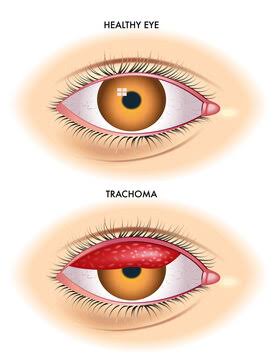
- Trachoma is a contagious bacterial eye infection. Which is caused by the bacterium Chlamydia trachomatis.
- Trachoma is the leading cause of infectious blindness worldwide.
- Trachoma is spread through direct contact with eye, nose, and throat secretions of an infected person.
Write clinical manifestations of trachoma
- Cloudy cornea
- Blurred vision
- Corneal scarring
- Discharge from the eye
- Sensitivity to light
- Eye pain
- Itching and irritation
- Swelling in the eyelid
- Ilealis abnormality (eyelids turn inward)
Write diagnostic evaluation of trachoma
- History collection
- Physical examination
- Swab test
- Visual acuity Testing
- Photography
- Blood Test
- Culture and Sensitivity Test
Write management of trachoma
- The SAFE strategy for the treatment of trachoma has been given by WHO which is as follows:
- S : Surgery:In cases of advanced trachoma, if trachomatous trichiasis (eyelashes turned inwards) is present, surgery is performed to correct it. Therefore, blindness and visual impairment can be prevented.
- A : Antibiotics : Use antibiotic medicine to treat bacterial infections. For example, azithromycin and tetracycline
- F : Facial Cleansing : Promote facial cleanliness, especially in children, which minimizes bacterial transmission. Encourage regular face washing with soap and water.
- E : Environmental Improvement : Implement environmental measures such as clean water supply, sanitation. Improving the environment can prevent bacterial transmission.
Define pterygium
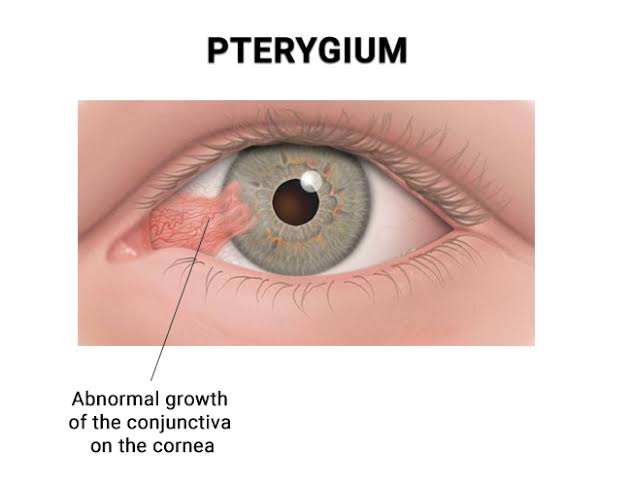
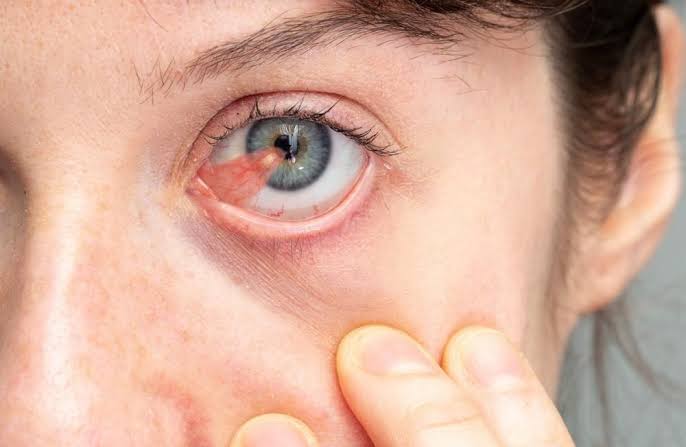
- Pterygium is also known as ‘eye web’ and ‘surfer’s eye’.
- Pterygium is a non-cancerous triangular growth on the conjunctiva that can spread to the cornea.
- Pterygium can affect one or both eyes.
Write causes of pterygium
- The exact cause of pterygium is unknown. But the factors for pterygium are as follows.
- Exposure to UV light
- Exposure to dust, wind
- Environmental factors
- Dry eye
- Chronic irritation
Write clinical manifestation of pterygium
- Pink and flaky tissue develops on conjunctiva
- Redness and inflammation
- Irritation or gritty sensation
- Blurred Vision
- Dryness or excessive tearing
Write diagnostic evaluation of pterygium
- History collection
- Physical Examination
- Visual Examination
- Visual Acuity Test
- Fluorosene Staining
Write management of pterygium
Non-surgical management:
- Use lubricating eyedrops to relieve dryness and irritation.
- Use corticosteroid eye drops to reduce inflammation.
Surgical Management :
- If a pterygium is causing vision problems or discomfort, remove it. Pterygium is removed by excision