ENGLISH-MSN-2-OPTHALMIC DISORDER PART-4 (done)
Define keratitis
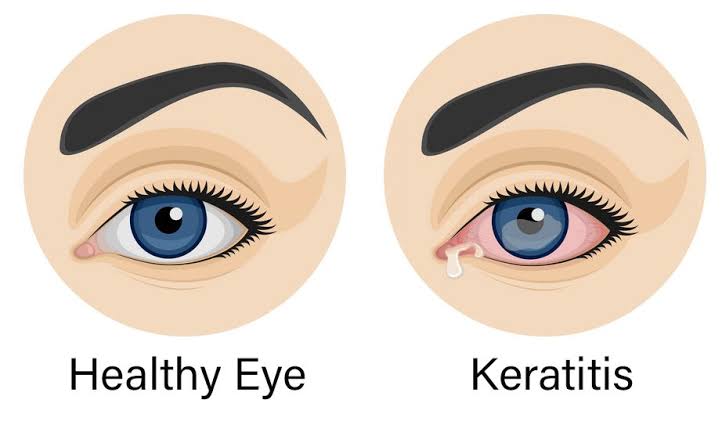
- Infection and inflammation of the cornea is known as keratitis.
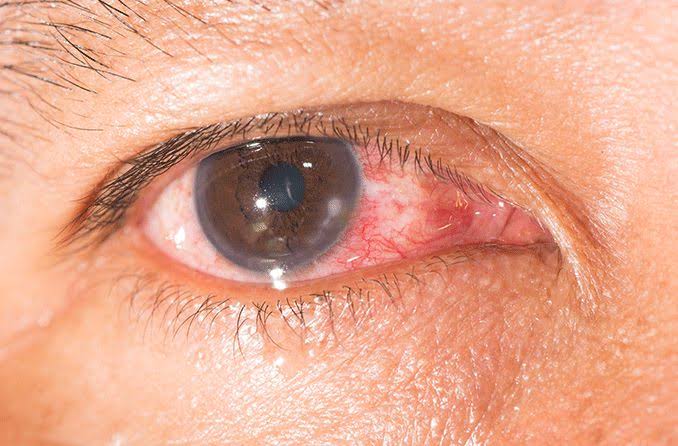
Write causes of keratitis
- Bacterial, viral and fungal Infection
- Trauma
- Eye Injury
- Dry Eye
- Allergic Reaction
- Exposure to UV Rays
- Exposure to Chemicals
- Pur Contact Lens Hygiene
- Immune System Dysfunction
Explain clinical manifestations of keratitis
- Eyepain
- Redness in Eye
- Eye irritation
- Blurred vision
- Photophobia
- Excessive tearing
- Discharge from the eye
- Feeling like something in the eye
- Difficulty opening eye
Write diagnostic evaluation of keratitis
- History collection
- Physical examination (especially eye examination)
- Visual acuity test
- Slit lamp examination
- Corneal staining
- Confocal microscopy
- Microbial culture
Write management of keratitis (Write management of keratitis)
- Topical Medicine: Use topical antibiotic eye drops and corticosteroids.
- Systemic Drug: If keratitis is caused by a bacterial infection, antibiotics may be given to treat it. If keratitis is caused by a viral or fungal infection, antiviral or antifungal medicine may be given to treat it.
- Pain Management:Provide over-the-counter pain relievers to relieve pain.
- Cycloplegic Agents: Cycloplegic agents reduce pain and inflammation and temporarily relax the eye muscles.
- Warm compresses: Provide warm compresses to the affected eye to relieve discomfort and promote healing.
- Avoidance of contact lenses: Instruct the patient to avoid wearing contact lenses until the infection has resolved.
- Protection From the Light: Use sunglasses or protective eyewear to get protection from light. Which provides protection from light sensitivity.
- Surgical intervention: Keratoplasty is performed in cases of corneal scarring.
Define corneal ulcer
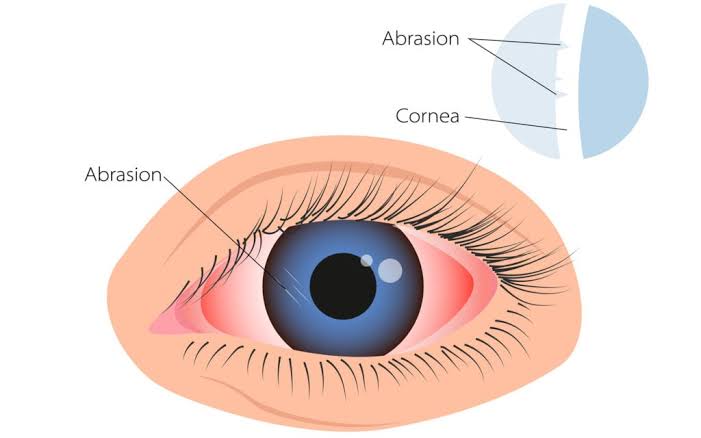
- Corneal ulcers are also known as ‘ulcerative keratitis’ and ‘eyesore’.
- A corneal ulcer is a painful open sore on the cornea. (The cornea is the transparent outer layer of the eye)
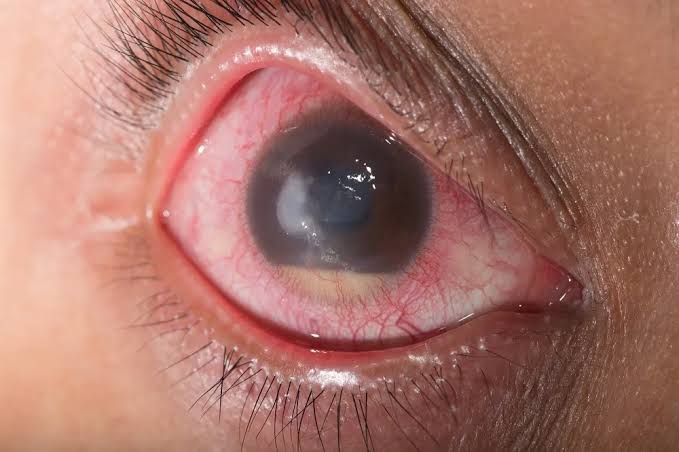
Write causes of corneal ulcer
- Bacterial Infections: Corneal ulcers are caused by bacterial infections caused by common bacteria such as Staphylococcus aureus, Streptococcus viridans, Pseudomonas aeruginosa.
- Viral Infections: Corneal ulcers are caused by herpes simplex virus, herpes zoster virus, varicella zoster virus.
- Fungal Infections: Corneal ulcers are caused by fungi such as Fusarium, Aspergillus, Candida is.
- Parasitic Infection: Parasitic infections such as Acanthamoeba keratitis can cause conditions like corneal ulcers.
- Trauma: Corneal ulcers can occur due to eye injuries such as scratches, cuts, etc.
- Contact Lens Wear: Corneal ulcers can also occur due to improper use of contact lenses and not maintaining proper hygiene while wearing contact lenses.
- Dry Eye Syndrome: Corneal dryness and ulcers are seen due to insufficient tear production and poor tear quality.
- Immuno Deficiency: People with immunodeficiency have an increased chance of developing corneal ulcers.
- Underline Ocular Conditions: Ocular conditions such as blepharitis, keratitis, keratoconjunctivitis can cause corneal ulcers.
- Chemical Burns: Contact with chemical substances causes damage to the cornea and results in conditions like corneal ulcers.
Write clinical manifestations of corneal ulcer
- Sharp eye pain
- Redness
- Blurred vision
- Sensitivity to light (photophobia)
- Excessive tearing
- Watery and purulent discharge from the Eye
- Foreign body sensation
- Loss of visual acuity
Write diagnostic evaluation of corneal ulcer
- History Collection
- Physical Examination
- Visual Acuity Test
- Slit Lamp Examination
- Culture and Sensitivity Test
- Corneal Scraping and Biopsy
Management of corneal ulcer
- Antibiotic therapy:If the corneal ulcer is caused by a bacterial infection, use antibiotic eyedrops to treat it.
- Antiviral therapy:If the corneal ulcer is caused by a viral infection, use antibiotics to treat it. For this, use an antiviral ointment.
- Antifungal medicine:If the corneal ulcer is caused by a fungal infection, use a topical antifungal agent to treat it.
- Corticosteroid eye drops:In selected cases, use corticosteroid eye drops to reduce inflammation.
- Pain management: Use oral or topical analgesic drugs to relieve pain.
- Surgical intervention: Surgical intervention is performed in deep corneal ulcers and more severe cases. Surgical intervention includes conjunctival graft or flap and corneal transplantation.
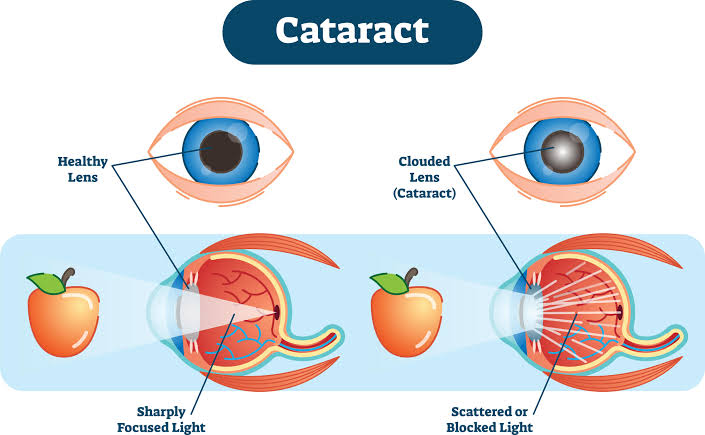
Define cataract
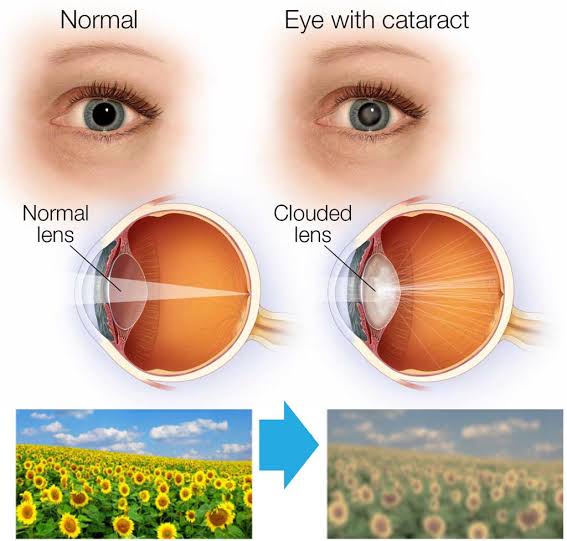
- Cataract is an ocular condition in which the clear crystalline lens becomes cloudy and opacity. Due to which blurred vision is seen.
Write causes of cataract
- Cataracts are caused by many factors. Which are as follows :
- Age :
- Hereditary (genetic factor)
- Exposure to UV light
- Exposure to heat
- Smoking
- Obesity
- Diabetes
- Eye Injury
- Previous Eye Surgery
- Intraocular Disorders
- Use of Medication (Corticosteroids, Oral Contraceptives)
Write classification of cataract
Classification according to cause
- Age-related (senile) cataract: This is the most common type and is caused by age-related changes in the lens.
- Congenital cataract: Congenital cataract is present at birth. It is caused by genetic factors.
- Secondary cataract: Secondary cataract develops due to an eye condition or systemic condition. Such as diabetes, trauma, inflammation
- Traumatic cataract:Traumatic cataract occurs due to penetrating or blunt trauma to the eye.
- Radiation cataract:Radiation cataract occurs due to exposure to ionizing radiation.
- Electrical cataract: Electrical cataract occurs due to electrical injury or exposure to high voltage electrical current.
- Toxic Cataract:Toxic cataract is caused by exposure to toxic chemicals or medicines.
- Metabolic Cataract: Metabolic cataract is caused by metabolic disorders. Such as galactosemia, Wilson’s disease
Classification according to location within lens
- Nuclear cataract: In nuclear cataract, the nuclear part of the lens is clouded.
- Supra nuclear cataract: In supra nuclear cataract The upper part of the nucleus i.e. the deeper part of the cortex is affected.
- Cortical cataract: In cortical cataract, the cortex is affected i.e. the outer layer of the lens is affected.
- Capsular cataract: In capsular cataract, the capsule around the lens is affected.
- Posterior subcapsular cataract: In posterior subcapsular cataract, the back part of the lens capsule is affected.
Classification According to Degree of Opacity
- Incipient Cataract: This is the early stage of cataract. In which minimal visual symptoms are seen and slight opacity is seen in the lens.
- Immature cataract: In this stage, moderate opacity is seen in the lens and noticeable visual impairment is seen.
- Mature cataract: In this stage, complete opacity is seen in the lens and due to this, significant visual impairment and blindness are seen.
- Hyper mature cataract: In this stage, the lens material Liquefaction occurs and shrinkage occurs in the lens capsule.
Write clinical manifestations of cataract
- Clouded, blurred and dim vision
- Trouble seeing at night
- Clear vision at night
- Double Vision in One Eye
- Halos Around Light (Discs or Circles Seen Around Light)
- Leukocoria or White Pupil
- Photophobia
- Reduce Light Transmission
- Decrease Visual Acuity
- Decreases color perception
Published
Categorized as Uncategorised