ENGLISH-UNIT : 1 Oncology : (part-03)
kidney cancer:
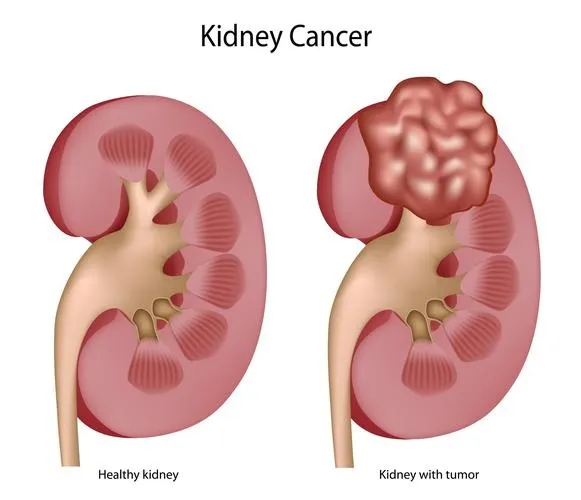
INTRODUCTION ( Introduction ) :
Kidney cancer is also called Renal cancer. In this, abnormal and uncontrolled growth of kidney cells occurs and a tumor forms. These tumors can be both benign and malignant. Kidney cancer mainly arises from two parts of the kidney.
The Renal tubule, ( Renal cell carcinoma),
The Renal pelvis ( transitional cell carcinoma).
If a patient has a renal tumor, he complains of blood in the urine (hematuria) or a mass and pain.
Etiology:
- exact cause is unknown,
- cigarate smoking ,
- Obesity ,
- High blood pressure ,
- long term dialysis,
- occupational exposure to toxic agents,
- certain Analgesic,
- childhood chemotherapy,
- previous radiation therapy .
clinical manifestation :
- Abnormal urin coloure like : dark ,rusty, brown ( Abnormal urine colour : dark, rusty brown ).
- back pain ( back pain ),
- hydronephrosis ( hydronephrosis : accumulation of fluid in the kidney ),
- Abdominal mass or lump ( Abdominal mass or lump ),
- Fever ( fever ),
- Hypertension
- malaise(malaise),
- weight loss(weight loss),
- anorexia (anorexia),
- cold intolerance (Cold Intolerance: Inability to tolerate cold),
- chronic fatigue (chronic fatigue),
- leg and ankle swelling,
- Excessive Night Sweat (excessive night sweat),
- Difficulty seeing,
- hypercalcemia
Diagnostic evaluation:
- history taking and physical examination,
- intra venous urography,
- Cytological examination,
- Renal angiogram,
- ultra sonography,
- ct scan.
Management:
- Radiation therapy,
- Chemotherapy,
- Hormonal therapy.
- Surgical management:
- Nephrectomy
- Simple Nephrectomy: In this, only the tumor is removed.
- Partial Nephrectomy: In this, the tumor and some of the surrounding area are removed.
- Radical Nephrectomy: In this, the kidney, tumor, adrenal gland, lymph node and surrounding tissue are removed.
Nursing management:
preoperative and Postoperative nursing management (Pre-operative and Post-operative Nursing Management) :
Preoperative nursing management (Pre-operative Nursing Management):
- Provide psychological support to the patient.
- Explain the procedure to the patient and his/her relatives.
- Check the patient’s intake output.
- Provide intravenous fluid to the patient.
- Provide blood transfusion to the patient.
- Provide oxygen to the patient.
- Shave the patient on the operative area.
- Provide a comfortable and workable environment for the patient and his/her relatives.
post operative nursing management (Post Operative Nursing Management) :
- Keep the patient under close observation after the operation.
- Check the patient’s vital signs every 15 minutes. Check vital signs.
- Check the patient’s blood pressure every 15 minutes.
- Provide oxygen to the patient if needed.
- Provide intravenous fluid.
- Maintain the patient’s nutritional and hydration status.
- Provide psychological support to the patient and his family members. To do.
- Provide proper antibiotic and analgesia medicine to the patient.
- Properly dress the patient’s operation area.
- Clear all doubts of the patient and his family members.
BLADDER CANCER (Bladder Cancer):
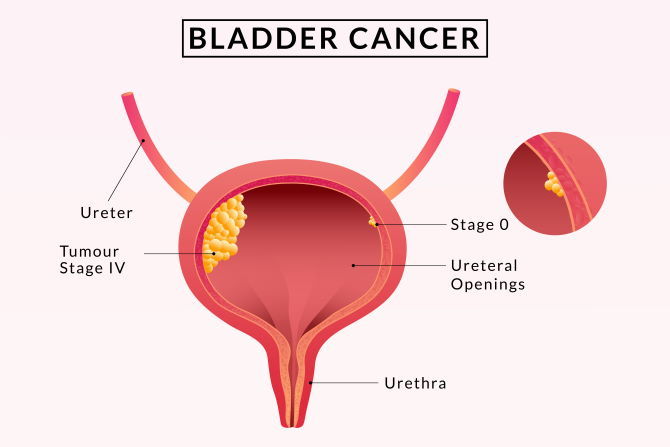
INTRODUCTION (Introduction):
In bladder cancer, there is abnormal and uncontrolled growth of epithelial cells of the bladder and formation of tumors. These tumors can be benign and malignant. Bladder cancer accounts for 90% of all cancers of the urinary system.
The types of cancer in the urinary system are classified according to the cells they form.
urethelial carcinoma ,
squamous cell carcinoma ,
Adenocarcinoma (In adenocarcinoma).
Etiology:
- Age: Mainly seen between the ages of 50 and 70.
- Sex: Affects men more than women. (3 : 1),
- cigarate smoking (cigarette smoking),
- chemical exposure (chemical exposure),
- Diet : It is more common in people who eat fried meat and animal fats.
- Race : Bladder cancer is more common in white people.
- person history of bladder cancer( A person with a history of bladder cancer,
- family history of bladder cancer,
- chronic bladder inflammation,
- Birth defects,
- External beam radiation.
- treatment of certain drugs
clinical manifestation (symptoms and signs):
- blood in urine (hematuria),
- pain during urination,
- frequent urination,
- pelvic pain,
- back pain,
- alteration in voiding.
Diagnostic evaluation:
- history taking and physical examination
- cytoscopy,
- Excretory urography Urography),
- ct scan ( CT scan ),
- ultrasonography ( Ultrasonography ),
- Biannual examination ( Biannual Examination ),
- tumor Biopsy ( Tumor Biopsy ),
- Cytological examination ( Cytological Examination)
medical management ( medical management ):
- Radiation therapy ( radiation therapy),
- chemotherapy ( chemotherapy),
- Immunotherapy ( immunotherapy ).
surgical management:
- cystectomy (removing the bladder)
- partial cystectomy (in which only the affected portion of the bladder is removed).
- Radical cystectomy (in which the entire bladder is removed along with the entire bladder) All surrounding lymph nodes and surrounding tissue structures are removed.
Preoperative nursing management:
In this, the urine output of the patient should be checked every hour in pre-operative and post-operative management.
Properly hospitalize the patient and keep him under close observation of nurses and other health care personnel.
If any complication arises in the patient, immediately inform the health care personnel.
pre operative(pre-operative ):
- Check the patient’s urine output.
- Insert a catheter into the patient.
- Properly explain the surgery, its complications, its benefits and side effects to the patient.
- Check the patient’s vital signs.
- Prepare the patient for surgery.
- Obtain consent for surgery from the patient’s family members.
- Properly explain the removal of the patient’s clothes and jewelry.
- Properly Shave.
- Provide psychological support to the patient and his family members.
- Provide intravenous fluid to the patient.
- Paint the patient’s body area with proper Savlon and spirit.
post operative nursing management (Post Operative Nursing Management) :
- Keep the patient under close observation after the operation.
- Check the patient’s vital signs every 15 minutes.
- Keep a blood transfusion ready for the patient.
- Provide intravenous fluid to the patient.
- Proper dressing of the operative area.
- Provide the patient with proper antibiotic and analgesic medicine.
- Maintain aseptic technique while handling the patient.
- Clear all doubts of the patient and his family members.
- Tell the patient not to do any hard activity.
- Tell the patient to rest completely. Avoid spicy and fatty foods.
- Maintain the patient’s intake output chart.
- Ask the patient to maintain personal hygiene.
- Get all the patient’s blood investigations done.
- Provide psychological support to the patient and his family members.
Ovarian cancer:
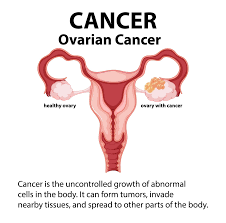
INTRODUCTION ( Introduction):
The ovary is an organ of the reproductive system. Abnormal and uncontrolled growth of its cells in the ovary and the formation of tumor-like structures result in malignancy, i.e. cancer. The result of cancer Bloating ( Tenderness := Pain from intercourse), Pelvic pain, Frequent urination.
Etiology :
- excessive use of birth control pills,
- early menarche (menstrual starts at an early age),
- late menopause
- Nullipara (a woman who has never conceived before the period of pregnancy viability).etc…
clinical manifestation (symptoms and signs):
- Pelvic pain,
- abdominal pain,
- constipation,
- nausea( Nozia),
- weight loss (weight loss),
- poor appetite (poor appetite),
- weakness (weakness),
- Fatige( Fatige).
Diagnostic evaluation
- history tacking and physical examination.
- laparotomy ( laparotomy),
- X ray ( X ray),
- ct scan ( CT scan),
- ultrasound( ultrasound),
- MRI (M. R. I) ,
- to check Elevated serum protein level
- Increase. Ca :=125.
management:
- radiation therapy, ,
- chemotherapy,
- biotherapy,
- surgically remove of tumor ( surgically remove of tumor).
Nursing management (Nursing Management ) :
- Do a head to toe examination of the patient.
- Check the patient’s vital signs To do.
- Check the patient’s intake output.
- See what the patient’s pain level is.
- Check the patient’s skin integrity.
- Maintain the patient’s hygienic condition.
- Provide the patient with a comfortable position.
- Provide Mind Diversion Therapy to the patient.
- Provide Analgesic Medicine to the patient.
- Maintain the hygienic condition of the patient.
- Provide proper bedsheets and clean clothes to the patient.
- Provide Bed Bath and Sponge Bath to the patient.
- The patient Provide clean and wrinkle-free bedsheets.
- Advise the patient to maintain oral hygiene.
- Check the patient’s skin turgor and integrity.
- Instruct the patient to drink two to three liters of water throughout the day.
- Maintain the patient’s nutritional status.
- Provide the patient with a comfortable and functional environment. Providing the environment.
- Providing the patient with proper position.
- Providing proper psychological support to the patient.
- Explain to the patient about the side effects of cancer surgery and chemotherapy and radiation therapy.
- Tell the patient to do some activity every day.
- Explain to the patient that a little exercise every day is necessary. To do.
- Maintain aseptic technique while handling the patient.
- Clear all doubts of the patient and his family members.
- Answer all questions of the patient and his family members. And provide him with psychological support.
cervical cancer:
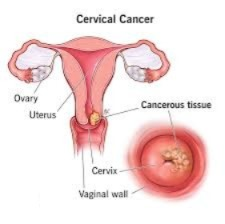
INTRODUCTION ( Introduction ) :
Cervical cancer is the abnormal and uncontrollable growth of cervical cells and the formation of tumor-like structures. These tumors can be benign or malignant.
Etiology (Etiology):
- multiple Sex partners Partner),
- birth control pills (birth control pills),
- Nallipara (Nallipara),
- Multiparty (multiparity),
- human papilloma viral infection(human papilloma virus infection),
- Nutritional deficiency (nutritional deficiency),
- Low socio economic factors,
- early child bearing,
- smoking,
- Chronic cervical infection,
- Hiv infection,
- cigaratte smoking .
clinical manifestation:
- abnormal vaginal bleeding ,
- thin vaginal discharge ,
- Pelvic and low back pain,
- painful urination,
- oedema of lower extremities,
- weight loss,
- anemia
Diagnostic evaluation:
- history tacking and physical examination (history taking and physical examination).
- pap smear test (pap smear test),
- Pelvic examination (pelvic examination),
- X rays ( X rays ),
- laboratory investigation (laboratory investigation),
- Biopsy (biopsy),
- ultrasonography (ultrasonography),
- MRI ( M. R. I. ).
- Calposcopy (calposcopy),
- cytography ( cytography),
- barium X Ray studies (barium X Ray study),
- Intravenous urography.
management:
1) Cryotherapy: In this, the tumor is frozen using liquid nitrogen.
2) (LEEP: Loop Electrocautery Excision Procedure: This procedure is used to remove abnormal cells. In this, a very thin wire is used to make a thin cut in the lesioned layer of the cervix.
3) Conization: In this, a cone-shaped portion of the cervix is removed.
4) Hysterectomy ( Hysterectomy ) : In this, the entire uterus is removed.
5) Total Hysterectomy ( Total Hysterectomy ) : Remove uterus, Cervix, and ovaries.
6) Radical Hysterectomy ( Radical Hysterectomy ) : Remove uterus, Cervix,ovaries,Fallopian tube, Malignant area of vagina affected lymph node.
7) Pelvic trachelectomy ( Pelvic trachelectomy): In this, only the selected part of the cervix is removed. And at the same time, the tumor in the cervix is removed.
8) Radiation therapy, ,
9) Chemotherapy, .
preoperative and Postoperative nursing management:
preoprative nursing management (Preoperative Nursing Management) :
- Provide psychological support to the patient.
- Explain the entire surgical procedure to the patient.
- Prepare the patient physically and mentally for surgery.
- Maintain the patient’s nutritional status.
- Maintain the patient’s hydration status.
- Catheterize the patient.
- Inject the patient with I.v. Set up the line.
- Provide fluids to the patient through the parenteral route.
- Perform all laboratory investigations on the patient.
- Provide a comfortable and working environment for the patient.
- Keep blood transfusions ready for the patient.
- Properly shave the operative area of the patient’s body To do.
- Paint the patient’s operative body parts with proper Savlon and spirit.
- Give the patient the prescribed antibiotic medicine in the proper manner.
- Check the patient’s vital signs.
post operative nursing management (Post Operative Nursing Management) :
- Close observation of the patient after the operation.
- Maintain aseptic technique while attending to the patient.
- Check the patient’s vital signs every 15 minutes.
- Proper dressing of the patient’s operative area.
- Proper observation of the surgical site Maintain the patient’s intake output chart. Provide intravenous fluid to the patient. Provide the patient with prescribed analgesic and antibiotic medicine. Do not check the drainage tube properly. Instruct the patient to monitor the operative site for any redness, swelling, To see if there is inflammation.
- Provide psychological support to the patient and his family members.
- Encourage the patient to do hard activities.
- Instruct the patient to do small and frequent amounts of activity.
uterine cancer ( uterine cancer ):
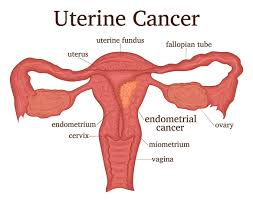
The uterus is an organ of the female reproductive system.The uterus is an organ of the female reproductive system.The abnormal growth of uterine cells in the uterus And due to uncontrollable growth, a tumor is formed. This tumor can be benign (noncancerous) or malignant (cancerous) and it mainly occurs in the endometrium (innermost layer) of the uterus.
Etiology:
- chronic exposure to estrogen (long-term exposure to estrogen).
- Endometrium Hyperplacia (endometrium hyperplasia),
- Obesity (obesity),
- a high fat diet (high fat food),
- diabetes (diabetes),
- Women over 50 -60 years of age.
- multiparty( multiparity ),
- nallipara ( nalipara ),
- Hiv infection (HIV infection),
- nutritional deficiency ( nutritional deficiency ).
- family history( in a family with a history),
- exposure to radiation( radiation) contact, )
- race (white women’s are more likely to have uterine cancer).
clinical manifestation (symptoms and signs ):
- abnormal vaginal bleeding (vaginal discharge),
- painful and difficulty in urination (painful urination),
- Pelvic pain (pelvic pain),
- anemia (anemia),
- Fatige (fatigue),
- weakness (weakness).
Diagnostic evaluation: