ENGLISH-COMMUNITY HEALTH NURSING (CHN) FIRST YEAR 11/09/2025 PAPER SOLUTION (COMPLETE)
Q-1
a. Write down difference between community health nursing and institutional nursing.03
Difference between Community Health Nursing and Institutional Nursing :
Based on the method of providing services and the working area in the nursing profession, nursing is mainly divided into two parts – Community Health Nursing and Institutional Nursing.
1. Definition Definition :
Community Health Nursing :
- Community health nursing is the practice of nursing that provides promotive, preventive, curative and rehabilitative services to individuals, families and entire communities at the community level.
Institutional Nursing:
- Institutional nursing is the practice of nursing that provides diagnostic, curative and rehabilitative services to patients admitted to a hospital or health institution.
2.Area of Practice Area of Practice :
Community Health Nursing :
- Works in villages, cities, schools, anganwadis, home-based services, primary health centers (PHC), community health centers (CHC) etc.
Institutional Nursing :
- Works in institutions such as hospitals, nursing homes, clinics, ICUs, OTs, etc.
3. Focus of Care:
Community Health Nursing:
- Emphasizes Disease Prevention, Health Promotion, and Health Education.
Institutional Nursing:
- Emphasizes Diagnosis, Treatment and Critical Care.
4. Beneficiaries Beneficiaries:
Community Health Nursing:
- Both healthy and unhealthy people, families and the entire community.
Institutional Nursing:
- Mainly sick or admitted patients.
5. Method of Approach:
Community Health Nursing:
- Provides services through Survey, Home Visit, Screening, Immunization, Counseling etc.
Institutional Nursing:
- Provides services through Bedside Care, Medication Administration, Intravenous Therapy, Monitoring etc.
6. Level of Prevention
Community Health Nursing:
- Works at all levels of Primary Prevention, Secondary Prevention and Tertiary Prevention.
Institutional Nursing:
- Mainly works at the Secondary Prevention and Tertiary Prevention levels.
7. Objective Objective:
Community Health Nursing:
- To improve the overall health of the community and reduce the incidence rate.
Institutional Nursing:
- Improving the patient’s condition, preventing complications, and helping them recover faster.
Community health nursing focuses on community-based, preventive, and promotive services, while institutional nursing is based on hospital-based, diagnostic, and therapeutic services. Both nursing fields are extremely important in the health system and complement each other.
b. Write down objectives of community health nursing – Write down objectives of community health nursing. 04
1. Promote maternal and child health. Reduce maternal and infant mortality (IMR, MMR) and morbidity.
2. Increase the life expectancy of people
3. Control infectious diseases and take preventive measures for them
4. Immunize against vaccine-preventable diseases.
5. Reduce the crude birth rate and crude death rate
6. To bring the total fertility rate up to 2.1
7. To train health workers and nursing students
8. To raise the standards of community health nursing practice
9. To recommend for the development of nursing manpower
10. Participate in the development of standards of care, health policies and regulations, etc.
11. Provide priority to vulnerable groups such as antenatal, elderly, children, adolescents and necessary health care services to the entire community.
12. Provide referral system services according to family and individual needs in the community so that they can benefit from government hospitals and other institutions.
c. Write down principles of community health nursing. – Write down principles of community health nursing. 05
1) Since community health nursing is focused on the community, it is important to get information about where nursing care is to be provided in the community, create a map for it, and establish good and working relationships.
2) Provide care according to the needs of the community and the individual. Health problems should be solved through health programs and resources.
3) Working with doctors, female health workers, female health supervisors, multipurpose workers and other health workers in the community health team, nurses help in planning health programs, evaluation, visiting people’s homes and giving advice, sanitation problems, nutritional problems, maintaining maternal and child health and providing health education.
4) Health worker authorized, health authority is responsible for every health worker. Every health worker is appointed by the state, municipality, local or private body or agency. Nurses work in the area. He should be in contact with the public health authority.
5) He should plan and organize his work. All this is necessary to maintain unity and cooperation in the health program. Because the health authority is considered individually responsible.
6) Health services should be available to people according to their age, caste, religion, nationality, social, political or economic level. There should be an environment where everyone can get good personal health and environment. Health workers should be non-political and not biased. Public health workers should not interfere in the national, religious beliefs of two people but they should be able to explain all other beliefs and social matters.
7) Public health workers should never accept any gift or bribe. But if the government has fixed some charges for some health care, then it should be taken honestly.
8) Family and community are considered a unit to work in public health work. Teaching is an important part for every health worker.
9) Periodic evaluation of the nursing services provided in the community for planning and progress is very important.
10) Professional relationship and discipline should be maintained with the community for community health nursing.
11) There should be a system for guidance and supervision for public health nurses services.
12) Systematic records and reports should be maintained of every work done in the community.
13) Continuous provision of health services is considered effective.
14) Family and community are considered a unit to work in public health work. Teaching is an important part of every health worker.
15) Health workers should be given personal and convenient treatment.
16) Other members who work with the village people. They can also help in the health program
17) A schedule should be provided for the satisfactory performance.
18) The person’s interest in the profession should be developed and maintained.
OR
a. Describe concept of primary health care. – Describe the concept of primary health care. 03
Primary Health Care – The concept of primary health care in India was similar to the concept of basic health services which was proposed by the Bhor Committee in 1946 and implemented by the Government of India through successive Five Year Plans after independence.
Definition of Primary Health Care – According to WHO, “Primary health care is the most essential health care which can be provided everywhere by the individual, family and society, practically and scientifically, with the full support of the individual, family and society. Primary health care is the health service provided in every country that can be afforded by the country.”
Primary Health Care is essential health care made universally accessible to individuals and families in the community through their full participation, by means that are scientifically sound and socially acceptable methods and technology, and at a cost that the community and country can afford).
Primary Health Care
Accountability
Available
Acceptable
Accessibility
- As afforded by the country and the community
- Universally accessible to all citizens of the country
- Available to all, regardless of rural or urban, rich or poor communities
- Socially acceptable based on practical and scientifically sound technology
- The country’s healthcare Agencies should be accountable.
b. Explain principles of primary health care. – Explain the principles of primary health care. 04
Principles of primary health care:
There are mainly 5 principles of primary health care.
1) Equitable distribution,
2) Community participation,
3) Appropriate technology,
4) Focus on prevention,
5) Intersectoral coordination
1) Equitable Distribution:
- Health services and resources should be distributed equitably in the community. Primary health care should be available to all without any discrimination of caste, creed and gender, religion, rich, poor, urban or rural. According to this principle, primary health care should be available to every individual, family and community. It is based on social justice. People living in rural areas are the main target of primary health care.
2) Community Participation:
- It is difficult to achieve the goal of primary health care without community involvement. Continuous efforts should be made to get community involvement in the planning, implementation, and maintenance of health services. Local health workers of villages like village health guides, anganwadi workers, ASHAs, train-aids are any Provides health services by overcoming communication barriers and culture. This is done in a way that makes it acceptable to the community.
3) Appropriate Technology:
- The technology used in primary health care should be scientifically sound, safe, socially acceptable, relevant to local requirements and financially viable and should be available at the local level. Ex: Use of ORS for the treatment of diarrhoea is an example.
4) Focus on Prevention:
- The main focus of primary health care is not to treat disease but to prevent disease and promote health. Primary health care emphasizes health education.
5) Intersectoral Coordination:
- For the successful implementation of primary health care, coordination of other sectors is necessary such as agriculture, sanitation, housing, nutrition, public workers, communication and education etc.
- Thus, primary health care mainly involves 5 Principals are involved.
c. Explain elements of primary health care. – Explain the elements of primary health care. 05
Elements of Primary Health Care:
Primary Health Care:
Primary health care is an essential health care that is universally made accessible to everyone and acceptable to everyone through full participation in it and primary health care should be affordable to the community and the country. There are 8 essential elements of primary health care which are as follows:
ELEMENTS:
1) E : Ensure Safe Water Supply,
2) L: Locally Endemic Disease Control
3) E: Education
4) M: Maternal and Child Health (Immunization Against Infectious Diseases)
5) E: Environmental Sanitation
6) N: Nutrition
7) T: Treatment of Minor Alignment
8) S: School Health Services.
1) E: Ensure Safe Water Supply:
- Supply of adequate amounts of safe drinking water and sanitation are essential for good health and are an important factor in an environment. Access to safe drinking water is essential for preventing waterborne diseases and promoting overall health. Primary health care includes efforts to ensure that communities have access to clean and safe water sources, which is fundamental for disease prevention and health promotion.
2) L: Locally Endemic Disease Control:
- The main focus of primary health care is to control any endemic diseases in a particular region or community. It involves surveillance, preventive measures (such as vaccination and vector control) and early detection and treatment of locally prevalent diseases. Prevention and control of locally and endemic diseases to reduce morbidity rates.
3) E: Education:
- Health education is a key component of primary health care. Its aim is to equip individuals and communities with the knowledge and skills to take charge of their health. To empower people to make informed decisions. Education covers a wide range of topics including hygiene practices, nutrition, family planning, sexual health, and prevention of disease. To provide education to people about health and current health problems. To control and prevent these health problems, certain measures are formulated and people are made aware of the health services available to them so that they can use them when needed.
4) M: Maternal and Child Health (Immunization Against Infectious Diseases):
- Mothers and children are the most vulnerable group to health problems and account for a large percentage of the population. Primary health care places significant emphasis on maternal and child health services. It includes prenatal care, safe child birth, proper postnatal care, newborn care, immunization, growth monitoring and nutrition to ensure healthy development during critical stages of life. Protecting mothers and children from illness and other risks ensures good health of families and communities. –>
Immunization Against Infectious Diseases:
- Provide proper immunization to children to protect them from major infectious diseases such as,
- Poliomyelitis,
- Diphtheria,
- Tetanus,
- Miscellaneous,
- Tuberculosis,
- Proper immunization of children to prevent infectious conditions like Hepatitis B etc.
- Poor hygiene and environmental conditions Environmental sanitation is essential to prevent diseases caused by. Primary health care
- Improving sanitation, properly disposing of waste materials, and providing education on hygienic practices to reduce the risk of communicable diseases in the community.
- Good nutrition is essential for health and child development. It is essential for the growth and development of the body. People should be encouraged to pay attention to a balanced diet. Nutrition is the foundation of primary health care, which identifies both malnutrition and overnutrition as issues. In order to improve health outcomes and prevent nutritional deficiencies,
- Promotion of balanced diet, micronutrients, supplementation, support breastfeeding, and nutritional counseling are involved. It is necessary to provide knowledge to preserve the nutrients present in food preparation and diet.
- Primary health care provides accessible and timely treatment for common health conditions and minor ailments. Primary health care is provided by trained health care personnel to manage illnesses (such as respiratory infections, diarrhea, skin conditions, and minor injuries). And there should be easy availability of drugs.
- School Health Services are integrated with primary health care to improve the health and well-being of school-age children. These services include screening, immunization, health education sessions, counseling, and referral for further evaluation and treatment when needed.
5) E: Environmental Sanitation:
6) N:Nutrition:
7) T : Treatment of minor alignment:
8) S: School Health Services:
Thus, a total of 8 elements are involved in primary health care.
Q-2
a) Write down “National immunization schedule”. Write about the national immunization schedule. 08
b) Discuss the responsibilities of community health nurse in immunization. Explain the responsibilities of community health nurse in immunization. 04
Responsibilities of Community Health Nurse in Immunization:
- Immunization is the process of providing protection to a person from a specific transmitted disease through a vaccine. Community Health Nurse plays a major role in the immunization program.
1. Planning and Microplanning:
- Identifying target beneficiaries in the community.
- Determining birth registration and target population.
- Preparing a session plan.
- Arranging activities according to the Immunization Schedule.
2.Health Education:
- Explaining the importance of vaccination to parents and community members.
- Providing information about Vaccine Preventable Diseases.
- Clearing misconceptions and rumours.
- Encouraging timely administration of follow-up doses.
3. Vaccine Storage and Cold Chain Maintenance:
- Maintaining vaccines at appropriate temperature (2°C to 8°C).
- Cold chain equipment such as ILR (Ice Lined Refrigerator) and Deep Freezer.
- Checking the Vaccine Vial Monitor.
- Maintaining a stock register.
4. Safe and Correct Administration:
- Administering the vaccine according to the appropriate age, appropriate dose and appropriate route (Oral, Intradermal, Subcutaneous, Intramuscular) Giving.
- Following Aseptic Technique.
- Using Auto-disable Syringe.
- Evaluating the child before and after immunization.
5.AEFI Management – Adverse Event Following Immunization:
- Identify adverse events after vaccination.
- Differentiate between mild and severe reactions.
- Keep an emergency kit ready.
- Follow the AEFI reporting and referral process.
6.Recording and Reporting:
- Updating the immunization register.
- Making entries in the mother-child card.
- Preparing monthly reports and sending them to the higher authorities.
- Making due list and defaulter tracking.
7.Surveillance and Monitoring :
- Surveillance of vaccine-preventable diseases.
- Reporting outbreaks.
- Coverage evaluation.
8. Community Mobilization :
- Coordinating with ASHA Workers and Anganwadi Workers.
- Organizing vaccination camps and outreach sessions.
- Finding dropout cases and bringing them for vaccination.
In the immunization program, the Community Health Nurse performs multiple responsibilities such as planning, education, safe vaccination, cold chain maintenance, AEFI management, recording and community mobilization.
Through her work, the incidence of disease in the community decreases, child mortality decreases and public health standards improve. Therefore, the role of community health nurses in immunization is extremely important and responsible.
OR
a) Explain role of community health nurse in family health services. Explain the role of community health nurse in family health services. 08
(A) Community health nurse in survey work:-
- i) Collecting demographic facts-Collecting demographic data
- ii) Making list of homes- Making a list of homes, identifying housing location.
- iii) Collecting information about pregnant mothers, eligible couples, infants and children below the school going age.
(B) Function of CHN in Educations functions and motivation:
- i) To encourage the adoption of small family norms.
- ii) To explain the importance and necessity of family planning to the masses effectively.
- iii) To use various techniques of teaching and communication.
- iv) To eligible couples contraceptives To motivate and educate people about the use of family planning services and permanent methods.
- v) To motivate people for family planning services operation or permanent methods.
(C) Function of CHN in managerial function;
- i) Conducting clinics-Conducting clinics
- ii) Deciding the date and place of clinics-Deciding the date and place of clinics-Deciding the date and place of clinics
- iii) Arranging equipment and other resources at clinic
- iv) Arrangement and distribution of contraceptive-
- v) Insertion and removal of IUD’s
- In which the IUCD is inserted. And its follow-up is taken. And when necessary, it is also removed.
(D) Organizing family planning camps
- Organizing family planning camps in the community and providing the necessary family planning facilities to the people, especially efforts to ensure that people adopt the method of permanent family planning To organize such camps whenever necessary and reach out to the beneficiaries. (E) Maintaining Records. After providing health care services to the family, keep all records of the care provided to them, including all the details in the family folder. How many eligible couples are there in the community and keep proper data of ANC, PNC etc. and keep all the services provided in the record so that they can be used properly in the future.
(F) Liaison work-
- The community health nurse will work as a link between the health care services and the people who need the health services while providing health services to the family so that they will make efforts to benefit them in the mainstream of the health care system.
i) Ask NGOs and voluntary organizations to co-operate.
- Health services or the health needs of the family cannot be provided by the government or by themselves, so often such services are provided by different NGOs and cooperative organizations, so they should cooperate in this.
b) Explain communicable disease triad. 04
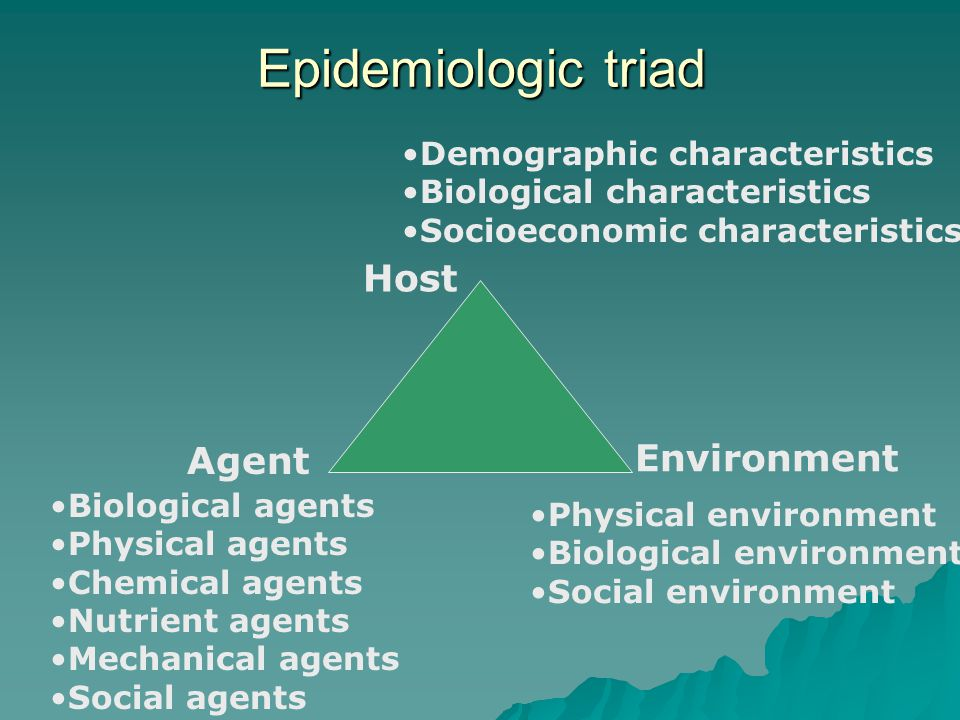
The epidemiological triad or epidemiological triangle is a traditional model for explaining how infectious diseases occur and are transmitted in a community. This model is very simple and is used to explain the mechanisms for the occurrence of infectious diseases and their control and eradication. It is very necessary for.
These three factors are responsible for the occurrence of disease: agent, host, and environment. If any one of them is absent, the disease does not occur. Therefore, this model is used for the emergence and treatment of diseases.
The Epidemiological Triad is a basic model for understanding the occurrence of communicable diseases. This triad is made up of three main components: agent, host, and environment.
1. Agent:
- – An agent is the entity that causes a disease process (infection or noninfection). This includes bacteria, viruses, parasites, fungi, etc.
- – Example: Hepatitis B virus is the agent that causes Hepatitis B disease.
2. Host:
- – A host is a person or organism that is susceptible to an agent of a communicable disease. The host’s innate or acquired characteristics, such as age, sex, immune power, and heredity, can affect the effectiveness of the agent.
- – Example: A person with a weakened immune system may be more susceptible to fungal infections.
3. Environment:
- – Environment is the set of external factors that influence the transmission between the host and the agent. These include physical, biological, social and economic factors.
- – Example: A dirty environment and lack of water are environmental factors that can help spread cholera.
Epidemiological Triad:
/ \
/ \
/ \
Host — Environment
Example: Malaria
– Agent:* Plasmodium parasite
– *Host:* Human
– *Environment:* Areas with water storage (where mosquito populations are high)
Importance:
Epidemiological The trio is important for the prevention and control of communicable diseases. Based on this model, various practical measures are taken for the prevention of communicable diseases, such as:
– Use of medicine to kill the agent.
– Vaccine to increase the host’s immune power.
– Management of organic waste and water to keep the environment clean.
This model helps healthcare professionals to effectively understand and control the spread of communicable diseases.
Q-3 Write short answer (any two) Write a short answer. (Any two) 6×2-12
a) Write down methods of cooking. Write the methods of cooking.
The following different methods are used to cook food.
(1) Boiling
(2) Steaming
(3) Frying
(4) Rousting
(5) Baking
(6). Grilling
(1) Boiling:-
Food is cooked by boiling water at 100* C. This method is used to prepare lentils, rice, vegetables, beans, tubers, and other vegetables.
Since more water is used in this method, vitamins and salts are destroyed. Therefore, sufficient water is used in the boiling method.
(2)Steaming (steaming):-
In this, food is cooked with hot steam. Pressure cooker works on this principle. There is more steam in the pressure cooker. Through this, all the nutrients are preserved. This saves time and fuel. So this method is excellent.
(3) Faying (Frying) :-
In this, thepla, dosa, all types of pudla, are made by drying them in oil. Similarly, puri, bhajiya, vada, kachori etc. can also be fried in oil.
(4) Rousting (Roasting):
It is made by adding a little oil or ghee. After that it is placed on direct heat. Chicken is made by this method. This method is also good.
(5) Baking (baking):
In this, food is cooked by dry heat. In this, food is cooked by using an oven and its hot air. This method is good. Biscuits, bread, and cakes are made in it.
(6) Grilling :
In this, dry heat is used to cook food by heating it on a metal grid.
b) Explain purification of water at large scale. Explain water purification on a large scale.
Large scale water purification can be done by sand filtration. This filtration is of two types which are respectively called slow sand filtration or biological sand filtration and 2) rapid sand filtration or mechanical sand filtration.
In this first raw water is purified, it is stored in a settlement tank for two days and in this short period a large quantity of water is purified and 90% of the impurities are removed from it. This happens naturally. In other words, in this stage, the turbidity of raw water is reduced.
In the second stage, this water is The slow sand introduced into the filter is called the filter bed. The bed is structured from top to bottom in this way:
In which there is water in 1.4 meters, below it there is 1.2 liters of fine sand, below it there are large pebbles in 0.4 meters.
Sand is the main filtering medium in the sand bed. Its thickness is 1.2 meters. There is sand at the bottom, which is a layer of sand that supports the sand bed. There is a pipe at the bottom of this sand bed, which is hollow, through which the filtered water collects and comes out through the pipe to the main tank. In this way, many other mechanisms are responsible for purifying the water through the sand filter, which are as follows.
1) mechanical (mechanical)
2) sedimentation (sedimentation)
3) absorption (absorption)
4) oxidation of impurities
5) bacterial action (bacterial action)
All these things play their part in water purification but the important part is on the sand bed or the jugular layer or the vital layer. This is a thin and oily layer which contains many types of alkaline protozoa and bacteria. This layer takes two to three days to form. The vital layer destroys harmful bacteria through the slow layer and the water becomes 98% pure. Therefore, it is not advisable to use the filtered water until the new sand bed is ready. In slow sand filtration, 2+03 million gallons of water can be filtered in the filter at a rate of 2 gallons of water per hour. If the thickness of the vital layer on the filter bed increases, then the water cannot be filtered properly and the filtration rate decreases.
The capacity of the filter bed decreases after a few weeks or days. This is called loss of bed. When this amount increases to 4 feet. Water filtration is not considered beneficial. At such a time, from the top of the vital layer. 2 to 3 am is scratched. This scratching action is called cleaning the filter. Which should be done repeatedly in the bed. When the thickness of the sand bed decreases to 30 to 40 CM, it is closed. And the process is started again by constructing the bed. The main disadvantage of slow sand filtration is that it requires changing the bed at frequent intervals!
Note:-Rapid Sand Filtration (Read from Paper-1)
c) Describe methods of health education. Describe the methods of health education.
(1) Personal health education:-
- When a person is admitted to the hospital and discharged from the hospital, the doctor and health worker provide personal health education.
- – Health education can be provided when the patient comes for treatment of his illness.
- – Personal hygiene Treatment due to illness And can be explained about prevention.
- – Public health nurses provide health education and discussions in homes in a personal manner. And provide correct understanding.
- – Flip books are used to provide personal health education. The limitations of individual education are such that health education can be given to a very small number of people.
- – True, accurate, precise information that they adopt.
(2) Group Health Education :-
- Our society is divided into different groups. This approach is effective in student groups, pregnant mothers’ groups, etc.
- – The topic of group teaching should be of interest to the group. Only then will they listen attentively. – Group teaching can be given with the help of visual, auditory, equipment.
- – Health education can be given to groups of students, pre school, children, ANC, PNC, body care, nutrition, industrial workers and special types of health education such as prevention of accident, nutrition etc. among children and elderly people.
There are two types of group health education
1. One-way method: In which there is no interaction of the audience with the group speaker or health education provider.
Ex. T :- Lecture method
2. Two Way Method: There is interaction between the audience and the group speaker or health education provider. Both have active participation.
Eg. Group discussion, seminar, symposium etc.
Q-4 Write short notes. Write short notes. (Any three) 12
a ) Advantages and disadvantages of home visit.- Write the advantages and disadvantages of home visit.
Advantages of home visit:
- (1 ) The nurse can get an idea of the actual situation of the home and family.
- (2) Since family members have enough faith in our words, they are more interested in our programs at home and are more relaxed at home.
- (3) The social and economic background of the family home can be known. So that moral teaching can be given.
- (4) New health problems of the family can be known.
- (5) By meeting the family members, it is known whether they are taking advantage of the health services available to them or not.
- (6) It is an opportunity to see whether the services of other health agencies are available to the family or not.
Disadvantages of home visits:-
- (1) Home visits are time consuming and require time to travel to meet the needs of the people.
- (2) Health professionals do not have emergency equipment for emergency situations.
- (3) In many communities, visits create issues, raising questions about the safety of nursing staff.
- (4) Since home visits are provided, nurses are very much involved in the care setting. There is less control over things like clinic, noise, privacy, distractions etc.
b) Role of nurse in referral system. – Nurse’s contribution to the referral system.
- Make observations and collect information about the situation, factors related to the illness, etc.
- Identify the type of illness and its severity
- Provide immediate treatment care within its competence, standing orders and available resources.
- It is very important for every nurse working in a PHC/CHC or district hospital to have knowledge of the referral system Is. The patient for referral should be carefully selected
- The nurse should know his responsibility and limitations in the referral system
- Whenever there is an emergency, the first thing to do is to attend to the patient, save his life, then provide treatment as per the standing order and only then refer him/her.
- Before referring the patient, make all the entries in the record, including his/her provisional diagnosis, treatment given and the reason for the referral, along with a referral note
- If possible, Help in arranging transportation
- Consoling and guiding the patient’s relatives
- Finding out whether there are doctors and facilities available for the patient at the place of referral
- Whenever a serious patient is referred, provide him with necessary life-saving equipment such as oxygen cylinder, ambu etc.
- If necessary, accompany the patient and continue to provide care until he is stable
- Recording – Reporting of each work done
c) Process of communication.
Sender / Source: This person is the one who arranges the message. An effective communicator should have the following qualities: Its purpose should be clear. The message should be according to the needs and interests of the audience. The effectiveness of the message is seen based on its own social status, its knowledge and its vestige in the community.
Message: The message means the information that the communicator has that people want to understand and act on. A good message should always have the following things. The message should have a specific purpose. The message should be clear and understandable. The message should have an outline. The message should be time-sensitive and demand-driven. It should be based on the basis of need.
Coding: To convert information or ideas into code, for example, words, pictures, actions, etc., it is called coding. is
Channel of Communication: Channel is the medium of communication between sender and receiver. The whole communication is seen through its three media system such as interpersonal communication for example counseling and traditional media such as puppet shows, news etc. Apart from this, mass media such as radio, telephone, television, poster, film, video etc. Mass media can be used for a very large number of people. In the present high-tech era, mobile, email, voice mail, internet and blogs etc. can also be used as channels.
Receiver: In every communication, there must be a receiver. Without an audience, communication has no meaning, it is just noise.
Decoding: Opening the code is called decoding, which means that it gives meaning to the content that they have received.
Feedback: This is a flow of information from the receiver or audience to the center, which is the audience’s reaction to the message. If the message is not clear, then it is not acceptable, then the audience will reject it. The feedback system gives the center an opportunity to increase the acceptability of its message. Usually, feedback is taken through polls, interviews, surveys, etc.
d) Importance of nutrition in nursing –
Importance of Nutrition in Nursing
1. To maintain the health of the patient:
The main function of nutrition in nursing is to maintain the health of the patient. Providing proper nutrition increases the patient’s immunity, which makes the body more capable of fighting diseases.
2. Help in getting rid of diseases:
A good nutrition system helps the body recover faster. Generally, proper nutrition after surgery or serious illnesses speeds up the process of patient recovery.
3. Fulfilling the requirement of high nutritive value:
In the field of nursing, high nutritional value is required, especially for the elderly, children, and pregnant women (ANC). The nurse identifies minor nutritional deficiencies and advises on appropriate food.
4. Energy Supply:
Nutrition is very important to help the patient regain strength after illness or surgery. Protein, carbohydrates, vitamins, and minerals provide the body with the necessary energy.
5. Improve physical and mental health:
Getting the right nutrition improves mental and physical health. It reduces pain, stress, and fatigue, which allows the patient to recover better.
6. Prevention of diseases: Many chronic diseases such as diabetes, heart disease, and hypertension can be prevented by adopting good nutritional practices.
7. Building a healthy lifestyle
The nurse helps the patient improve their lifestyle by spreading knowledge about nutrition. She teaches the patient to choose healthy foods, be careful about eating, and adopt a balanced diet.
8. Nutritional use in treatment:
Some diseases like mal-nutrition, anemia etc. require special nutrition. Nurses help in improving the condition of the patient by providing special food and nutritional value in these diseases.
The importance of nutrition in nursing plays a very important role in the treatment and well-being of the patient.
Q-5 Define following (any six) Write the following definition. (Any six) 12
a) Cold Chain
- The process adopted to maintain the temperature of the vaccine from the point of production until it reaches the beneficiary is called cold chain.
b) Standing order Order
- When a health worker visits a home or goes to a school or industry, he can provide treatment in the absence of a doctor. The authority may provide treatment as permitted in these instructions. This instruction is given by the Medical Officer or Authorizing Committee and is called a Standing Order.
c) Noise
- The word noise comes from the Latin word noise, an unpleasant sound that disturbs the balance of human or animal life is called noise.
d) Epidemic
- Epidemic is a condition in which the number of cases of a disease suddenly exceeds the normally expected number in a specific area or community during a specified period of time.
Examples
- (Cholera)
- (Dengue)
- (Dengue)
- (Measles)
e) Balanced diet
- A balanced diet is a diet that includes all the nutrients needed for the body’s growth, development, energy production, and overall health in the right amounts. This diet should include a balanced intake of nutrients such as proteins, carbohydrates, fats, vitamins, minerals, and water. Proteins are essential for cell growth and repair, carbohydrates provide energy for the body, fats are important for long-term energy and cellular function, while vitamins and minerals support the immune system and are essential for metabolic processes. Adequate water is essential for hydration. A balanced diet supports the body’s growth and development, strengthens the immune system, and helps prevent chronic diseases.
f) Nutrition
- Nutrition is the process by which living beings obtain the necessary nutrients from food, which are necessary for their growth, development, energy production, and overall health. This process involves the ingestion, digestion, absorption, and metabolism of nutrients from food. The process of nutrition supports various physical functions of the body, such as cellular function, immune response, and tissue repair. Proper nutrition provides the body with nutrients such as proteins, carbohydrates, fats, vitamins, minerals, and water, which are essential for a healthy lifestyle and immune system.
g) Health
In 1948, the W.H.O. (World Health Organization) defined health as follows.
- ” Health is a state of complete physical, mental, social and spiritual well being and not merely an absence of disease or infirmity.
As per WHO
- “Health is a state of complete physical, mental, social and spiritual well being and not merely an absence of disease or infirmity.”
h) Health education
- Health Education is a process through which individuals and communities are encouraged to bring about positive changes in health-related knowledge, attitude and practice, so that they can maintain and improve their health and make appropriate use of health services as needed.
Q-6(A) Fill in the blanks – 05
1.WHO stands for …… WHO’s full name is …… World Health Organization
2.Vitamin C is also known as …… Ascorbic Acid
3.Child less than 1 year is called …… Infant
4.The causative organism of tetanus is …… The organism responsible for tetanus is ……. Clostridium tetani ( Clostridium tetani )
5.1 gm fat gives …… calorie. Nine kilocalories
B) True or False – Tell the truth. 05
1.Only immunization is provided in mamata clinic. False Correct Answer : Mamata Clinic not only provides immunization, but also provides other services like maternal and child health services, prenatal check-ups, nutritional guidance.
2.Oral pills are temporary family planning method. True
3.Month of June is celebrated as anti-malaria month. June is known as anti-malaria month. True
4.One ASHA is for every 1000 population. Every 1000 people have one hope. True
5.AIDS day is celebrated on 1st April AIDS Day is celebrated on the first of April. False Correct Answer : World AIDS Day is celebrated every year on 1st December, not on 1st April.
(C) Multiple choice questions – Write the correct option from the following. 05
1.The referral chain is – referral chain a ……
(a) Village-Sub center-PHC-CHC-State level
(b) Sub centre-PHC-CHC-Village-State level
(c) CHC-PHC-Village-Sub center-State level
(d) Village-PHC-CHC-Sub center-State level
2.BCG vaccine is given to prevent – BCG vaccine is given to prevent ……
(a) Tetanus
(b) T.B
(c) Pertussis
(d) Diphtheria
3.Which one of the following is not the component of physical environment……
(a) Air
(b) Soil
(c) Water
(d) Microorganism
4. Fat soluble vitamin is …..
(a) Vitamin B Vitamin B
(b) Vitamin B12 Vitamin B12
(c) Vitamin C Vitamin C
(d) Vitamin A Vitamin A
5.Normal BMI range is ……
(a) 19-25
(b) 17-19
(c) 16-17
(d) 18-20