BSC NURSING SEM 1 APPLIED SOCIOLOGY UNIT 5 Social stratification-
Introduction to Social Stratification
Definition
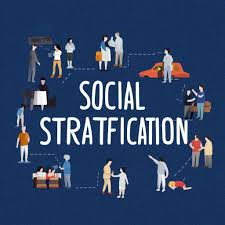
Social stratification refers to the hierarchical arrangement of individuals or groups in a society based on social, economic, political, or cultural factors. It determines how resources, privileges, and opportunities are distributed among different sections of society.
Key Features of Social Stratification
- Inequality:
- Social stratification inherently involves inequality, where individuals or groups have unequal access to resources and opportunities.
- Example: Economic disparities between the rich and the poor.
- Hierarchical Structure:
- Society is organized into layers, with some groups occupying higher or privileged positions.
- Example: Caste systems or class divisions.
- Universality:
- Social stratification exists in every society, regardless of its size or complexity.
- Example: Class systems in modern democracies and caste systems in India.
- Diverse Criteria:
- Stratification can be based on various factors, such as class, caste, race, gender, or ethnicity.
- Example: Gender-based stratification, where men and women have unequal opportunities.
- Social Mobility:
- Stratification systems vary in their degree of mobility, i.e., the ability of individuals or groups to move between layers.
- Example:
- Open systems like class systems allow mobility.
- Closed systems like caste systems restrict mobility.
- Cultural Embeddedness:
- Stratification is deeply rooted in the culture and traditions of a society.
- Example: Religious justification of caste systems in traditional Indian society.
- Persistence Over Time:
- Although the degree of stratification may change, its presence tends to persist over generations.
- Example: Economic inequality existing across decades in capitalist societies.
- Functional or Conflict Perspective:
- Functionalists argue that stratification helps maintain order and efficiency by assigning roles based on merit.
- Conflict theorists view it as a result of exploitation and power struggles.
- Example: Inequality in wealth distribution reflects power imbalances, as per the conflict perspective.
Characteristics of Social Stratification
- Socially Constructed:
- Stratification is not a natural phenomenon but a result of human interactions and societal structures.
- Example: Caste divisions in India were institutionalized through religious and social practices.
- Involves Power and Privilege:
- Higher strata control resources and have more privileges than lower strata.
- Example: Political elites controlling decision-making processes.
- Legitimized by Ideology:
- Systems of stratification are often justified through cultural, religious, or ideological means.
- Example: The concept of “divine right” justified the monarchy in medieval Europe.
- Multidimensional:
- Stratification encompasses multiple dimensions, including wealth (economic), status (social), and power (political).
- Example: A wealthy individual may lack social respect due to unethical practices.
- Intergenerational:
- Social stratification is often passed down through generations.
- Example: Children of wealthy parents tend to inherit wealth and privileges.
- Dynamic Nature:
- While stratification systems are persistent, they evolve with societal changes.
- Example: Women’s increasing participation in the workforce is reducing gender-based stratification in some societies.
Forms of Social Stratification
1. Caste System
- Definition: A hereditary, rigid system where social positions are ascribed at birth and mobility is limited.
- Features:
- Hierarchical divisions based on purity and pollution.
- Endogamy (marrying within the same caste).
- Occupational specialization tied to caste.
- Example: The caste system in India, dividing society into Brahmins, Kshatriyas, Vaishyas, and Shudras.
2. Class System
- Definition: A stratification system based on economic factors like wealth, income, and occupation.
- Features:
- Open system with opportunities for social mobility.
- Focuses on achieved status rather than ascribed status.
- Example: Upper class, middle class, and working class in capitalist societies.
3. Estate System
- Definition: A system of stratification characterized by legally defined groups with specific rights and duties.
- Features:
- Predominantly found in feudal societies.
- Stratification based on land ownership.
- Example: Medieval Europe’s division into nobility, clergy, and commoners.
4. Slavery System
- Definition: A system where individuals are treated as property and deprived of personal freedom.
- Features:
- Extreme form of inequality.
- Slaves have no rights or control over their lives.
- Example: Transatlantic slavery during the colonial era.
5. Gender-Based Stratification
- Definition: Stratification based on gender, where men and women are assigned different roles and statuses.
- Features:
- Patriarchal dominance in most societies.
- Discrimination in access to education, employment, and political power.
- Example: Wage gaps and limited political representation for women.
6. Race and Ethnicity-Based Stratification
- Definition: Stratification based on racial and ethnic differences.
- Features:
- Discrimination and prejudice against certain racial or ethnic groups.
- Systematic exclusion from resources and opportunities.
- Example: Apartheid in South Africa or racial segregation in the U.S.
7. Economic Stratification
- Definition: Division based on wealth, income, and material resources.
- Features:
- Economic inequality determines access to education, healthcare, and housing.
- Class-based mobility is possible but limited by systemic barriers.
- Example: Wealth concentration in the hands of the top 1% globally.
Importance of Understanding Stratification
- Social Analysis:
- Helps understand inequalities and social hierarchies in societies.
- Example: Studying the impact of caste on education in rural India.
- Policy Making:
- Informs the creation of policies to reduce inequality and promote social justice.
- Example: Affirmative action policies for marginalized groups.
- Health and Social Services:
- Stratification impacts access to healthcare and social services.
- Example: Economic disparities leading to unequal healthcare access.
- Social Harmony:
- Understanding stratification helps address conflicts and promote inclusivity.
- Example: Encouraging gender equality to reduce workplace discrimination.
Published
Categorized as B.SC-APPLIED SOCIOLOGY- NURSING SEM 1-NOTES, Uncategorised