ENGLISH-MENTAL HEALTH NURSING (MHN) 15/09/2025 ( PAPER SOLUTION NO.13 (15-09-2025)-UPLOAD
PAPER SOLUTION NO.13 (15-09-2025)
Q-1
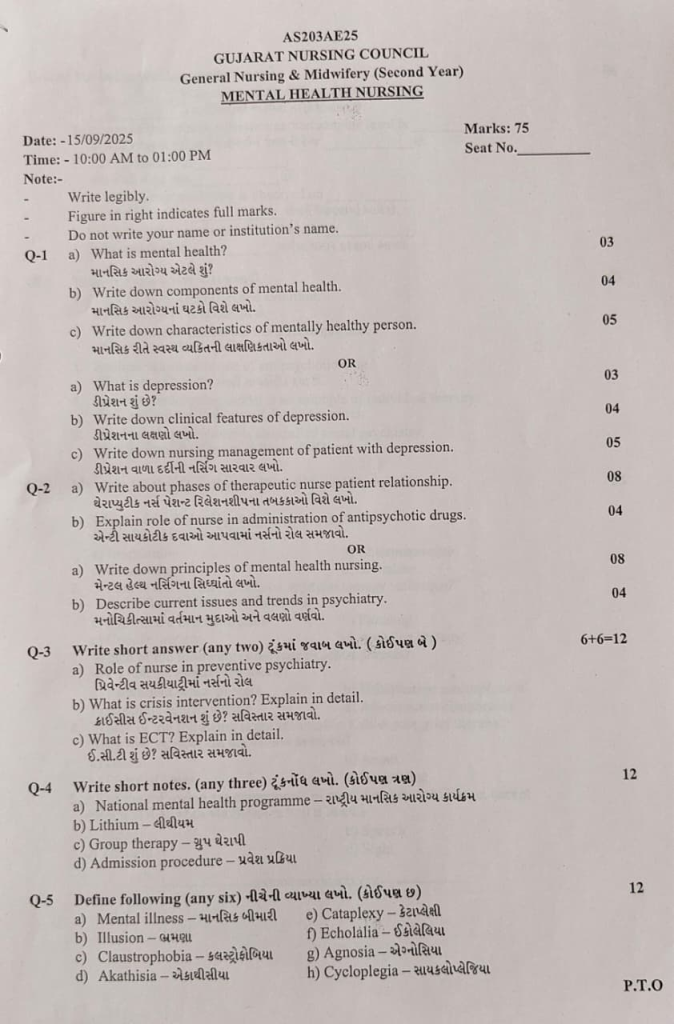
a) What is mental health? What is mental health? – 03
- Mental Health is a stable and positive mental state in which a person can manage the stresses of life to the best of their ability, work effectively, make a contribution to society, and maintain healthy relationships. Mental Health is not just the absence of mental illness, but also includes Emotional Well-being, Psychological Resilience, and Cognitive Functioning. This covers diseases like Depression, Anxiety Disorders, Bipolar Disorder, PTSD and Schizophrenia. Mental Health is of central importance for Preventive Medicine and Public Health.
b) Write down components of mental health. Write about the components of mental health.04
Components of Mental Health:
- Mental health is a state of mental well-being in which a person can realize his or her own abilities, cope with the stresses of daily life, function productively and adjust effectively to society. The main components of mental health are as follows:
1) Emotional well-being:
- Emotional well-being is the ability of a person to recognize, express, and control their emotions. These include Emotional stability, Self-confidence, Self-esteem and Stress management.
2) Cognitive functioning:
- Cognitive functioning is the ability to think, learn, concentrate, remember and make good decisions. It includes processes like Attention, Memory, Decision-making and Problem-solving.
3) Behavioral control & Self-regulation:
- Keeping a person’s behavior appropriate to the situation, controlling impulses and behaving according to social rules is part of self-regulation. These include impulse control, self-discipline and coping skills.
4) Social well-being:
- Social well-being is the ability of a person to build and maintain positive relationships with family, friends and society. It includes Communication skills, Empathy, Cooperation and Social adjustment.
5) Self-concept and self-acceptance:
- A person should know themselves realistically, accept their strengths and weaknesses and consider themselves valuable – this is the basis of mental health. It includes Self-awareness, Self-acceptance and Identity stability.
6) Reality orientation:
- A person should understand reality correctly, be able to think freely from delusion and hallucination and make a proper evaluation of the situation – this component is important. It includes reality testing and appropriate insight.
7) Occupational and Role Functioning:
- A person fulfills his roles such as student, employee, parent, etc. responsibly and feels satisfied in work. This is part of this functionality. It includes work performance, responsibility and productivity.
8) Mind–body integration:
- Physical health and mental health are interrelated. Adequate sleep, nutrition, exercise and substance avoidance are essential for mental stability and brain function.
c) Write down characteristics of mentally healthy person. 05
Characteristics of mentally healthy person (characteristics of mentally healthy person are as follows):
1. He has his own philosophy of life:
A mentally healthy person formulates his values keeping in mind the demands of society. This philosophy guides him in his various activities of life.
2. A proper sense of self-evaluation:
A well-adjusted person knows about his abilities, motives, strong points and limitations. He carefully evaluates his behavior and admits his mistakes.
3. Emotionally mature:-
He is emotionally mature and stable and expresses his feelings well and uses them with proper control.
4.A balanced self-regarding sentiment. (Balanced self-regarding sentiment):-
He has a proper sense of personal respect. He thinks that he is an important member of the social group and can contribute something to its progress and welfare.
5.. Socially adjustable:-
We are all social beings. This social life refers to the reality of Give & Take. A mentally healthy person knows the art of living a social life and does social give and take.
6. A realistic approach:-
His approach to various problems of life is realistic. He is not afraid of imaginary dangers or difficulties that may arise.
8. Intellectually sound:
He has developed his intellectual powers sufficiently. This enables him to think independently and take the right decision at the right time
9. Emotional maturity. (Emotional maturity):
Emotions like fear, anger, love, etc. are commonly seen in our social life. Such a person has mature emotional behavior. He has control over them and expresses them according to accepted social norms.
Emotions like fear, anger, love, etc. are commonly seen in our social life. Such a person has mature emotion behavior. He has control over them and expresses them according to accepted social norms.
10. Bravery facing failures (Courage to face failures) :
Life is a see-saw game. If we aim for success, we sometimes face failures. A person with complete mental balance has enough courage and endurance to face failures in his life.
11. Punctuality:
A person with mental health has desirable social and healthy habits. He does not forget his commitments and is regular and punctual in fulfilling his duties.
12.Self-judgment :
Self-judgment is one of the important characteristics of such a person. He uses it to solve his problems. He does not rely on the judgment of others.
Common Characteristics of a Mentally Healthy Person:-
They feel good about themselves.
They are not overwhelmed by emotions like fear, anger, love, jealousy, guilt, or anxiety.
They have stable and satisfying personal relationships.
They feel comfortable with other people.
They can laugh at themselves and with others.
They have respect for themselves and others even if there are differences.
They are able to accept life’s disappointments.
They can meet the demands of life and manage their problems when they arise.
They make their own decisions.
They shape their environment whenever possible and Adjusts it when necessary.
OR
a) What is depression? What is depression? 03
Depression is a mood disorder, in which the following main symptoms are seen: Feelings of sadness and hopelessness are experienced. Loss of Interest and Pleasure in daily activities. Social and Occupational Function are affected. Changes occur in Sleep Pattern and Appetite. This condition affects Mood, Thought, Behavior, and Overall Health.
b) Write down clinical features of depression. Write down the symptoms of depression. 04
- Sadness
- Helplessness
- Hopelessness
- Worthlessness
- Depressed mood (Depressed Mood)
- Delusion
- Hallucination
- Suicidal Thought
- Slow Thinking
- Poor Memory
- Poor Concentration
- Decreased Appetite
- Weight Loss
- Psychomotor Agitation
- Decreased Libido
- Dependency (Dependency)
- Fatigue
c) Write down nursing management of patient with depression. Write down nursing management of patient with depression. 05
- Suicidal Ideation and Attempt
- High Risk for Violence
- Disturbed Activity
- Loss of Interest
- increased weight loss
- impaired cognition
- impaired socialization
- impaired communication
- altered nutrition less than body requirement Requirements)
- Altered Sleep PatternSelf-Care Deficit
Suicidal Ideation and Attempt
Objectives:
- To prevent the patient from suicidal ideation and attempt.
Nursing Interventions:
- Do not leave the patient alone: Stay with the patient at all times.
- Keep sharp instruments and dangerous objects away: Keep glasses, rope, or other dangerous objects nearby No.
- Safe Environment: Provide protection and a safe environment to the patient.
- Watch for Passive Suicide: Such as, The patient may starve or sleep in the Bath Tub or Sink.
- Observation is necessary: Especially when the patient is coming out of **Depression**, as the patient may be at greater risk at that time.
- Check toilet and bathroom: Inspect for suicide tools and dangerous situations.
- Encourage feelings and emotions: Encourage the patient to express their feelings and emotions.
- Encourage talking about suicide plans: Encourage the patient to share their Suicidal Plan and Method.
- Helping to find meaning in real situations: Teach coping mechanisms so that the patient can cope with the situation Can.
- Improving the patient’s insight: Providing Family Support to the patient to stay away from Suicide thoughts and attempts.
Impaired Cognition
Objectives:
- The patient has Optimal Cognitive Abilities.
- The patient’s Thought Process improves.
Nursing Interventions:
- Cognition Assessment: Complete Assessment of Patient (Assessment) and know their Cognitive Level.
- Coping Mechanism: Help the patient learn New Techniques and Promote them to use them.
- Time Spend Time: Spend time with the patient and help them improve their Cognitive Abilities.
- Creative Activities: Motivate the patient to participate in **Creative Activities**.
- Active Friendly Approach: Maintain a Friendly and Active approach with the patient, so that their Confidence increases.
Impaired Communication
Objectives:
- Improve the patient’s communication.
- The patient interacts with people.
Nursing Interventions:
- Assessment of Communication and Interaction: Assess the patient’s Communication Level and Social Interaction.
- Friendly Approach: Maintain a Friendly approach with the patient and have proper Communication.
- Group Therapy: Encourage the patient to participate in Group Therapy.
- Use Simple Language: Spend time with the patient and Communicate in Simple Language that the patient understands.
- Provide Opportunities for Social Interaction: Give the patient opportunities for Social Interaction and Provide a Friendly Environment.
- Motivate for Social Interaction: Motivate the patient for Social Interaction, so that their Communication Skills improve.
Self-Care Deficit
Objectives:
The patient can perform their Daily Life Activities Independently.
The patient maintains his/her Personal Hygiene.
Nursing Interventions:
- Assessment of Daily Life Activities: Assess the patient’s activities of Bathing, Diet Intake, Cloth and Hair Care etc.
- Motivate for Personal Hygiene: Motivate the patient to maintain Personal Hygiene and provide Health Education.
- Daily Hygiene Guidance: Instruct the patient to take a bath every day and encourage them to do nails and hair care To do.
- Plan for Daily Life Activities: Make a Plan for Daily Life Activities according to the patient’s condition and encourage them to take Active Participation.
- Behavioral Behavioral Change Techniques: Teach the patient behavioral change techniques and motivate them to follow them, and provide support when needed.
- Provide Opportunity for Discussion: Discuss with the patient their disorder, Provide opportunities to discuss Medication and Therapy, as well as understand their feelings and needs.
Altered Sleep Pattern
Objectives:
- Improving Sleep Pattern.
- Maintaining a Balance between Rest and Activity.
Nursing Interventions:
- Assess Sleep Pattern: Take the patient’s Sleep Pattern into consideration and provide a Clean and Comfortable Bed.
- Clean and Calm Environment: Providing a Calm and Clean Environment to Improve Sleep.
- Medication: Giving Prescribed Medication by the doctor and maintaining the patient’s Hygiene.
- Encourage Activity: Encourage the patient to Activity in their daily routine, so that they feel less tired and Sleep improves.
Q-2
a) Write about phases of therapeutic nurse patient relationship. 08
Definition:
A therapeutic nurse-patient relationship is a professional relationship between a nurse and a patient, the purpose of which is to improve the patient’s mental, physical, and social health. It is extremely important to maintain trust, empathy, respect and professional boundaries in this relationship.
Objectives:
- To provide mental support to the patient.
- To effectively address the patient’s fears, doubts, pain, etc.
- To increase self-confidence and self-defense in the patient.
- Involving the patient in treatment.
- Supporting patient behavior improvement.
Key Components:
- Trust: Creating an environment where the patient trusts the nurse.
- Empathy: To understand the patient’s situation emotionally.
- Respect: Respect the patient’s human rights and personality.
- Genuineness: The nurse’s behavior should be honest and open.
- Professional Boundaries: Keep the relationship within professional limitations.
Therapeutic NursePatient Phases of Therapeutic Relationship:
1. Pre-interaction phase
It starts when the nurse is assigned a patient. This is the phase before interacting with him. During this phase, the nurse has some fear and anxiety. She sets her objectives. To overcome her anxiety, she takes the help of the clinical supervisor because she also has many misconceptions or beliefs about the patient. Whether the patient will accept her or not, she will not behave violently. For this, she often talks to the nurse of the next shift or makes guesses from the records.
2. Orientation phase
This phase begins when the nurse interacts with the patient, where the nurse introduces herself and the patient is also unaware of it. In this phase, both get to know each other, accept each other, and a contract for treatment is formed with each other. This time, while communicating with the patient, show trust in your behavior towards him. Tell the patient about the confidentiality of the information received. The orientation phase is complete when both the nurse and the patient accept each other as unique human beings.
3. Working phase
This phase is a phase for the problem solving process for the nurse and the patient, in which the nurse works to complete the goals set in the orientation phase. She works for the patient’s recovery. In this, the nurse overcomes her anxiety and her fear is reduced. During this time, the patient is encouraged to socialize. Motivated to communicate. Helping to find solutions, etc. work.
4. Termination phase
This is the final phase of the therapeutic relationship between the nurse and the patient. This phase is also called the resolution phase or the end phase. The main purpose of the termination phase is to end the therapeutic relationship between the nurse and the patient. The termination phase begins when the patient signs the contract of the orientation phase. The patient is discharged. The patient goes on parole and does not return. Due to moving to another place as per the clinical rotation. Due to improvement in the patient. Due to no longer needing a one-to-one relationship. The nurse terminates the relationship even though the patient is in the hospital. The patient is discharged from the hospital and ends the therapeutic relationship. It is important to inform the patient about the termination and they have the right to know. The patient should be allowed to express their thoughts and feelings.
Role of Nurse:
- Empathetic treatment of the patient.
- Active listening.
- Support for the patient’s emotional ups and downs.
- Guidance to improve behavior.
- Respond patiently and handle anger or frustration.
b) Explain role of nurse in administration of antipsychotic drugs. Explain the role of the nurse in administering antipsychotic drugs.04
Role of Nurse while Administering Antipsychotic Drugs:
1. Pre-medication Assessment of the Patient:
The nurse must assess the patient’s complete mental status, vital signs, allergy history, medication history, and current physical condition. It is especially necessary to check the patient’s temperature, blood pressure, pulse rate and respiratory rate.
2. Proper Drug Identification and Preparation:
Properly identify antipsychotic drugs such as Haloperidol, Risperidone, Olanzapine etc., prepare the correct dosage as per the doctor’s order and administer.
3. Check Dose and Route Route):
Ensure the correct dose of the drug and the route of administration such as oral, intramuscular or intravenous. Follow the Three-check system and Five Rights – Right Patient, Right Drug, Right Dose, Right Time, Right Route.
4. Observation for Adverse Effects during Administration:
Continuous observation for common side effects of antipsychotic drugs such as Extrapyramidal Symptoms, Sedation, Orthostatic Hypotension, Waning of Consciousness, Dry Mouth, Weight Gain etc. To do.
5.Monitoring for Therapeutic Effect:
The nurse should monitor the effectiveness of the medication. For example, to check whether the patient’s condition has improved, such as whether there is a decrease in hallucinations, delusions, aggressive behavior, etc.
6. Patient and Family Education:
The nurse should inform the patient and his family about the proper use of medications, regularity, side effects, and what to avoid while taking the medication. Explaining not to stop the medication.
7.Ensure Compliance:
The nurse should follow-up and provide motivational talks to ensure that the patient is taking the medication regularly.
8.Documentation:
It is necessary to document each administered medication, time, dose, route, and any observations.
9. Immediate Response to Critical Reactions:
Arranging immediate medical assistance for severe reactions to antipsychotic drugs such as Neuroleptic Malignant Syndrome, Akathisia, Dystonia.
10. Interprofessional Communication:
Communicating with physicians and the mental health team about medication side effects, therapeutic response, and any other problems.
All of these measures demonstrate the nurse’s important responsibility for the successful and safe administration of antipsychotic therapy.
OR
a) Write down principles of mental health nursing. Write the principles of mental health nursing. 08
1.Patient is Accepted Exactly as He is (Patient is accepted exactly as he is)
Acceptance means being free from any kind of prejudice or judgment. Acceptance expresses feelings of love and care. Acceptance does not mean complete permission, but rather the setting of positive behaviors to respect him as an individual human being.
A. Being Non-judgmental and Non-punitive
The patient’s behavior is not judged as right or wrong, good or bad. The patient is not punished for his unwanted behavior. Punishment such as directly chaining, retraining, or keeping him in a separate room and indirectly ignoring his presence or deliberately ignoring or avoiding him. A nurse who shows acceptance does not reject a patient even when he or she behaves contrary to her or her expectations.
B. Being Sincerely Interested in the Patient.
- Being sincerely interested in the other person means taking the other person’s interests into account
- studying the patient’s behavior patterns
- Encouraging him or her to make his or her own choices and decisions as much as possible Allowing
- Be aware of his likes and dislikes.
- Be honest with him.
- Take time to listen to what he has to say.
- Avoid sensitive topics and issues.
- Recognize and reflect on the feelings the patient may express.
C. Recognize and Reflect on Feelings which Patient may Express
When the patient talks, it is not important to note the content, but to recognize and reflect on the feelings behind the conversation.
D . Talking with Purpose
The nurse’s conversation with the patient should revolve around his needs, wants, and interests. When problems are not clear, indirect approaches such as reflection, open ended questions, focus on the issue, and presenting reality are more effective.
E.Listening
Listening is an active process. The nurse must take the time and energy to listen to what the patient is saying. She must be an empathetic listener and show genuine interest.
F. Allowing patient to express strongly held feeling.
The expression of strong emotions is very explosive. It is better to allow the patient to express their strong feelings without rejection or punishment.
2.Use Self understanding as therapeutic tools
The psychiatric nurse must have a realistic self-concept and be able to identify her own feelings and responses.
3.Consistency is used to contribute to patients security
This means that staff should take steps to ensure patient safety throughout the ward routine.
4. Reassurance should be given in a Subtle and Acceptable Manner
Reassurance builds patient confidence. The nurse needs to explain and analyze the patient’s situation to provide reassurance.
5.Patient’s Behaviour is Changed through Emotional Experience and not by Rational Interpretation Use Self understanding as therapeutic tools
Advising patients to rationalize their behavior is not effective in changing their behavior. Role-play and social drama etc. can be used to change his behavior
6. Unnecessary Increase in Patient’s Anxiety should be Avoided
To avoid unnecessary anxiety in the patient, the following things should be taken care of
- The nurse should not show her anxiety.
- Pointing out the patient’s shortcomings.
- Confronting the patient with repeated failures.
- Making demands on the patient that he or she clearly cannot meet.
7. Objective Observation of Patient to Understand his Behavior
So that what the patient wants to be said can be assessed. The nurse should not mix her own feelings, judgments and opinions.
8. Maintain Realistic Nurse-Patient Relationship
A realistic or professional relationship focuses on the individual’s personal and emotional needs, not on the needs of the patient and the nurse.
9. Avoid Physical and Verbal Force as Much as Possible (Do not use any kind of physical or mental force)
The nurse should not give any kind of punishment. The patient may be suffering from psychological trauma. In addition, the nurse can prevent unpredictable behavior by studying the patient’s behavior. The nurse should perform the procedure quickly. She should not show the patient that she is uncomfortable. If the patient is restrained, explain the reason for it. When there is a positive change in the patient’s behavior, allow him to interact with others.
10. Nursing Care is Centered on the Patient as a Person and not on the Control of Symptoms
There is a reason behind the behavior seen in a person. The nurse should have an understanding of why the symptoms of this behavior occur. Many times, the patient shows symptoms of different behaviors in the same situation. Therefore, nursing care should be done by keeping the patient in mind and not by keeping his symptoms in mind
11. All Explanations of Procedures and other Routines are Given According to the Patient’s Level of Understanding (Explaining the routine and other routines to the patient according to his understanding)
Routines and procedures should be explained according to the understanding and needs of the psychiatric patient so that his anxiety is removed to a large extent and every person has the right to know the procedures being performed on him, that is, he is mentally ill, so it should not be necessary to explain this to him.
12. Many Procedures are Modified but Basic Principles Remain Unaltered-(Many Procedures will be Modified but these Basic Principles will remain the same)
Many procedures will be modified and methods will change according to the needs of the patient, but the basic principal will remain the same, which is mainly to take care of the patient, including his safety, security, therapeutic relationship, procedures, etc……
b) Describe current issues and trends in psychiatry. Describe current issues and trends in psychiatry. 04
Current Issues in Psychiatric Nursing:
1. Workload & Burnout
Psychiatric nurses work long shifts with high risk patients.
Difficulties:
- Mental Fatigue
- Overshift work
- Burnout and feelings of fatigue
2. Safety & Risk of Violence
Patients in psychiatric settings can often become aggressive or violent.
Concerns:
- Lack of personal safety
- Risk of physical and verbal assault
3. Inadequate Compensation & Recognition
Compared to other nursing fields, psychiatric nurses receive less recognition and pay.
Results:
- Staff turnover
- Loss in motivation
4. Ethical Dilemmas
Regarding involuntary treatment, restraint, and patient capacity Nurses have to make ethical decisions.
Example:
How to obtain consent when a patient is in a state of psychosis?
5. Stigma & Lack of Support:
Psychiatric nursing is still not actively accepted in some societies.
Effect:
- Nurses feel less valued about their careers.
- Less focus on mental health in nursing education
6. High Complexity in Addiction Cases
Patients have dual diagnoses with Substance Use Disorder (SUD).
Concerns:
- Relapse rate is high
- Withdrawal management is difficult
7. Low Nurse-to-Patient Ratio:
When there are more patients and fewer nurses, the quality of care is affected.
Effect:
- Less time for individual consultation
- Incomplete documentation
8. Documentation and Legal Responsibility:
There are more legal implications in psychiatric cases.
Requirements:
- Accurate documentation
- Legal knowledge
Trends in psychiatric nursing are patient-centric, tech-enabled, and culturally inspired, while issues include nurse safety, morale pressure, and lack of resources. Continuous education and professional support for every nurse is essential for effective nursing care.
Current Trends in Psychiatric Nursing
1. Technology-Based Mental Health Care:
Telepsychiatry and telehealth services are growing rapidly in psychiatric nursing.
Specialty:
- Treatment of remote patients through video consultation.
- Use of digital therapy, mobile apps and electronic health records.
2. Holistic & Personalized Treatment:
Psychiatric nursing is now only pharmacology (Pharmacology) will not be based on.
Flow:
- Medicine + Therapeutic Models (Models) — such as CBT (Cognitive Behavioral Therapy), DBT (Dialectical Behavioral Therapy).
- The physical, emotional, social and spiritual aspects of the patient are taken care of.
3. Interprofessional Team Approach (Interprofessional Team Approach):
The treatment now involves a multidisciplinary team more.
The team consists of:
Psychiatrist, Psychologist, Nurse, Occupational Therapist, Social Worker, etc.
4. Evidence-Based Practice:
Psychiatric nursing now adopts scientific research-based methods.
Example:
New medication protocols
Therapeutic interventions such as Exposure Therapy, EMDR (Eye Movement Desensitization and Reprocessing)
5. Culturally Sensitive Care:
Nursing is now done according to the patient’s cultural beliefs, language and lifestyle.
Specialty:
- Interpreting the patient’s mental states according to culture.
- Strengthening the therapeutic alliance.
6.Continuous in Nursing Education (Continuous Education in Nursing):
It is important to stay updated on new medications, mental health disorders, and treatment methods.
Resources:
- E-learning platforms
- Webinars, simulation tools, certificate courses
Q-3
Write short answer (any two) Write a short answer. (any two) 6+6=12
a) Role of nurse in preventive psychiatry.
Role of Nurse in Preventive Psychiatry:
Preventive psychiatry is the broad process of preventing mental disorders, early detection, timely treatment and rehabilitation to reduce disability and relapse. Nurses play an effective role at every level of prevention as they are in continuous contact with the individual, family and community.
1) Mental Health Promotion:
- Nurses provide health education to enhance mental well-being—education about healthy lifestyles, adequate sleep, nutrition, physical activity, stress management, problem-solving skills, and emotional regulation. It motivates the person to develop positive coping, resilience and self-esteem.
2) Primary Prevention:
- Primary prevention aims to “prevent disease before it starts”. Nurses raise awareness about risk factors such as substance use, domestic violence, chronic stress, perinatal mental health and adolescent problems. Participates in implementing programs for life skills education, parenting guidance, crisis prevention and stigma reduction in schools and communities.
3) Secondary Prevention
- In secondary prevention, “early identification and early treatment” are key. Nurses identify early symptoms of depression, anxiety disorders, psychosis, substance use disorders, and suicide risk through screening and assessment. He/She conducts interviews, mental status examinations and risk assessments to make timely referrals and arranges follow-up to ensure continuity of treatment.
4) Tertiary Prevention:
- The aim of tertiary prevention is to “reduce complications and disability, promote rehabilitation and prevent relapse”. The nurse ensures medication adherence, monitors side effects, and helps create a mental health relapse prevention plan. She provides guidance for rehabilitation, social reintegration, occupational therapy, and vocational training so that the patient can return to a social and functional life.
5) Psychoeducation for the patient and family
- The nurse provides the patient and family with scientific information about the nature of the disease, causes, symptoms, trigger factors, need for treatment, the importance of taking medication regularly, and follow-up. Teaches the family about family support, communication, and crisis management so that the home environment is therapeutic.
6) Counseling & Supportive Interventions
- The nurse listens to the patient, builds rapport, and provides support through therapeutic communication. Provides relief from symptoms by providing basic counseling, stress management techniques, relaxation therapy and sleep hygiene guidance where necessary.
7) Community Based Mental Health Services
- Nurses deliver services through home visits, school/college health activities, camps and outreach. Ensures case finding, referral linkage and continuity of care in the community. In this way, the nurse facilitates that treatment is “not confined to the hospital” and continues in the community.
8) Documentation & Multidisciplinary Teamwork
- The nurse properly documents nursing assessments, care plans, progress notes, and responses to treatment. Psychiatrists, psychologists, social workers, and other health professionals work together as a multidisciplinary team.
9) Suicide Prevention:
- Nurses recognize warning signs of suicidal ideation and suicidal behavior, help with safety planning, and make emergency referrals when necessary. Close observation of high-risk patients and guidance to the family on immediate action are important responsibilities of the nurse.
- The role of the nurse in preventive psychiatry is central to all three levels – Primary, Secondary and Tertiary Prevention.
b) What is crisis intervention? Explain in detail. What is crisis intervention? Explain in detail.
CRISIS INTERVENTION
Crisis
Crisis is a situation in which a person’s normal problem-solving strategies fail to resolve the situation, resulting in a condition of imbalance. The loss of a person’s problem-solving skills is called crisis.
Crisis Intervention
Crisis Intervention is a method used to provide immediate, short-term help to individuals who are experiencing physical, emotional, mental, and behavioral problems.
TYPES OF CRISIS
•Developmental crisis
•Situational Crisis
•Adventitious(Social) Crises
•Developmental Crisis
*Developmental Crisis occurs as a result of normal life changes such as puberty, marriage, retirement. They are also called maturational crisis.
•Situational Crisis
*Situational Crisis occurs as a result of unexpected trauma such as losses, divorce, abortion, illness, and displacement.
•Adventitious (Social) Crises
*Adventitious Crises are called event of disaster. This crisis is not part of everyday life.
*It is a natural disaster: flood, fire, earthquake and global pandemics such as Covid-19 and influenza etc.
GOALS OF CRISIS INTERVENTION
*To reduce emotional stress and protect the crisis victim from additional stress.
*To help the victim organize and mobilize resources or support systems to meet their unique needs.
*To help the person recover from the crisis and prevent more serious long-term problems.
PURPOSE OF CRISIS INTERVENTION
*To reduce the emotional, physical, mental and behavioral intensity of the person in the face of the crisis.
*To help the person recover from the crisis and prevent more serious long-term problems. To help in returning to functional level.
AIMS OF CRISIS INTERVENTION
*To help the person recover from the crisis and prevent serious mental problems.
PRINCIPLES OF CRISIS INTERVENTION
*To encourage the patient to express his/her feelings.
*To use concise statements and to avoid irrelevant questions. Or avoid bothering with too much detail.
*A calm, controlled presence reassures the person that the nurse can help.
*Listen to the patient’s feelings and give the person enough time to process information and ask questions.
REQUESITES
*Talk less and give the person a chance to communicate.
*Be aware of verbal and nonverbal signs Should.
*If it is a face to face situation, maintain eye to eye contact and maintain appropriate social distance.
*Ask open ended questions.
*Ask permission, never act on assumptions.
*Check for sensitive cross-cultural factors.
LENGTH OF TIME FOR CRISIS INTERVENTION
* The time length for crisis intervention can range from one session to several weeks, with an average of four weeks.
* For individuals with long-standing problems, crisis intervention is not sufficient and can range from 20 minutes to 2 hours or more.
PHASES OF CRISIS INTERVENTION
* There are 3 phases of crisis intervention.
1. Immediate Crisis Intervention
2. Second Phase
3. Third Phase
1. Immediate Crisis Intervention
*It involves establishing rapport with the victim, collecting information for short-term assessment and service delivery, and preventing potential crisis conditions. Immediate Crisis Intervention also includes caring for the victim’s medical, physical, mental health, and personal needs, and providing the victim with information about local resources or services.
2. Second Phase
*The second phase of crisis intervention involves a needs assessment to determine the services and resources needed by the victim to provide emotional support to the victim.
*The purpose of the second phase is to determine how the crisis is affecting the victim’s life so that a plan for recovery can be developed that will help the victim move forward.
3. Third Phase
*Recovery intervention helps the victim to stabilize their life and become healthy again.
*It also includes helping the victim prevent further victimization by the criminal justice system or other agencies.
TECHNIQUE OF CRISIS INTERVENTION
Catharsis : In this, the person describes in imagination or to others the traumatic events or emotions from their past in order to release them.
Clarification: To explain to the patient the relationship between certain events more clearly.
Suggestion: To influence the person to accept an idea or belief, especially the belief that the nurse can help and that the person will feel better over time.
Reinforcement Of Behavior: To encourage the patient to adopt adaptive behavior. To provide a positive response.
Support Of Defence : Promote the use of healthy, adaptive defences and discourage those that are unhealthy.
Rising Self-esteem : Help the patient regain a sense of self-worth.
Solution Exploration : Explore alternative ways to solve immediate problems.
PROCESS OF CRISIS INTERVENTION
*Aguilera According to list (1982), there are 4 steps in the process of crisis intervention.
1.Assessment
The assessment process attempts to answer questions such as-
•What happened? (Problem Identification)
•Who is involved?
•What is the cause?
•How severe are the problems?
2.Planning Therapeutic Intervention
* Therapeutic intervention prelisting skills, the creativity and flexibility of the crisis worker and the speed of the person’s response depend on the individual. The Crisis Worker helps the person establish an intellectual understanding of the crisis by noting the relationship between the precipitating factors and the crisis.
3.Implementing Technique Of Intervention
*Try to establish a positive relationship.
*Ask the person to discuss current feelings, such as denial, guilt, grief, or anger.
*Help the person cope with the reality of the crisis by gaining an intellectual and emotional understanding of the condition.
*Explain to the person that emotion is a normal reaction to a crisis.
*Avoid false reassurance, set limits for destructive behavior.
*Emphasize the person’s responsibility for behavior and decisions.
*Help the person with their daily life activities and Nursing interventions are assessed and modified as necessary.
4.Resolution Of Crisis
*During the evaluation phase or step of crisis intervention, reassessment should be done to ensure that the intervention is reducing stress and anxiety.
*Help is provided to formulate a realistic plan for the future, and the person is given the opportunity to discuss how current experiences can help them cope with future crises.
c) What is ECT? Explain in detail. What is ECT? Explain in detail.
Introduction:
Electroconvulsive Therapy (ECT) – Electroconvulsive therapy is a medical mental health treatment that involves administering controlled electrical currents to the patient’s brain to induce a therapeutic seizure. This therapy is primarily used for patients who have mental health conditions such as severe depression, bipolar disorder, schizophrenia, or catatonia and have not responded to other treatments.
History and uses:
ECT was first developed in Europe in 1938. Previously, options for severe mental disorders were less effective. Today, ECT is administered in a safer, controlled, and more modern manner, using general anesthesia and muscle relaxants.
Procedure:
1. Pre-evaluation:
Before starting ECT, the patient’s medical history, physical examination, blood tests, ECG, (ECG), and often brain imaging tests (such as MRI) are taken.
2. Anesthesia and Muscle Relaxant:
The patient is placed under general anesthesia so that he does not feel any pain. Muscle relaxants are also given so that the muscular movements of the body are controlled during the seizure.
3. Placement of electrodes: Electrodes are placed on the scalp – either bilaterally or unilaterally.
4. Electrical stimulation: A controlled electrical current (such as 70-120 volts for 0.7 seconds) is given. As a result, the patient’s brain experiences a known and therapeutic seizure.
5. Post-procedure Monitoring: The patient is monitored in the recovery area after ECT, keeping in mind the condition. The patient wakes up in a very short time.
Frequency of Sessions:
A typical ECT consists of 6 to 12 sessions, which are given two or three times a week. In special cases, maintenance ECT may also be given, in which treatment is continued over the long term.
Indications:
- Treatment-resistant Depression
- Severe Suicidal Tendency
- Severe Catatonia
- Psychotic Depression
- Atypical Response to Therapy
Benefits:
- Rapid Treatment Outcome
- Immediate Effect in Severe Cases
- Improvement in the patient’s mood, expectations, and behavior
- Possibly less need for medical medications
Possible Side Effects:
- Temporary loss of orientation or disorientation
- Temporary memory loss, especially of recent events For
- Headache
- Vomiting or Nausea
- Fatigue
Rare Complications:
- Heart Rhythm Abnormalities (Cardiac Arrhythmia)
- Respiratory Depression
These complications are very rare and mainly occur in high risk patients.
Myths vs Reality:
- Many people believe that ECT is atrocious, but today’s method is very safe and medically approved.
- ECT causes permanent memory loss – this is also a misconception. Most patients are able to lead normal lives.
- Electroconvulsive Therapy (ECT) is a modern medical psychiatric intervention that often proves to be a turning point in a patient’s life.
Q-4
Write short notes. (any three) Write short notes. ( 12 )
a) National mental health programme
The National Mental Health Programme was launched by the Government of India in 1982. Maharashtra was the first state to implement the National Mental Health Programme. Mental illness is a burden on the community and the National Mental Health Program was created to alleviate the burden and strengthen the infrastructure.
Aims :
- Prevent and treat mental and neurological disorders and their associated disabilities.
- Use mental health technology to improve general health services To do.
- To use the principles of mental health for national development. So that the quality of life can be improved.
Objectives (Objective)
To ensure the availability and accessibility of minimum mental health care, especially for vulnerable groups and disadvantaged classes, in the near future. – To use mental health knowledge for social development and for general health care. – Increase community participation and self-help efforts in providing mental health services.
Strategies
Integrate mental health with primary health. – Provide tertiary care institutions for the treatment of mental disorders. – Implement District Mental Health Program in all districts.
- Remove the stigma attached to mentally ill patients and protect their rights.
- Provide facilities of psychiatric units and psychiatric hospitals at grass root level.
Specific approaches
- Diffusion of Mental Health Skills to Peripheral Areas
- To spread mental health skills to the peripheral areas.
- To start mental health care from the grass root level.
- Instead of focusing on mental health care in urban areas, focus on rural and peripheral areas. (Peripheral areas such as subcenters, primary health centers)
- Provision of appropriate task oriented training to the staff providing mental health care services.
- Appropriate Appointment of Tasks in Mental Health Care
- Performing tasks at all levels such as village worker, sub-center, primary health center, district hospital, regional hospital.
- Equitable and Balanced Distribution of Resources
- Distributing resources in a balanced and equal manner.
- Strengthening mental health services at all levels and distributing resources.
- Integration of basic mental health services into general health care services
- Integrating basic mental health services with general health care services.
- Linkage to community development – Involving blocks, districts and strata for the implementation of mental health programs.
To prevent problems caused by alcohol, drug abuse Involve the community. - Utilization of existing infrastructure to deliver minimum mental health care services
- Utilize all existing mental health care infrastructure and provide minimum mental health care services there.
- Provision of appropriate task oriented training to the existing staff.
Component of NMHP (Component of NMHP)
- Village & sub enter level :
(Village and Sub Center Level) To identify psychiatric disorders at the village and subcenter level and refer them to the PHC or District Hospital. - Primary health center :
(Primary Health Center) To identify and treat minor psychiatric disorders at the PHC level and refer them to the District Hospital if necessary. - District hospital :
(District Hospital) There is a psychiatrist in the district hospital who diagnoses various mental disorders and provides treatment for them. - Teaching unit :
(Teaching unit) In the teaching unit, people are explained about mental health and how to maintain mental health. - Rehabilitation :
(Rehabilitation) To create rehabilitation centers and provide special rehabilitation services there. - Prevention :
(Prevention) To prevent alcohol and substance abuse related problems. - Mental health training :
(Mental Health Training) To organize a training program where health care personnel are provided training on mental health.
b) Lithium
Introduction:
Lithium is a drug used to treat mental disorders, especially manic and depressive episodes of bipolar disorder. It is a mood stabilizer medication. It is also used in patients with acute mania, rapid emotional changes, and suicidal tendencies.
Mechanism of Action of Lithium
Lithium is a positive ion that enters cells in a similar way to sodium, and affects the flow of neurotransmitters. It specifically modulates the reuptake of serotonin and norepinephrine, which leads to mood stabilization.
It also inhibits the second messenger system and protein kinase within the cell, resulting in reduced mood swings in the patient.
Clinical Uses:
Bipolar Disorder – For both acute mania and maintenance therapy.
Recurrent Depression – Where other therapies have not been effective.
Schizoaffective Disorder – where there are mood swings with schizophrenia.
Suicidal Ideation – Effective in reducing suicide risk.
Aggression & Impulsivity – especially in patients with intellectual disability.
Therapeutic Range:
The therapeutic blood level for lithium is 0.6 to 1.2 mEq/L.
▪︎ < 0.6 mEq/L: Ineffective ▪︎ > 1.5 mEq/L: Toxic
Therefore, plasma level monitoring is essential.
Side Effects:
Gastrointestinal: Vomiting, Diarrhea
Neurological: Tremors, Lethargy, Panic
Endocrine: Hypothyroidism (Hypothyroidism)
Renal: Polyuria, nephrogenic diabetes insipidus
Cardiac: T-wave flattening on ECG
Lithium toxicity: If levels are high – ataxia, confusion, coma
Contraindications:
▪︎ Pregnancy – Teratogenic effect especially in the first three months
▪︎ Kidney Disease
▪︎ Severe Dehydration
▪︎ Heart Block
Nursing Management:
Blood Level Monitoring:
▪︎ Lithium levels should be monitored for 5-7 days after initiation and regularly thereafter
▪︎ Monitor for lethargy, ataxia or confusion
Maintain Hydration:
▪︎ The patient should be advised to drink adequate fluids to avoid dehydration
Thyroid and kidney function tests:
▪︎ Get regular TFT (Thyroid Function Test) and RFT (Renal Function Test) done
Watch out for drug interactions:
▪︎ Lithium levels are likely to increase with NSAIDs, ACE inhibitors, Diuretics
Patient education:
▪︎ Avoid excess salt while taking medication
▪︎ Inform the doctor immediately in case of pregnancy or serious illness
▪︎ Do not stop medication suddenly To do
c) Group therapy – Group therapy
Group therapy is a type of psychosocial therapy in which two or more (small group) patients are treated at the same time by one or more therapists
Group therapy is used to treat psychological and emotional problems such as relieving distress, increasing self-esteem, and improving behavior and social relationships. is.
Aim of group therapy:
To help the patient resolve his emotional condition and to encourage his personal development in the group.
Principle of group therapy:
~ The group should have specific boundaries. ~The people in the group should communicate with each other and have relationships with each other. ~The group should have a maximum of 10 to 15 members so that the therapy is more effective. ~The duration of the group therapy session should not exceed 60 minutes. ~Easy and free communication in the group. ~Each group should have its own principles and rules. ~Each person in the group should have their own task and role.
Phases of group development:
1) Pre-affiliation phase
In this phase, the physical set-up is prepared. In which place, time, type of group, session and duration etc. are decided.
2) Initial or orientation phase-(Initial phase) :
In this phase, group members get to know each other and the therapist. In which goals, roles, rules and responsibilities are explained.
3) Working phase-(Working phase) :
In this phase, group members work with each other to achieve goals and there is high communication and group members share their personal feelings with each other.
4) Termination phase-(Termination phase) :
In this phase, therapy is completed in which the group experience is evaluated. Termination can lead to anxiety, regression, and transference in group members.
Indication of group therapy–(Indication of group therapy):
~ Relationship problems ~ Anxiety ~ Depression ~ Grief loss ~ Emotional trauma ~ Low self-esteem ~ When indie visual therapy fails ~ When the patient needs to socialize
contraindications of group therapy–(Contra Indication of Group Therapy) :
~ Antisocial patient ~ Severely depressed patient ~ Patient with hallucinations and delusions ~ Patient with suicide attempt
Role of nurse-(Role of nurse) :
~ Nurse plays an important role as a co-therapist and leader Plays.
~ He acts as creative and opportunistic while working with group members.
~ He helps group members solve problems.
~ He works cooperatively with the therapist.
~ He assists the patient in the decision-making process.
d) Admission procedure – Admission procedure
- The admission process of a mentally ill patient in a mental health hospital is completely legal, ethical and
- It is done according to scientific standards. In India, this process is regular as per the Mental Health care Act, 2017. The main purpose of admission is to ensure the safety, proper diagnosis, immediate treatment and rehabilitation of the patient.
1. Assessment:
After being brought to the hospital, a detailed psychiatric evaluation is done of the patient.
History Taking:
- Presenting complaint, duration of illness, past psychiatric history, medical history, family history, substance use history and treatment history are taken.
Mental Status Examination:
- Behavior, speech, mood, affect, thought process, thought content, perception, cognition, insight and judgment are evaluated.
Risk Assessment:
- It is determined whether there is a risk of suicide, homicide, self-neglect or aggressive behavior.
Diagnostic Impression:
- Primary diagnosis is made according to ICD-10 or DSM-5 Criteria.
- After all these evaluations, the need for admission is determined.
2. Types of Admission:
(A) Voluntary Admission:
- When the patient is ready for treatment and gives informed consent, he is admitted under voluntary admission.
- The patient’s decision-making capacity is evaluated.
- The admission form and consent form are signed.
- The patient has the right to request discharge.
(B) Supported Admission:
- Supported admission is made when the patient lacks decision-making capacity and is a risk to themselves or others.
- An independent assessment by two mental health professionals is required.
- The consent of the nominated representative is obtained.
- Information is provided to the Mental Health Review Board as per legal provisions.
3.Documentation:
- Accurate and legally sound documentation is mandatory.
- Informed Consent Form Form)
Admission Register Entry
Clinical Record
Risk Assessment Note
Identity Proof
All notes must be signed with date and time.
4.Physical Examination and Investigation:
- A complete physical examination is done to rule out any organic cause for psychiatric symptoms.
- General Physical Examination
- Systemic Examination
- Blood Test
- Liver Function Test
- Renal Function Test
- Thyroid Profile
- Urine Examination
- ECG
- Imaging Study as required
5.Treatment Plan:
- An individual treatment plan is prepared according to the patient’s clinical condition.
Pharmacotherapy:
- Medications like antipsychotics, antidepressants, mood stabilizers, anxiolytics are given according to the diagnosis.
Psychotherapy:
- Cognitive Behavior Therapy, Behavior Therapy, Family Therapy.
Electroconvulsive Therapy:
- Given in special circumstances and after proper consent. Occupational Therapy and Rehabilitation
6.Patient Rights:
- As per the Mental Healthcare Act, 2017, the patient has the following rights:
- Confidentiality
- Treatment with respect and dignity
- Right to Information
- Legal Aid
- Right to appeal to the Mental Health Review Board
7. Inpatient Management:
- Continuous monitoring is done after admission.
- Vital signs monitoring.
- Observation of side effects of medication.
- Daily psychiatric review.
- Nursing care plan.
- Behavior charting.
8. Discharge Procedure Procedure):
- When the patient’s condition is clinically stable:
Clinical Review
Discharge Summary is prepared which contains information on diagnosis, treatment, medication and follow-up.
Follow-up Plan is decided.
Family members are educated about relapse signals. - The admission process of a mentally ill patient in a mental health hospital is based on scientific evaluation, legal provisions, proper documentation and individual treatment plan. Depends. This process ensures patient safety, human rights, confidentiality and long-term rehabilitation.
Q-5
Define following (any six) Write the following definition. (Any six) 12
a) Mental illness – Mental illness
Mental illness is a psychiatric disorder in which a person’s cognition, emotion, and behavior are clinically important interruptions. It affects the efficient life of the person and often requires treatment.
OR
Mental illness is a condition in which a person has many psychiatric disorders, any of which affects the person’s thinking, mood, behavior, personality and other parts of the body, causing them to be unable to perform tasks, the severity of which varies, which is called mental illness.
b) Illusion – Illusion
Wrong Identification Or Misperception of sensory impression or Distortion Of Sense. In which a person makes a mistake or misinterpretation in identifying an object or thing. Instead of the original thing, he thinks it is something different. Example: He thinks a rope is a snake.
c) Claustrophobia – Claustrophobia
Fear of Closed Place means fear of closed places without reason. Example: A person feels afraid in a closed room.
d) Akathisia – Akathisia
These are extrapyramidal symptoms that occur as a side effect of antipsychotic drugs. It is a movement disorder in which a person cannot stand or sit properly.
e) Cataplexy – Cataplexy
Cataplexy is a neurological disorder in which there is a sudden loss of control of muscle tone, causing a condition of sudden weakness or loss of control in the body, but the person remains fully alert. This condition is usually triggered by strong emotions such as laughter, anger, surprise or excitement. Cataplexy is often associated with a sleep disorder called narcolepsy, in which consciousness is maintained but there is a sudden loss of control over voluntary muscles.
f) Echolalia
In this, the person has the tendency to repeat the words spoken by another person, which is known as echolalia.
For example… a person is asked how are you? So he will say to the person, how are you?… Are you fine?… Will the person also say that you are fine?
g) Agnosia – Agnosia
Agnosia (Agnosia) is a neurological disorder in which, even without any primary sensory defect in the person, due to damage to a specific area of the brain, the person fails to properly understand or recognize the sensations and stimuli received by an object, person or sound etc.
Main Cause:
Brain’s Lesions or damage to the parietal lobe, temporal lobe or occipital lobe.
h) Cycloplegia
Cycloplegia is a condition in which the ability of accommodation is immediately or permanently lost due to paralysis of the ciliary muscle of the eye, resulting in the eye being unable to focus properly on nearby objects. This condition is usually produced artificially with the use of cycloplegic drugs such as Atropine, Tropicamide or Cyclopentolate so that an accurate evaluation of the refractive error can be done. Pupil dilation is also observed during cycloplegia, due to parasympathetic inhibition on the ciliary muscle and iris sphincter muscle.
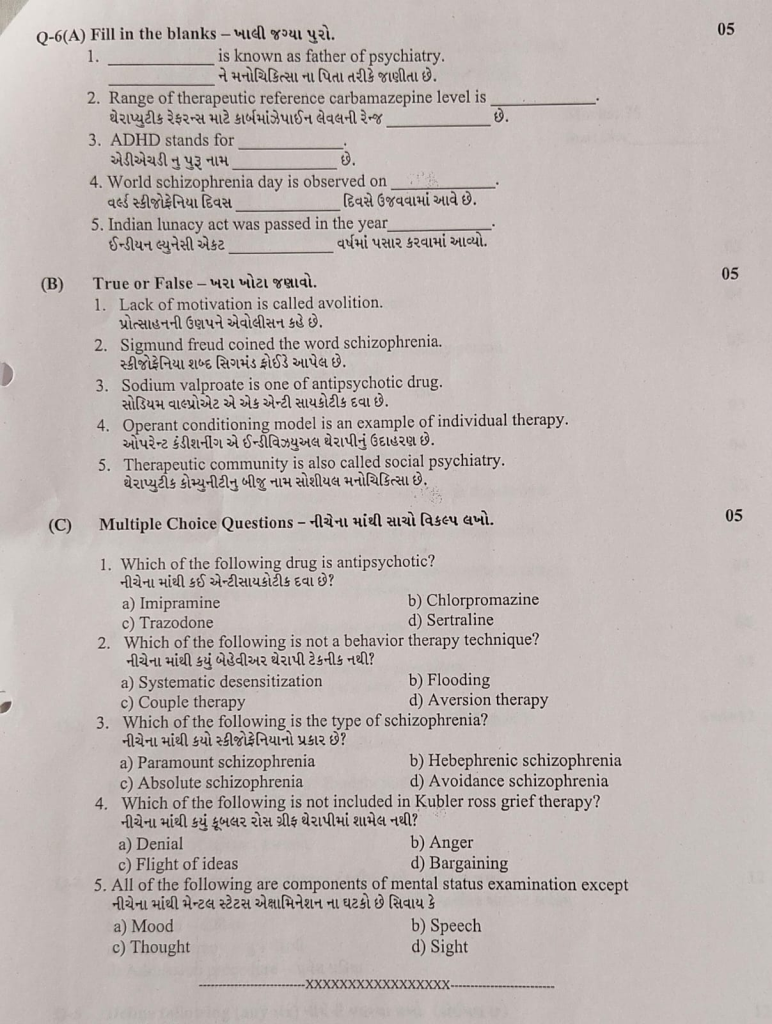
Q-6 (A) Fill in the blanks – Fill in the blanks. 05
1) ……is known as father of psychiatry. ……is known as father of psychiatry. Answer: Sigmund Freud
2.Range of therapeutic reference carbamazepine level is …… The range of therapeutic reference carbamazepine level is ……. Answer: 4 –12 mcg/ml
3.ADHD stands for …… The full name of ADHD is ……. Answer: Attention Deficit Hyperactivity Disorder
4.World schizophrenia day is observed on …… World schizophrenia day is observed on …… day. Answer: 24 May
5.Indian lunacy act was passed in the year …… Answer: 1912
B) True or False – Tell the truth. 05
1.Lack of motivation is called avolition. Lack of motivation is called avolition. ✅ True
2.Sigmund freud coined the word schizophrenia. ❌ False
Correct Answer : Schizophrenia was given by Eugen Bleuler.
3.Sodium valproate is one of antipsychotic drugs. Sodium valproate is an antipsychotic drug. ❌ False
Correct Answer : Sodium valproate is a mood stabilizer/anticonvulsant, not an antipsychotic.
4.Operant conditioning model is an example of individual therapy. Operant conditioning is an example of individual therapy. ❌ False
Correct Answer : Operant conditioning is a behavior therapy, not an individual therapy.
5.Therapeutic community is also called social psychiatry. The other name of therapeutic community is social psychiatry. ❌ False Correct Answer : Therapeutic community is a treatment method while social psychiatry is a branch of psychiatry, so the two are not the same.
(C) Multiple Choice Questions – Write the correct option from the following. 05
1.Which of the following drugs is antipsychotic? Which of the following is an antipsychotic drug? Correct Answer : b) Chlorpromazine
a) Imipramine
c) Trazodone
b) Chlorpromazine
d) Sertraline
2.Which of the following is not a behavior therapy technique? Which of the following is not a behavior therapy technique? Correct Answer: c) Couple therapy
a) Systematic desensitization
b) Flooding
c) Couple therapy
d) Aversion therapy
3.Which of the following is the type of schizophrenia? Which of the following is a type of schizophrenia? Correct Answer: b) Hebephrenic schizophrenia
a) Paramount schizophrenia
b) Hebephrenic schizophrenia
c) Absolute schizophrenia
d) Avoidance schizophrenia
4.Which of the following is not included in Kubler Ross grief therapy? Which of the following is not included in Kubler-Ross Grief Therapy? Correct Answer: c) Flight of ideas
a) Denial
b) Anger
c) Flight of ideas
d) Bargaining
5.All of the following are components of mental status examination except. Which of the following are components of a mental status examination except… Correct Answer: d) Sight
a) Mood
b) Speech
c) Thought
d) Sight