ENGLISH-MEDICAL SURGICAL NURSING (MSN) – II (13/09/2025) PAPER SOLUTION NO.15(UPLOAD)
Q-1
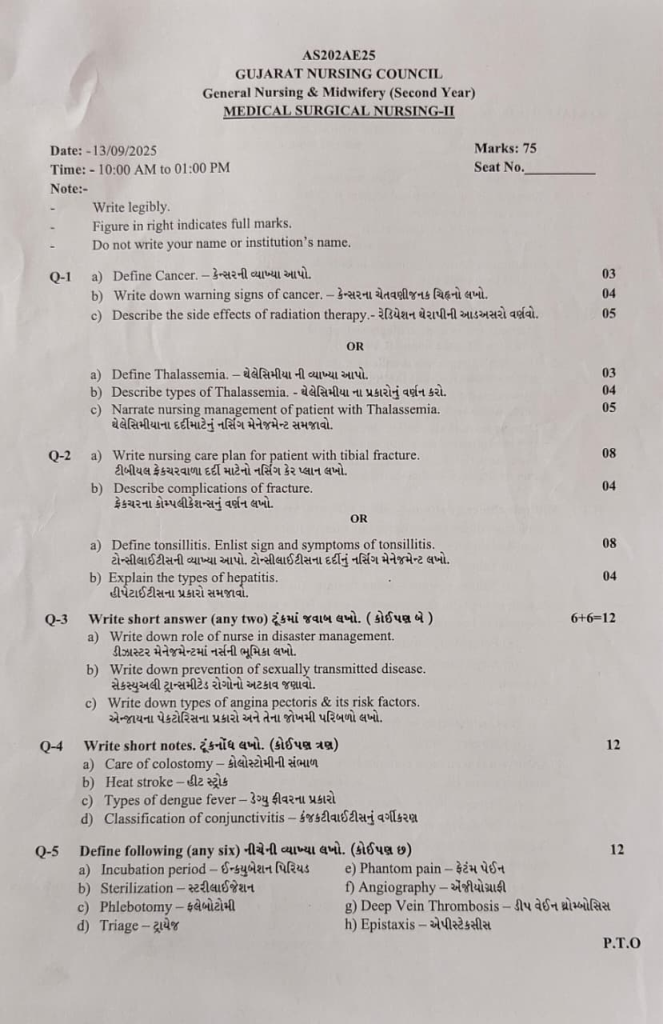
a) Define Cancer.Define Cancer.03
Cancer is a group of diseases in which there is uncontrolled growth of cells and it can also invade nearby tissues and can also spread throughout the body system. Cancer is a disease in which there is uncontrolled growth of cells and their multiplication can also go to nearby organs and can also spread throughout the body. Cancer cells spread in the body through the blood and lymphatic system. Cancer is not a single disease but a group of about 100 types of cancer. Cancer is named after the place, organ or part of the body where it is found.
For example:
if cancer starts from colon it’s called colon cancer
if cancer starts from basal cell of skin its called as a basal cell carcinoma.
b) Write down warning signs of cancer. – Write the warning signs of cancer.04
Warning sign of cancer:
CAUTION
1) C: change in bowel and bladder habit
2) A: A sore that does not cure.
3) U: Unusual bleeding and discharge.
4) T: Thickenin of lump in breast or any other parts. A thick lump is seen in the breast.
5) l: Indigestion and difficulty in swallowing.(Difficulty in digesting food or swallowing)
6) O: Obvious change in mole.(Any moles appear)
7) N: Naging cough and soreness.(Repeated cough)
1. Change in bowel and bladder habit.
Description : A normal person has a bowel habit of one to two times.
It changes to 3 to 5 times.
Bladder: A normal person passes urine five to six times a day. It increases to 10 to 20 times.
1) Urine and stool change in consistency, size and frequency. Blood is present in urine and stool.
2. A sore that does not cure.
Description :
1): In this, the sore keeps getting bigger.
2): It is very painful.
3): Blood comes out of it.
In this, wherever the sore falls or the ulcer occurs in the body, it never heals, instead of healing, it increases and increases excessively.
3.Unusual bleeding and discharge.(Abnormal bleeding or discharge)
Description :
1) : Blood comes from urine and stool.
2) : Blood comes from any part of the body such as 1) nipple, 2) penis.
Bleeding or discharge comes from any part of the body, this is a sign of a type of cancer.
4.Thickening of lump and mass in breast or any other parts of the body.(Thick lump is seen in any part of the body or breast).
Description : If there is a lump and mass, then it never heals.
In its place, it gets bigger and bigger.
And that lump and mass also causes more pain and becomes like a lump.
5. Indigestion and difficulty in swallowing (difficulty in digesting food or swallowing food).
Description : In this, whatever is eaten is not digested and it becomes difficult to swallow food. Regurgitation of food is a warning sign for a person who has cancer.
6.Obvious change in mole (any mole has changed).
Description : If there is any mass or lump, its size changes.
In the place where the lump or mass decreases, it becomes larger.
7.Necrosis, nagging cough and hoarseness (repeated cough).
Whenever coughing and nagging occurs, a hoarse sound is felt.
- Voice changes.
- Voice becomes thick.
- Blood comes out in the phlegm.
- All these signs are warning signs of cancer.
c) Describe the side effects of radiation therapy.- Describe the side effects of radiation therapy.05
1.General Side Effects
- Fatigue – Very tired Skin reactions – redness, dryness, itching, peeling Hair loss – hair loss in the treated area Loss of appetite – loss of appetite 2. Side Effects Depending on Area Treated Head and Neck: –>
- Dry mouth
- Difficulty in swallowing
- Taste changes
Chest :
- Difficulty breathing
- Cough
- Esophagitis
Abdomen:
- Nausea and vomiting
- Diarrhea (Diarrhea)
- Abdominal cramps
Pelvis:
- Urinary problems
- Infertility
- Sexual problems
3.Late Side Effects:
- Fibrosis (Fibrosis)
- Organ damage
- Secondary cancer
OR
a) Define Thalassemia. – Define Thalassemia.03
Thalassemia is a group of hereditary hemolytic anemias. It is an autosomal recessive genetic disorder in which there is a reduction in the synthesis of hemoglobin/inadequate amount of production. Thalassemia is a genetic blood disorder in which the body does not produce enough hemoglobin (the protein in red blood cells that carries oxygen into the body). In this, red blood cells are destroyed in large amounts, due to which the condition of anemia arises.
b) Describe types of Thalassemia. – Describe the types of thalassemia.04
There are two main types of thalassemia.
- 1) Alpha thalassemia,
- 2) Beta thalassemia,
1) Alpha thalassemia,: Alpha thalassemia is a disorder of the alpha chain of hemoglobin. It is seen due to missing or mutation in it.
2) Silent carrier: In this, one or both alpha globin genes are missing or mutated but no symptoms are seen in this.
3) Alpha thalassemia trait: In this, two alpha globin genes are missing or mutated. And due to this, the condition of mild anemia arises, and mild symptoms are seen such as fatigue or pale skin.
4) Hemoglobin H Disease: In this, three alpha globin chains are missing and mutated, causing a condition of moderate to severe anemia. It is characterized by more pronounced anemia, jaundice, enlarged spleen and other symptoms.
5) Alpha Thalassemia Major: In this, all four alpha globin genes are missing and severely mutated. Due to this, severe anemia and other health problems are seen.
2) Beta Thalassemia,
Beta thalassemia is seen due to the missing or mutation of the beta chain of hemoglobin.
1) Beta thalassemia trait: In this, one beta globin gene is missing and mutated and mostly symptoms are also seen. No.
2) Beta Thalassemia Intermedia: In this, both beta globin genes are affected to a moderate degree and the symptoms are very wide. Due to this, a condition of mild to severe anemia is seen. Sometimes transfusion is also required in it.
3) Beta Thalassemia Major (Coolis Anemia): In this, both beta globin genes are severely affected. Due to which the condition of severe anemia arises. In this, transfusion is required from childhood to life long.
Other Classification of the Thalassemia
- 1) Thalassemia Major,
- 2) Thalassemia Intermedia,
- 3) Thalassemia Minor
1. Thalassemia Major (Cooley Anemia):
Thalassemia major is the most severe form of thalassemia.
It occurs when a child inherits two mutated beta globin genes, one from each parent. This results in a significant reduction or absence of beta globin chains, which is a condition of severe anemia.
A person with thalassemia major requires lifelong blood transfusions from childhood to maintain hemoglobin levels and prevent complications.
Without treatment, thalassemia major can cause growth retardation, organ damage, and bone problems, and other health-related conditions.
2. Thalassemia intermedia:
Thalassemia intermedia is an intermediate form of thalassemia, which is less severe than thalassemia major but more severe than thalassemia minor. People with thalassemia intermedia have two mutated beta globin genes, but the degree of severity varies.
Symptoms can range from mild to moderate anemia, and some patients may also require blood transfusions to manage symptoms. Treatment needs vary depending on the severity of symptoms in patients with thalassemia intermedia. Patients with thalassemia intermedia may develop complications such as bone deformities, enlarged spleens, and gallstones, but these are usually less severe than those with thalassemia major.
3. Thalassemia minor (trait):
Thalassemia minor, also known as thalassemia trait, is the mildest form of thalassemia. It occurs when a child inherits a mutated beta globin gene from one parent and a normal beta globin gene from the other parent. Patients with thalassemia minor usually have no symptoms or only mild symptoms of anemia.
Carriers of thalassemia minor usually have slightly lower hemoglobin levels than normal, but they usually do not need treatment. However, carriers of thalassemia minor can pass the gene mutation to their children.
c) Narrate nursing management of patient with Thalassemia. Explain the nursing management of a patient with thalassemia.05
Nursing Management of Thalassemia:
- Provide complete education to the patient about the condition, its causes, its symptoms and signs, and its treatment.
- Continuously monitor the patient.
- Provide proper blood transfusion to the patient.
- Assess the patient for any reactions during blood transfusion.
- Perform regular health supervision of the patient.
- Properly maintain the hydration status of the patient.
- Properly maintain the patient’s blood and electrolyte levels.
- Properly provide antibiotic medication to the patient.
- Improve the patient’s dietary intake, especially providing iron and protein-containing foods to the child.
- If the patient’s condition of anemia is due to nutritional deficiency, then the patient should be provided with adequate nutritional supplements such as iron, vitamin B 12 and folate.
- Provide the patient with a properly iron-rich nutritious diet.
- Provide the patient with adequate supplementary diet according to the nutritional deficiency.
- If the patient’s condition of anemia is due to any infection Or if it is due to a chronic disease, treat that condition of the child immediately.
- If the patient has a condition of severe anemia, then do proper blood transfusion.
- Monitor the patient regularly.
- If the patient’s anemia condition is due to excessive blood loss, then stop it and start intravenous infusion immediately.
- If the patient has a condition of pain Provide analgesic medication.
- Provide complete education to the patient and his family members about the child’s condition, its causes, its symptoms and signs, and its treatment.
- Do all kinds of laboratory investigations on the patient.
- Do regular screening of the child to prevent the patient from the condition of anemia.
- Ensure the patient takes adequate rest Giving advice.
- Properly provide emotional support to the patient and his/her family members.
- Properly monitor the patient’s condition, including recording vital signs and intake output charts.
Q-2
a) Write nursing care plan for patient with tibial fracture. Write a nursing care plan for patient with tibial fracture. 08
Care plan
1)Nursing Diagnosis:
Acute Pain
(Acute pain related to tissue injury and muscle spasm secondary to fracture as evidenced by verbal report of pain, guarding behavior, facial grimacing.)
Goal / Expected Outcome :
Patient will report pain ≤3/10 within 30–60 minutes of intervention.
Patient will appear relaxed and comfortable.
Nursing Interventions :
- Assess pain intensity, location, and characteristics using pain scale every 2–4 hours.
- Immobilize affected limb with cast/splint/traction.
- Elevate limb above heart level (if not contraindicated).
- Apply cold compress during first 24–48 hours as prescribed.
- Administer prescribed analgesics (NSAIDs/opioids).
- Encourage relaxation techniques (deep breathing).
Rationale :
- Accurate assessment guides treatment.
- Immobilization reduces muscle spasm and prevents further injury.
- Elevation reduces edema and pain.
- Cold application decreases inflammation.
- Analgesics relieve pain perception.
Evaluation :
- Patient reports reduced pain.
- No signs of severe discomfort.
2) Nursing Diagnosis:
Impaired Physical Mobility
- (Impaired Physical Mobility related to musculoskeletal impairment and pain as evidenced by limited movement and inability to bear weight.)
Goal :
- Patient will maintain optimal mobility without complications.
- Patient will demonstrate correct use of assistive devices.
Nursing Interventions :
- Assess level of mobility and activity tolerance.
Maintain proper body alignment. - Encourage active ROM exercises of unaffected limbs.
- Assist with crutches/walker as advised.
Reposition every 2 hours. - Encourage deep breathing and leg exercises.
Rationale :
- Prevents joint stiffness and muscle atrophy.
- Reduces risk of DVT and pressure sores.
- Promotes circulation and lung expansion.
Evaluation :
- No contractures or pressure ulcers.
- Patient safely uses assistive devices.
3) Nursing Diagnosis:
Risk for Infection :
- (Risk for Infection related to open wound, surgical fixation, or invasive procedure.)
Goal :
- Patient will remain free from infection during hospitalization.
Nursing Interventions :
- Monitor wound site for redness, warmth, swelling, discharge.
Maintain sterile dressing technique. - Monitor temperature and WBC count.
- Administer antibiotics as prescribed.
- Teach patient to keep cast clean and dry.
Rationale :
- Early detection prevents osteomyelitis.
- Sterile care reduces contamination.
Evaluation :
- No fever or purulent discharge.
- Wound healing properly.
4) Nursing Diagnosis:
Risk for Impaired Skin Integrity
- (Risk for Impaired Skin Integrity related to immobilization and pressure from cast.)
Goal :
- Skin remains intact and healthy.
Nursing Interventions :
- Inspect skin around cast edges regularly.
Pad rough edges of cast. - Keep skin clean and dry.
- Provide back care and pressure area care.
- Avoid inserting objects inside cast.
Rationale :
- Prevents pressure sores and skin breakdown.
Evaluation :
- Skin intact without redness or ulceration.
5) Nursing Diagnosis:
Risk for Peripheral Neurovascular Dysfunction (Compartment Syndrome)
- (Risk for Peripheral Neurovascular Dysfunction related to edema and increased compartment pressure.)
Goal :
- Patient will maintain adequate circulation and nerves function.
Nursing Interventions :
- Assess the 6 P’s regularly:
Pain
Pallor
Pulse
Paresthesia
Paralysis
Poikilothermia - Check capillary refill (<3 seconds).
- Compare both limbs for color and temperature.
- Report severe unrelieved pain immediately.
Rationale :
- Early detection prevents permanent nerve and muscle damage.
Evaluation :
- Normal pulses and sensation maintained.
6) Nursing Diagnosis:
- Imbalanced Nutrition: Less Than Body Requirements
- (If appetite decreased)
Goal :
- Patient will maintain adequate nutritional intake for bone healing.
Nursing Interventions :
- Encourage high-protein, calcium, and vitamin D diet.
- Provide small frequent meals.
- Monitor weight weekly.
Rationale :
- Nutrition promotes bone regeneration and healing.
Evaluation :
- Patient maintains healthy weight and shows signs of healing.
Patient Education (Patient Education):
- Avoid weight bearing until prescribed.
- Proper crutch walking technique.
- Keep cast dry.
- Report numbness, swelling, foul odor, severe pain.
Attend follow-up visits regularly. - Overall Evaluation :
Pain controlled
No infection
Skin intact
Circulation maintained
Fracture healing without complications
b) Describe complications of fracture. Write a description of complications of fracture.04
Complications of Fracture:
- Fracture means a bone breakdown. Different complications can occur after a fracture. These complications are of two types:
1) Early Complications
2) Late Complications
1) Early Complications
1) Hemorrhage
- During Fracture The sharp end of the bone damages the blood vessels around it and causes bleeding.
2) Shock
- Hypovolemic Shock occurs.
3) Neurovascular Injury
- Nerves and Blood Vessels are damaged.
4) Compartment Syndrome
- The pressure in the Muscle Compartment increases and the Blood Supply decreases.
- “5 P’s”: Pain, Pallor, Pulselessness, Paresthesia, Paralysis.
- Medical Emergency.
5) Infection:
- Open Fracture can become infected.
- Osteomyelitis can occur.
6) Fat Embolism :
- Fat particles enter the blood stream and cause Fat Embolism Syndrome.
- Dyspnea, Petechial Rash.
2) Late Complications:
1) Delayed Union :
- Bone Healing is delayed.
2) Non-Union:
- Surgical Intervention is required.
3) Malunion:
- Deformity occurs.
4) Avascular Necrosis:
- Bone Tissue dies.
- Femoral Head is more common.
5) Joint Stiffness:
- Immobilization reduces range of motion.
6) Muscle Atrophy Atrophy):
- Disuse.
7) Deep Vein Thrombosis:
- Prolonged Bed Rest leads to Blood Clot.
- Pulmonary Embolism Can.
OR
a) Define tonsillitis. Enlist sign and symptoms of tonsillitis. Define tonsillitis. Write the nursing management of a patient with tonsillitis.08
- Tonsils are masses of lymphatic tissue located in the throat. Its function is to protect the body from microorganisms and toxic substances of the organism.
- When the tonsils become infected and inflamed, it is called tonsillitis. This is a painful condition, because the tonsils are exposed to foreign substances or toxins from microorganisms, which makes this condition more painful.
- When the tonsils become inflamed, they appear swollen, red, and tender.
A gray or white appearance is also seen in this area.
Swelling is also seen in the lymph nodes around the neck due to infection in the tonsils. - Tonsillitis is generally of two types: Found.
Acute tonsillitis..
- In this condition, symptoms of infection are seen in a very short period of time and the infection spreads quickly.
- It is mainly caused by bacteria and viruses.
Chronic tonsillitis..
- If episodes of acute tonsillitis occur repeatedly, this condition can convert into chronic tonsillitis if left untreated for a long time.
- Group A beta streptococcal microorganisms are responsible for the main cause of tonsillitis.
Sign And Symptoms:
- In this condition Pain is mainly seen when swallowing anything.
- Redness and swelling are seen in the mucous membrane of the local neck.
- Referred pain is also seen in it, such as pain going to the ear.
- Fever and chills.
- Headache.
- Muscle pain.
- Swelling of the lymph nodes in the neck.
- Halitosis, i.e. bad breathing.
- Snoring.
- Sleep patterns are disturbed.
- The person may experience general malaise, anorexia, malaise, and other signs and symptoms such as nausea, vomiting, abdominal pain, constipation, etc. in tonsillitis.
Management:
- Ibuprofen is typically prescribed as an analgesic to relieve pain for the management of this condition. It also reduces pain, inflammation, and swelling.
- Antibiotic therapy is given to treat this condition.
- The patient should be advised to drink more fluids and eat green leafy vegetables and fruits.
- Aspirin and acetaminophen can be given to the patient to relieve throat pain and inflammation.
- Advise the patient to take special rest in this condition.
- Ask to avoid any irritating substances.
- Advise to gargle with warm water mixed with salt.
- Some herbal and home remedies can also be prescribed to the patient to get relief from this condition, such as Galsemium .
- In cases of chronic tonsillitis, tonsils are removed by surgery. Special peri-operative care should be taken for these patients.
- After the operation, the patient should be advised to rest, asked to avoid physical activity as much as possible and forbidden to go out. Special precautions are taken for children.
- After the operation, a liquid diet should be given for some time to reduce the pain and then a semi-solid diet can be started gradually. Spicy food should be avoided and hard food should also be avoided.
- Even after the operation, the patient complains of pain for some time. Advise the patient to take pain relief medicine to relieve that complaint.
- Advise the patient to take an ice collar after the operation, in which putting ice in a bag and keeping that bag on the side of the neck gives the patient a lot of relief. And the bleeding tendency is also seen less.
- After the operation, the patient also complains of swelling. As soon as this bleeding is seen, he is placed in an upright position and an ice collar is applied to his neck. And immediate hospitalization is also advised.
b) Explain the types of hepatitis. Explain the types of hepatitis.04
Types of Hepatitis:
Hepatitis is an inflammation of the liver. It is most often caused by a virus, but can also be caused by alcohol, drugs, autoimmune reactions, or toxins. There are five main types of hepatitis:
1. Hepatitis A (Hepatitis A):
- Transmitted through the fecal-oral route.
- Caused by contaminated food or water.
- Usually acute and not chronic.
- Recovers without special treatment.
2. Hepatitis B (Hepatitis B):
- Blood, body fluids, and mother-to-child transmission (Mother-to-Child Transmission) can become a chronic disease.
- Can become a chronic disease is.
- Long-term complications such as liver cirrhosis and hepatocellular carcinoma are possible.
3. Hepatitis C:
- It is mainly spread through blood.
- Many patients remain asymptomatic.
- Can easily become chronic and cause long-term liver damage.
4. Hepatitis D (Hepatitis D):
- Only occurs in people who already have hepatitis B.
- Co-infection (Co-Infection) or Super-infection (Super-Infection) can occur.
- Can make the disease more serious.
5. Hepatitis E (Hepatitis E):
- It is spread through the same fecal-oral route as Hepatitis A.
- Pregnant Women – Pregnant Women are at higher risk.
Q-3
Write short answer (any two) Write a short answer. (Any two) 6+6 = 12
a) Write down role of nurse in disaster management.
- The word disaster is derived from the word disaster or disastro. The meaning of which people of old times used to compare it with destruction. These people believed that disasters were caused by the unfavorable position of the planet or the earth or by an unfavorable condition created by God.
- According to the WHO, a disaster is any extraordinary event that occurs in any area of society that causes damage or loss, economic disturbances, loss of human life, or damage to health and health services.
- This It is a condition in which there is a very large amount of morbidity and mortality, and there is a lot of damage to property, roads, electrical lines and all infrastructure.
- A disaster is an unpredictable, unknown and sudden dangerous condition.
- At this time, a person’s normal schedule is disrupted, and this is a major change in a person’s normal life.
Role of Nurses in Disaster Management.
- The role of nurses in disaster management is very important. In which it is especially necessary to take multidisciplinary management steps as nurses.
- Identifying the affected population during the time of disaster. It involves providing care and actively participating in disaster planning and management.
- Nurses play a key role in maintaining a holistic care approach during disasters. In which it works for the integration of everyone.
- Nurses provide care to each person from physiological, psychological and spiritual aspects and maintain collaboration between each team member.
- As a nurse, identify what type of event and what type of damage there is during a disaster. Then the main task is to identify the needs of the affected population.
- After arranging the needs in priority setting, setting objectives and goals helps in planning the resources and activities to fulfill the needs through a collaborative approach.
- During this time, it helps to be as helpful as possible by contacting government, non-government and many agencies.
- Disaster Management Nurses need to be physically and psychologically prepared to perform their duties. He/She should have the necessary training and professional preparation to do the job.
- During this situation, the nurse tries to be helpful by maintaining communication between each team member.
- Nurses also play a very important role in disaster management plans and disaster prevention strategies in the community.
- For this Necessary strategies and training programs should also be implemented. Mock drills can be used to make the community aware and informed about this.
- An evaluation plan is also prepared in a disaster. According to which, precautions can be taken in planning and implementation after assessment.
- Efforts are also made to normalize the disaster-affected population through rehabilitation programs.
- It is also important to keep in mind the basic needs of the affected people at every stage of disaster planning and fulfill these needs.
b) Write down prevention of sexually transmitted disease. Write down prevention of sexually transmitted disease.
Sexually Transmitted Diseases are diseases that are mainly spread through unprotected sexual contact. Such as: Syphilis, Gonorrhea, Chlamydia, Trichomoniasis, HIV/AIDS, Hepatitis B, etc. Proper preventive measures are necessary for the prevention of such diseases.
1. Use of Safe Sex:
- Regular use of condom: Condoms are the most effective protection for both males and females.
- Latex or polyurethane condoms should be used in every sexual contact.
2.Sexual relationship with one partner:
- Mutual Monogamous Relationship is the safest way to prevent STDs.
- Contact with multiple partners increases the risk of disease.
3.Regular Medical Check-up:
- People in the high risk group (such as sex workers, intravenous drug users) need to get checked up on time.
- Screening can catch early infections and prevent further spread.
4.Blood and injection safety:
- Always screen for blood transfusion Only blood that has been collected should be taken.
- Do not reuse the same needle. Use only sterile needles and syringes.
5. Vaccination:
- Hepatitis B and HPV. Getting vaccinated against (HPV – Human Papilloma Virus) can prevent certain STDs.
6.Personal Hygiene:
- Maintain proper cleanliness of private parts.
- Do not use other people’s personal items such as undergarments, towels, blades, etc.
7. Education and Counseling:
- Bringing awareness about STDs to the people through Sexual Health Education.
- Providing proper guidance to adolescents about Reproductive Health.
8. Precautions during pregnancy:
- Pregnant women should be screened for HIV, syphilis, etc.
- If there is an infection, timely treatment should be given so that transmission to the child can be prevented.
To prevent sexually transmitted diseases, proper use of condoms, monogamous relationships, vaccination, regular screening, and health education are very important. STD prevention is necessary not only for the individual but also for the health of the entire society.
c) Write down types of angina pectoris & its risk factors. Angina pectoris types and its risk factors.
Introduction:
Angina pectoris is also known as ‘ischemic chest pain’. Angina pectoris is the medical term used for ‘chest pain’ and ‘discomfort’ caused by coronary heart disease. Angina is not a disease but a symptom of coronary artery disease. Due to plaque deposits in the coronary arteries, it becomes narrowed, due to which not enough blood and oxygen reaches the heart muscles and due to which chest pain is seen.
Types of angina pectoris (Type of angina pectoris):
✓ Stable (Classic) Angina:In stable angina, when exertion, exercise or any stressful activity is done Pain is felt in the chest when it comes. This pain can be relieved by rest and medication.
✓ Unstable Angina: Unstable angina is the least common and most severe type. In which pain is felt in the chest during rest or minimal exertion. Hence it cannot be relieved by rest and medication. This is an impending sign of a heart attack.
✓ Varient Angina:Varient angina, also known as ‘Prinzmetal’ and ‘vasospastic angina’, is characterized by chest pain due to spasm of the coronary arteries. This pain is seen during periods of rest and this pain is seen during midnight as well as early morning hours.
✓ Refractory Angina: Refractory angina is a severe and persistent form of angina in which chest pain is seen even after medication, lifestyle changes, angioplasty and bypass surgery. Therefore, Enhanced External Counter Pulsation (EECP), Spinal Cord Stimulation, Heart Transplantation are done for treatment.
✓ Silent Angina: In silent ischemia, the patient does not feel pain, i.e. there are subjective data omissions. But it can be determined with the help of ECG, exercise stress test, Holter monitoring.
Q-4 Write short notes. Write short notes. (Any three) 12
a) Care of colostomy – Care of colostomy
Colostomy care
- Maintaining hygiene by regularly emptying the colostomy bag and cleaning the colostomy site is called colostomy care.
Purpose:
- To prevent leakage.
- To prevent excoriation of the skin and stoma.
- To make observations of the stoma and surrounding skin.
- To educate the patient and caregiver about the care of the colostomy and collection bag.
Articles:
A tray containing :
- Macintosh with draw sheet : To protect bed and bed linen.
- Clean disposable gloves : For universal precautions.
- Colostomy bag : To change if damaged or soiled.
- Kidney tray with paper bag : To discard waste.
- Normal saline : To clean the stoma.
- Basin with warm tap water: To rinse the pouch.
- Soap in dish: To gently wash the peristomal skin.
- Gauze piece/gauze pad: To dress the stoma.
- Tissue paper: To remove any excess stool from the stoma.
- Stoma measuring Guide, pen, pencil and scissors: To measure the size of the pouch.
- Skin barrier, zinc oxide ointment: To protect against excoriation if fecal matter comes into contact with the skin.
- Long sheet: To change the linen if it is soiled.
- Bed pan with lead: To receive the waste.
Procedure :
- Explaining the procedure to the patient: To gain his cooperation.
- Assembling the necessary equipment nearby: Organizations facilitate the performance of the task.
- Washing hands and wearing gloves: To prevent the spread of microorganisms.
- Providing privacy and Help the patient to provide a comfortable position (Fowler, semi-Fowler, standing position): Positioning allows the patient to see the procedure in preparation for learning.
- Empty the partially filled appliance into the bedpan if it is a drainable pouch: Removing the contents before removing the pouch prevents accidental spillage of feces.
- Slowly remove the appliance starting from the top, keeping the skin of the abdomen taut. If any resistant filling is present, use warm or adhesive solvent to facilitate removal: Careful removal protects the underlying skin from damage and minimizes discomfort for the patient.
- Use tissue paper to remove excess stool from the stoma. Cover the stoma with a gauze pad: Careful removal protects the underlying skin from damage and minimizes discomfort for the patient.
- Gently wash the peristomal skin and allow it to dry: While the skin is being prepared, a gauze piece is placed over the stoma. Absorbs any drainage from the stoma.
- Assess the peristomal skin and appearance of the stoma. A moist reddish-pink stoma is considered normal: changes in normal appearance indicate anemia, altered circulation and should be reported to the physician.
- If necessary, apply a paste type skin barrier (zinc oxide) and allow the paste to dry for 1-2 minutes. Enhances good cleansing.
- Applying the skin barrier and appliance together: Establishes a smooth surface for application of the skin barrier and pouch.
- Select the size of the stoma opening using the guide (measurement).
- Trace a circle of the same size on the back of the skin barrier in the center.
- 1/4 th or larger than the actual size of the stoma. Use scissors to cut the 1/18th inch larger size.
- Remove the backing to expose the sticky size.
- Easy-fit the barrier and pouch over the stoma and press down gently: Easy-use pouch prevents odor and feces from escaping.
Special Considerations:
- Flats can cause the pouch balloon to pop out. This requires immediate attention because if the flats are not released, the pouch can separate from the skin. Open the clamp and release the flats. (Never puncture the hole in the appliance).
- Measure the patient’s fluid intake and output. Check the stoma appliance for quantity and quality of discharge. Record intake and output every 4 hours for the first 3 days after surgery.
- The stoma site should always be dry. The presence of moisture increases the chance of Candida yeast infection.
- Flattiness increases as peristalsis returns. Advise the patient that this is an indicator of bowel functioning.
b) Heat stroke
Heat Stroke:
- Heat stroke is an emergency condition in which body temperature rises due to prolonged exposure to the sun or excessive environmental changes. Elevated.
- In some conditions, the body’s heat loss mechanisms are lost and the hypothalamus does not function properly. Heat stroke requires immediate medical attention. If not treated properly, it can increase the mortality rate.
Risk Factors:
- Due to prolonged exposure to the sun.
- Age wise: Very young/old client.
- Clients who have cardiovascular disorders.
- Hypothyroidism, diabetes, hypothyroidism, alcoholic,
- Occupation of farmer, athlete, construction worker,
- Medications such as, Phenothiazines, diuretics,
- Amphetamines, anticholinergics.
Clinical Manifestation:
- Giddiness,
Confusion,
Delirium,
Semiconcious – Concious, - Gastrointestinal track: Excessive thirst, nausea, visual disturbances, non-reactive pupils, muscle cramps
- Skin: Hot, dry, no sweating, temperature 45°C, increased heart rate, increased blood pressure.
- If cooling measures are not taken, permanent neurological damage may occur.
Nursing Actions Action):
- Provide a total environment.
Check the patient’s level of consciousness. - Monitor the patient’s vital signs.
- Provide intravenous fluids to the patient.
- Monitor the patient’s intake-output record.
- As When the client regains consciousness, collect the client’s medical history, addictions, and previous medication intake, if any.
- Monitor the patient’s intake – output.
- Provide cold sponging to the patient.
- Monitor the patient’s temperature.
- Document the assessment, actions taken, and the client’s reactions.
c) Types of dengue fever – Types of dengue fever
Types of Dengue Fever:
- Dengue fever is a viral infectious disease caused by the Dengue virus. This virus belongs to the Flaviviridae family and is mainly spread by the Aedes aegypti mosquito.
- Medically, the types of dengue are classified based on clinical presentation and severity.
The World Health Organization (WHO) mainly classifies dengue as follows:
1) Dengue Fever (DF):
- Dengue Fever is the common and primary form of the disease.
Main Symptoms:
- Sudden High Grade Fever
- Severe Headache
- Pain behind the eyes (Retro-orbital Pain)
- Joint and muscle pain (Severe Myalgia and Arthralgia)
- Nausea, vomiting
- Skin rash (Maculopapular Rash)
Pathophysiology:
- Viremia causes an immune response in the body, which causes symptoms such as fever and pain.
- This type is usually not fatal and recovers within 5–7 days with proper treatment.
2) Dengue Hemorrhagic Fever (DHF):
- Dengue Hemorrhagic Dengue Hemorrhagic Fever is a more severe form.
Main Symptoms:
- Continuous High Grade Fever
- Bleeding Tendency
- Nose Bleeding (Epistaxis)
- Toothache Blood from the molars
- Bleeding in the abdomen or under the skin (Petechiae)
- Low platelet count (Thrombocytopenia)
- Plasma Leakage
Pathophysiology:
- Capillary permeability increases, which causes plasma leakage and bleeding.
- Immediate hospitalization is necessary in this condition.
3) Dengue Shock Syndrome (DSS):
- Dengue Shock Syndrome is the most severe and life-threatening form of dengue. It is a threatening form.
Main symptoms:
- Severe plasma leakage
- Low blood pressure (Hypotension – Hypotension)
- Weak and rapid pulse
- Reduced blood supply to organs (Organ Hypoperfusion – Organ Hypoperfusion)
- Multi Organ Failure (Multi Organ Failure)
Pathophysiology:
- Plasma leakage causes a decrease in intravascular volume, resulting in hypovolemic shock.
- This condition requires ICU care. Treatment is required.
Modern Classification according to WHO 2009:
The World Health Organization classified dengue in 2009 as follows:
1) Dengue without Warning Signs:
- With common symptoms Dengue.
2) Dengue with Warning Signs:
The following warning symptoms are present:
- Persistent abdominal pain
- Persistent vomiting
- Fluid accumulation Accumulation)
- Liver Enlargement (Hepatomegaly)
- Increase in hematocrit and decrease in platelets
3) Severe Dengue:
- Severe Plasma Leakage
- Severe Bleeding
- Severe Organ Involvement
Dengue fever mainly occurs in three classical forms:
- Dengue Fever (DF)
Dengue Hemorrhagic Fever (DHF)
Dengue Shock Syndrome (DSS)
And according to WHO in a modern way it is: - 1) Dengue without warning signs
2) Dengue with warning signs
3) Severe dengue is classified.
It is possible to reduce the mortality rate through early diagnosis and proper fluid management.
d) Classification of conjunctivitis – Classification of conjunctivitis
Classification of Conjunctivitis:
Conjunctivitis is an inflammation of the thin transparent membrane of the eye called the conjunctiva.
It is mainly classified according to etiology, duration and clinical presentation.
1. Etiological Classification according to Etiology:
(A) Infectious Conjunctivitis
1. Bacterial Conjunctivitis
Usually caused by bacteria like Staphylococcus, Streptococcus, Haemophilus.
Main symptoms:
- Purulent discharge
- Stickiness of the eyelids
- Redness and Swelling
- Stuck eyes in the morning
2. Viral Conjunctivitis
Mainly caused by Adenovirus.
Main symptoms:
- Watery discharge
- Redness in the eye
- Sensitivity to light
- Preauricular lymphadenopathy
- Spread to both eyes
3. Chlamydial Conjunctivitis
Caused by Chlamydia trachomatis.
Main symptoms:
- Chronic redness
- Mucopurulent discharge
- Follicular reaction
- Follicle inside the eyelash
(B) Non-infective conjunctivitis
1. Allergic Conjunctivitis
Caused by contact with an allergen.
Main symptoms:
- Severe itching
- Watering
- Both eyes affected
- Papillary hypertrophy
2. Chemical Conjunctivitis
Caused by contact with acid or alkali.
Symptoms:
- Burning in the eyes
- Pain
- Watering
- Redness
⚠️ Emergency Management Required
3. Mechanical Conjunctivitis
Caused by dust particles, foreign bodies or contact lenses.
2) Classification According to Duration:
1. Acute Conjunctivitis
- Onset suddenly
- Lasts up to 3 weeks
2. Subacute Conjunctivitis
- Lasts 3 to 4 weeks
3. Chronic Conjunctivitis
- Lasts more than 4 weeks
- Allergy or chronic infection
3) Clinical Types Classification
1. Catarrhal Conjunctivitis
- Generalized redness
- Mucous discharge
2. Purulent Conjunctivitis
- Heavy purulent discharge
- Common in bacterial infections
3. Membranous Conjunctivitis
- Membrane forms on the conjunctiva
- Seen in severe infections
4. Follicular Conjunctivitis
- Lymphoid follicles are seen
5. Papillary Conjunctivitis
- Development of papillae
- Common in allergic conditions
Conjunctivitis is mainly classified according to Etiology, Duration and Clinical presentation.
Q-5 Define following (any six) Write the following definition. (Any six) 12
a) Incubation period – Incubation period
- The period between coming into contact with an infectious agent (bacteria, virus) and the first signs and symptoms are seen is known as the incubation period. For example:-
- Influenza : 1-4 days
- COVID 19 : 2-14 days
- Chickenpox : 10-21 days
b) Sterilization – Sterilization
- Sterilization is a scientific process in which all types of microorganisms present on any object, instrument or surface, including bacteria, viruses, fungi and spores, are completely destroyed so that it becomes completely sterile. This process is mainly done to make surgical instruments, dressing materials and hospital equipment free from contamination and methods like autoclaving, dry heat, chemical sterilization and radiation are used to prevent the spread of infection among patients and health care workers and ensure safe treatment.
c) Phlebotomy – Phlebotomy
Phlebotomy is a medical procedure in which an opening is made in a vein. In which a needle is inserted into a vein and blood is removed. This procedure is mainly performed for diagnostic purposes, therapeutic purposes, blood donation, or blood collection. It is also called a venipuncture. This procedure involves removing blood using a needle. This procedure is used to diagnose and treat many medical conditions. It is done.
There are two types: vein puncture and capillary puncture
- In this, blood is removed using a needle.
- This procedure is used to diagnose and treat many medical conditions.
- There are two types: vein puncture and capillary puncture
d) Triage – Triage
Define triage
- Triage is derived from the French word ‘trier’ which means ‘to short out’ or ‘to sift out’.
- Triage is a process used in emergency and medical settings in which patients are given priority based on the severity of their condition.
- Triage involves identifying patients who need early treatment Patients who are in critical condition are separated using color codes and provided with early treatment.
Write types of triage
1) Simple triage:
Simple triage is used when there is a mass casualty incident, the patient needs to be quickly assessed and categorized based on their needs, and resources are limited. Simple triage uses methods such as START (Simple Triage and Rapid Treatment) method and color code system (red, yellow, green and black).
2) Advanced Triage:
Advanced triage is mainly used in hospitalised settings where more resources are available and examination is done in more detail. Advanced triage mainly uses the Emergency Severity Index (ESI) method. In which patients are categorized from level 1 (most urgent) to level 5 (least urgent).
Write about color code of triage
- Red color :
Red means emergency. Red color indicates ‘immediate’. That is, red color is given to victims with life-threatening conditions. That is, such people need immediate intervention. For example, severe respiratory depression, brain hemorrhage
- Yellow color:
Yellow means urgent. Such people have serious conditions but are not life-threatening, meaning immediate intervention is not required.
- Green color :
Green means delayed. Green color is given for minor injuries such as wounds.
- Black color :
Black means deceased or expectant. People who are dead or who are seriously injured and cannot survive are given black color.
Write advantages of triage
- Patients are given priority based on their severity and urgency so that they can be treated early.
- It is useful in making difficult decisions easier.
- It is useful in making difficult decisions easier.
- Rapid initial assessment is provided.
- Ensures that resources are used effectively and their waste is prevented.
- Minimizes waiting time for critical services.
e) Phantom pain – Phantom pain
- Phantom pain is a neurological condition in which a person experiences pain in the location of an amputated organ (such as an arm or leg), even though that organ is not actually present in the body. This pain occurs in the location of the amputated organ and the person feels as if the limb is still there – called a phantom limb. This pain can usually be felt in the form of sharp, shooting, burning, cramping, or throbbing. The main cause of phantom limb pain is false impulses from the nervous system and brain, which give information about the presence and pain of organs that are not actually there. This pain appears especially after amputation and can last from short-term to long-term pain. Options such as Medical Intervention, Physical Therapy, Mirror Therapy, Medication etc. are available for the diagnosis and treatment of this pain.
OR
- Phantom pain is a type of pain or discomfort that occurs especially after the amputation of an extremity. After the extremity is removed, the person perceives the sensation of pain in that place. This type of pain is seen for a few days after the amputation. The mechanism of this type of pain is not yet clearly understood, whether this type of sensation is only perceived by the person or according to some theories, this type of pain is actually felt by the person through the sensation of the brain and spinal cord after the amputation of an extremity or limb.
f) Angiography – Angiography
- Angiography is an invasive diagnostic imaging procedure, in which blood Radiopaque contrast media is administered by intravascular injection to evaluate the anatomical structure and pathology of blood vessels, followed by X-ray based imaging modalities such as fluoroscopy to diagnose luminal patency, stenosis, occlusion, aneurysm, and other vascular abnormalities of blood vessels.
g) Deep Vein Thrombosis – Deep Vein Thrombosis
- Deep Vein Thrombosis is a pathological condition in which an intravascular blood clot or thrombus forms in the deep veins, especially in the veins of the lower limb, resulting in obstruction of venous return and clinical symptoms such as local swelling, pain and erythema, and the breakdown of this thrombus into the pulmonary circulation as an embolus. (Pulmonary circulation) can lead to life-threatening conditions like pulmonary embolism.
h) Epistaxis – Epistaxis
- Epistaxis means nose bleed or nasal hemorrhage. Bleeding from the nostril or nasal cavity is seen due to rupture of vessels in any area of the mucous membrane in the nose, which is called Epistaxis (epistaxis).
- Epistaxis is also called nose bleed. This is a condition in which active bleeding occurs from the nostrils, nasal cavity, or nasopharynx. This occurs when the blood vessels inside the nose are damaged or injured. Bleeding from the front or back of the nose is called nosebleed or epistaxis.
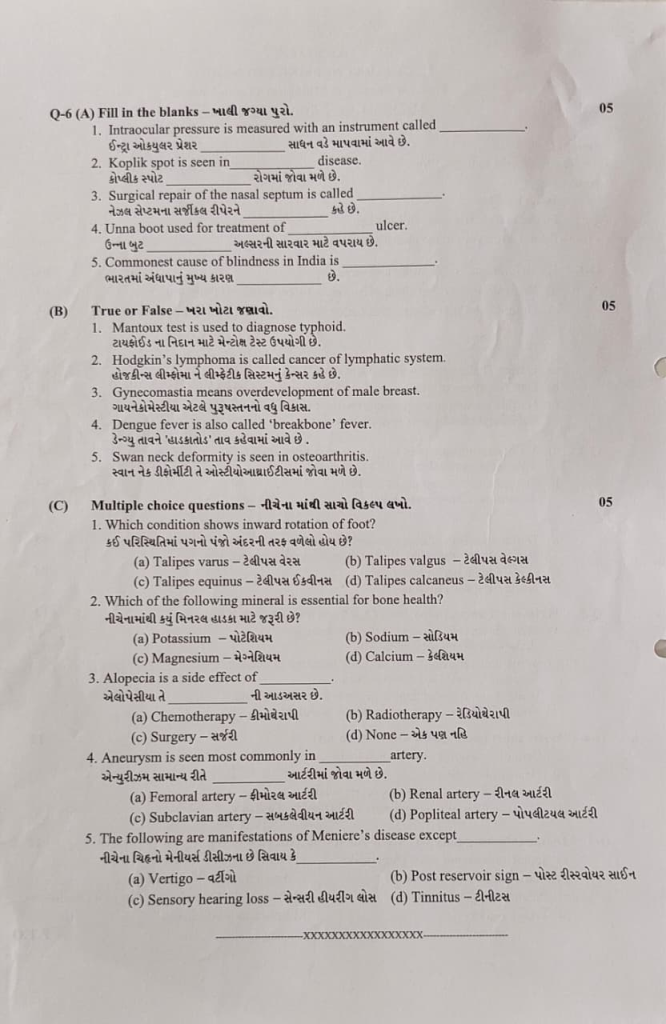
Q-6 (A) Fill in the blanks – Fill in the blanks.05
1.Intraocular pressure is measured with an instrument called …… Intraocular pressure is measured with an instrument called …… Tonometer
2.Koplik spot is seen in …… disease. Koplik’s spot is seen in …… disease. Measles
3.Surgical repair of the nasal septum is called …….. Unna boot is used to treat …… ulcers.Stasis ulcer / Varicose ulcer
5.Commonest cause of blindness in India is …… The main cause of blindness in India is ……. Cataract
(B) True or False – Tell the truth.05
1.Mantoux test is used to diagnose typhoid. Mantoux test is used to diagnose typhoid.False Answer : Mantoux test is used for TB है.
2.Hodgkin’s lymphoma is called cancer of lymphatic system. Hodgkin’s lymphoma is a cancer of the lymphatic system.True
3.Gynecomastia means overdevelopment of male breast. Gynecomastia means overdevelopment of male breast.True
4.Dengue fever is also called ‘breakbone’ fever. Dengue fever is also called ‘breakbone’ fever. True
5. Swan neck deformity is seen in osteoarthritis. Swan neck deformity is seen in osteoarthritis. False Answer: It is seen in rheumatoid arthritis.
(C) Multiple choice questions – Choose the correct option from the following. 05
1.Which condition shows inward rotation of foot? In which condition is the foot turned inward? Correct: (a) Talipes varus In talipes varus, foot turns inward (medially).
(a) Talipes varus –
(b) Talipes valgus –
(c) Talipes equinus –
(d) Talipes calcancus
2.Which of the following mineral is essential for bone health? Which of the following mineral is essential for bone health? Correct: (d) Calcium Calcium is most important for bone and teeth strength.
(a) Potassium – potassium
(c) Magnesium – Magnesium
(b) Sodium
(d) Calcium
3.Alopecia is a side effect of…… . Correct: (a) ChemotherapyExplanation: Alopecia is most commonly a side effect of chemotherapy because anticancer drugs destroy rapidly dividing cells including hair follicles. Radiotherapy may cause hair loss only at the site where radiation is given, not general alopecia of whole scalp/body.
(a) Chemotherapy – chemotherapy
(b) Radiotherapy – Radiotherapy
(c) Surgery
(d) None
4. Aneurysm is seen most commonly in …… artery. Aneurysms are usually found in the …… artery. Correct: (d) Popliteal artery
(a) Femoral artery
(b) Renal artery
(c) Subclavian artery
(d) Popliteal artery
5.The following are manifestations of Meniere’s disease except ……
The following are manifestations of Meniere’s disease except …… Correct: (b) Post reservoir sign – Post reservoir sign Meniere’s disease features: Vertigo, tinnitus, sensorineural hearing loss. Post reservoir sign is not related.
(a) Vertigo
(b) Post reservoir sign
(c) Sensory hearing loss
(d) Tinnitus