ENGLISH-COMMUNITY HEALTH NURSING-UNIT-1-PART-2-UPLOAD
COMMUNITY HEALTH NURSING-UNIT-1 PART : 2 (કોમ્યુનીટી હેલ્થ નર્સિંગ યુનિટ -1)
(Part-2)
💚c) History & development of Community Health in India & its present concept. 💚d) Primary health care, Millennium Development Goals 💚e) Promotion and maintenance of Health
💚 History & Development of Community Health in India & its present concept. (History of Community Health Nursing in India and its current concept)
Ancient history of community health in India)(3000 B.C.):
The history of community health in India begins in 3000 B.C., where ancient literature, evidence, and cultural practices mark traditional and organized methods of health education. Ayurveda, yoga and hygiene rules were an integral part of the lifestyle during this period.
3000 B.C. Community health practices of 3000 B.C.:
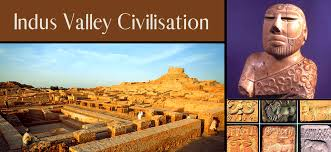
1. Harappa and Mohenjo Dado Civilization (Indus Valley Civilization):
Cleaning and sanitation:
Comprehensive health care- The presence of drainage systems, water and taps in homes indicates the primacy of cleanliness in the culture.
The rise of community health through toilet policies.
Water supply:
A system for providing clean water from a well.
Representing the first organized efforts of community health.
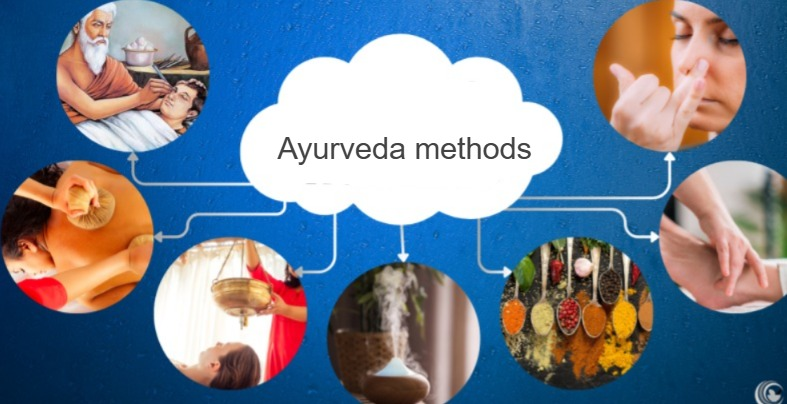
2. Ayurveda methods:
Ayurveda, which originated around 3000 B.C., was the primary defense system of health.
Charaka Samhita and Sushruta Samhita:
These texts describe the measures to prevent disease outbreaks and the importance of Dharmashastra for health.
Health was maintained through the “Tridosh Siddhanta” (Vata, Pitta, Kapha) of Ayurveda.
3. Yoga and Pranayama:
Yoga is a personal and Adopted at the community level.
Education of social health through pranayama and meditation.
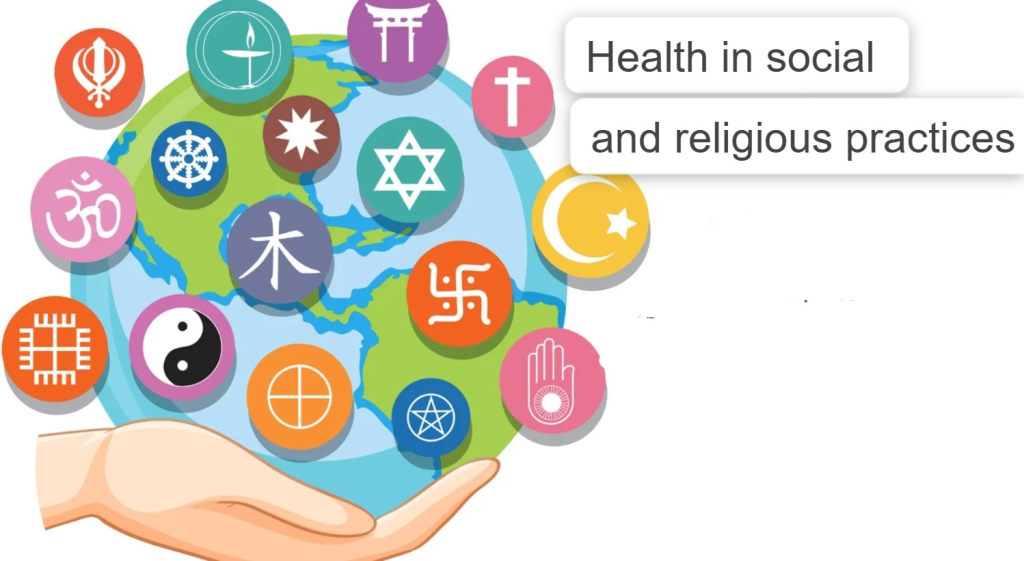
Health in social and religious practices:
1.Vedic period:
Rigveda and Atharvaveda:
Health depends on cleanliness and natural healing methods.
Keeping the environment clean through Yajna and Havan to prevent epidemics.
2. Religious festivals:
Temples and religious places function as centers of cleanliness.
Construction of wells and ponds for drinking water.
Everyone’s responsibility for health in Aryan culture:
Everyone’s responsibility for health in Aryan culture:
Everyone should Prakashana (Non-violence and Cleanliness) took responsibility for society.
Lifestyle rules like “Dincharya” and “Ritucharya” helped keep people healthy.
The post-Vedic period (500 B.C. to 300 A.D.) witnessed significant changes in community health. This period saw the emergence of organized efforts for health, traditional Ayurveda, and religious and social practices. This period is often referred to as the Buddhist and Mauryan eras, where special attention was paid to health and social services.
1. Mauryan Empire and Health(Mauryan Empire and Health):
Chanakya and Chanakya and Economics:
Chanakya’s Arthashastra emphasizes “Cleanliness and Care” for health.
Drainage systems in cities and toilets in towns were developed.
Ashok Maharaj and Health:
Establishment of hospitals and health centers for health under the rule of Ashoka Maharaj.
Efforts to build roads and wells.
Providing medicine and healthcare to the people.
2. Buddhism and Health:
Value enhancement of kindness and compassion :
The importance of compassion in Buddhism and the emphasis on services to the sick and poor.
“Viharas” (monasteries) served as shelters for the sick.
Cleaning and environment:
Personal and collective cleanliness was promoted in conjunction with religion.
Inspire the public to stay clean and healthy.
3. Revival of Ayurveda:
Dhanvantari and treatment science:
Improvements in Ayurvedic treatment and surgical methods of health.
Use of the “Seven Elements” (Sapta Dhatu) theory for the diagnosis of diseases.
New texts:
Extensive remedies from Ashtanga Hridayam and Charaka-Sushruta texts by Vaghbhatta.
Including yoga and spiritual remedies for mental health.
4. Social Health and Traffic Management:
HOSPITALS and health centers (HOSPITALS and health centers):
Establishment of free health centers for citizens.
Well and water system:
Wells and ponds were built by the kings to provide clean drinking water to the people.
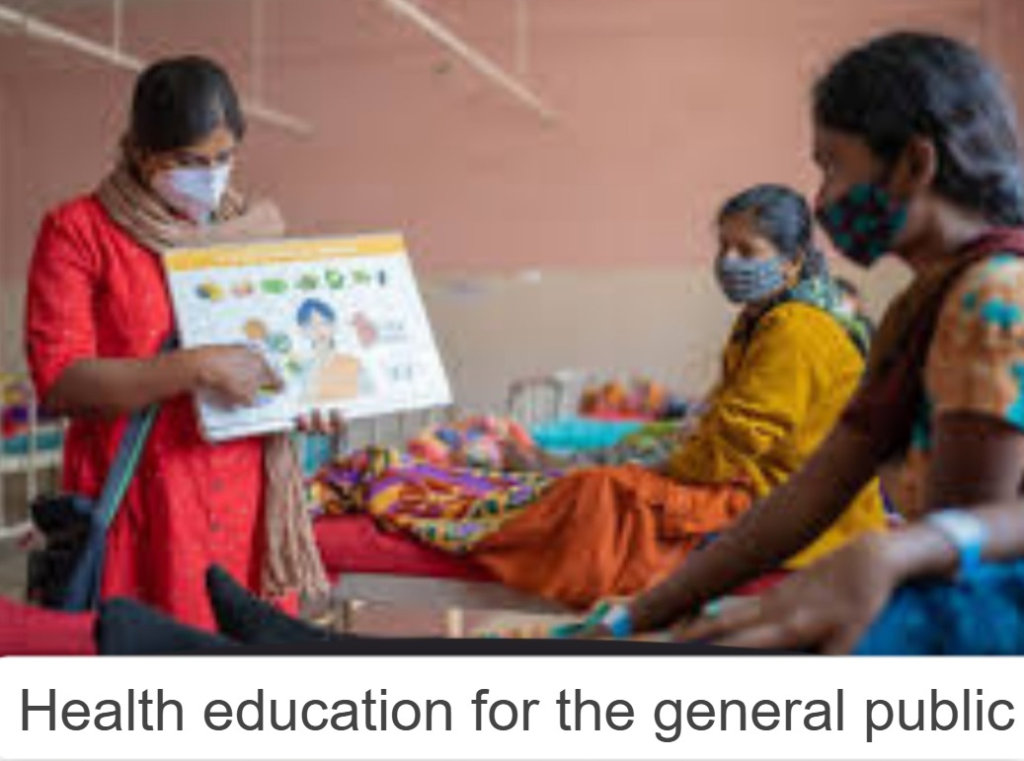
5. Health education for the general public :
Health and prevention of epidemics Education-based activities.
Inspiration of cleanliness and regular hygiene.
Organized efforts for the post-Vedic period progressed especially under the Buddhist and Mauryan regimes. This period laid the foundation for the expansion of health services and the primacy of community health, which is considered a strong pillar in the history of health in India.
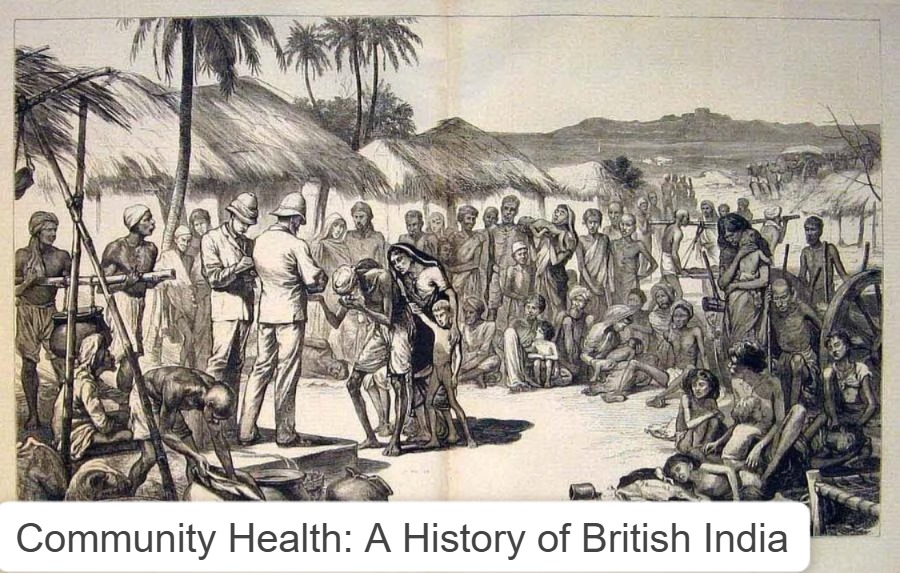
Community Health: A History of British India
British India (1600–1947) witnessed major changes in community health. From the establishment of health services to the control of epidemics and the study of health sciences, the British rule had a significant impact on the interplay of social and health perspectives.
1. The early years (1600–1757):
The early years (1600–1757):
British East India Company (EIC):
The establishment of the East India Company in 1600 led to the first global contact in trade and health.
Development of health services systems at trading posts (Surat, Bombay, Kolkata, Madras).
Primary measures for epidemic control (Primary measures for epidemic control) :
Develop basic sanitation facilities to prevent the spread of diseases like plague, cholera, and malaria.
2. Beginning of British rule (1757–1857):
Control in Bengal:
The need for healthcare increased with the onset of British rule in Bengal.
The British rulers developed a health system in major cities.
Control of the first epidemic:
Only for the civil service: Health facilities were limited to British officials and merchants.
The spread of the epidemic did not require much attention to the care of the citizens.
3. Establishment of health system (1858–1947):
After 1858: The health system became more formalized due to the introduction of direct rule by the British Crown.
Important Steps:
1869: First Municipal Act, which introduced responsibility for sanitation and health facilities in cities.
1896: Special health activities for malaria and cholera control.
1920: Health centers (Primary Health Centers) and policy for disease outbreak control were formulated.
4. Control and Health Activities:
A major epidemic:
Health programs for cholera, plague, tuberculosis and malaria.
Vaccination and vaccination activities to prevent epidemics.
Vaccine:
Vaccine for smallpox introduced in 1802 during British rule.
Cleaning and water supply:
Municipal malaria control program and construction of canals and ponds for drinking water began.
5. Policies for Community Health:
Famine Code: A policy was formulated to provide health services during famine.
Municipal Health Services: Establishment of municipal health system to develop health facilities in urban areas.
Neglect in villages: More efforts for health in cities, while neglect in rural areas.
6.Social and educational methods for health :
Influence of missionaries:
Hospitals and health camps were started by Christian missionaries.
Educational activities for awareness about health and hygiene.
Health Camps:
Health camps were organized in urban and tribal areas.
7. Impact of British rule on health:
Exploitation of wealth:
Indian health system was used for British economic interests.
Medical infrastructure:
class=”wp-block-list”>
Developing health facilities for railways and ports.
Social anomaly:
Geographical and social differences in health services.
The development of community health during the British rule was formalized In which health systems, disease outbreak control and medical education were the main influences. However, these services remained limited to cities and rural areas were neglected, laying the foundation for India’s future valuable efforts in health.
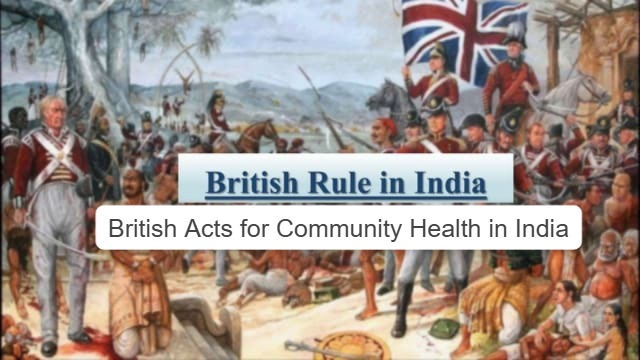
British Acts for Community Health in India
During British rule, most of the laws and policies in the health sector in India were designed to develop health systems, epidemic control, and sanitation facilities in urban areas. The main objective of these laws was to strengthen community health, but they were mainly focused on British economic and administrative interests.
1. Municipal Act of 1869:
Main target:
To ensure health and sanitation facilities in urban areas.
To establish municipal bodies to develop drainage systems, garbage bins and water supply facilities in urban areas.
Effect:
This act made municipal bodies responsible for health in cities.
Sanitation rules were implemented in urban areas.
2. Vaccination Act:
1802: Smallpox Vaccine was emphasized.
1892: Vaccination was made compulsory.
Main target:
Vaccination was used to prevent diseases like cholera, plague and smallpox. Planning.
Effect:
Increase in vaccination, but fear and resistance were seen among the people.
Special powers to the government to control disease outbreaks.
Immediate measures to prevent disease outbreaks like malaria, plague and cholera Measures.
Main contribution:
Quarantine people at home and take special measures to eliminate the spread of the disease.
Effect:
This act is still used today in urgent situations like Covid-19 is.
4. Factories Act (Factories Act, 1881 and 1934):
Main Target:
Health and safety conditions for workers in factories.
Putty water, toilets and rest facilities for workers.
Effect:
To improve healthcare in the factory area Fixed direction found.
5. Policy measures for epidemic control:
Cholera Rules:
In 1866, restrictive measures were imposed by various municipalities to prevent cholera epidemics.
Malaria and Plague:
In 1904, a health survey was started to control malaria.
Medical camps and isolation policies were implemented to contain the plague.
6. Medical Corporation Acts:
Main Target:
Establishing medical and healthcare facilities for the British rulers.
Appointment of medical personnel for the cities.
Effect:
These measures remained limited to urban areas.
7. Famine Code (1883):
Main Target:
Providing health facilities in times of famine.
Famine relief camps and food provision along with health facilities.
Effect:
Helpful in stopping the epidemic, but not enough care in rural areas.
8. Labour Health Acts:
Main Target:
Health and safety policies for workers in mines, factories and ports.
Implementation of these laws by labour departments.
Made under British rule Community health laws and policies attempted to strengthen the health system, but they were mainly limited to urban areas and in the interests of British officials. The benefits of these laws were not available to rural areas, which led to health inequalities in these areas.
1947: Health Ministries established in the states and the centre
1948: India joined WHO and ESI Act passed.
1949: Constitution of India adopted.
1950: Planning Commission set up.
1951: First Five Year Plan started. BCG vaccination programme started.
1952: Primary Health Centres set up.
1953: Nationwide Family Programme started.
1954: Contributory Health Services Scheme started at Delhi. Central Social Welfare Board set up. National Water Supply and Sanitation PDS inaugurated.
1955: Training Centre set up by Central Leprosy Teaching and Research Institute. Hindu Marriage Act passed.
1956: Second Five Year Plan started and Central Health Education Bureau established. Director f.p. established TB Chemotherapy Centre.
1957: Influenza epidemic became pandemic in the country. Demographic Research Centre established.
1958: National TB Survey completed, recommendations for Panchayat Raj.
1959: Mudaliar Committee appointed, Panchayat Raj started for the first time in Rajasthan, National TB Institute established.
1960: Pilot projects for smallpox eradication were started.
1961: Third Five Year Plan started, National Smallpox Eradication Programme launched.
1962: National Goiter Control Plan launched.
1963: Nutrition program started. Drinking Water Board established.
1966: Health Minister also appointed as Family Planning Minister. Separate department started for F.p. A Small Family Noms established.
1969: Fourth Five Year Plan started. All India Program started. Birth and Death Registration Act came into force. Termination Pregnancy Bill passed.
1974: Fifth Five Year Plan started. India became smallpox free. India Factory Act amended, three tier plan for medical care.
1980: Sixth Five Year Plan started.
1985: Seventh Five Year Plan started.
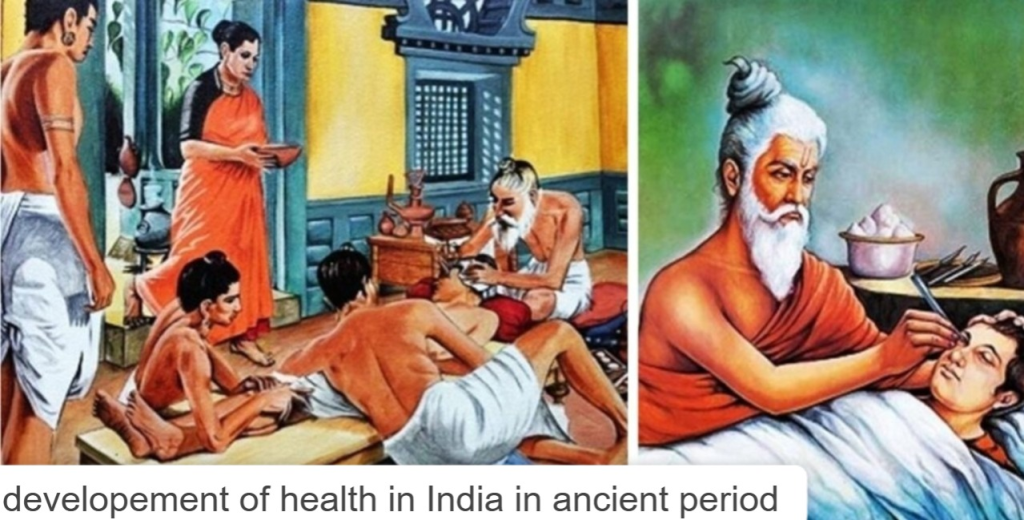
discuss the developement of health in India in ancient period
In ancient times… Clean environment, planned cities, air, fire, water, space, earth, were considered very important in Vedic culture. The importance of community health during that period is further justified by the presence of medical scientists such as Charaka and Sushruta in the “Nirogikaya”. The universities of Nalanda and Takshashila had facilities for teaching medicine and the Unani medical system was recognized.
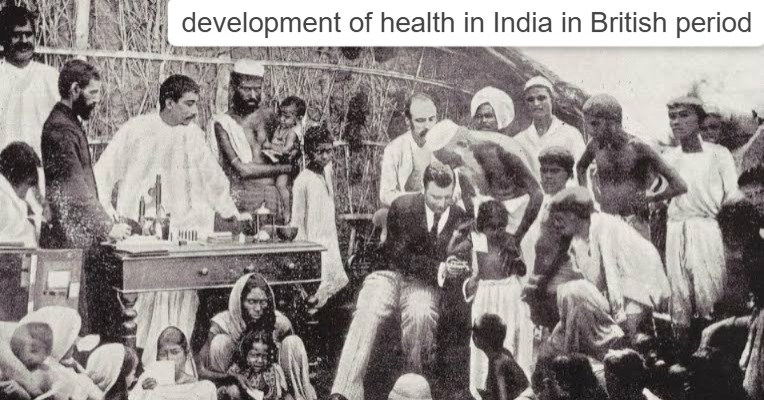
Explain development of health in India in British period (Discuss development of health in India in British period.)
During the British period… The Royal Commission tried to find out the unhealthy condition of British soldiers in India. Florence Nightingale studied the public health condition of India and suggested preventive measures for it. For this, the Lady Reading Health School was established in 1918. Training of Lady Health Visitors (LHV). All India Institute of Hygiene and Public Health was established in 1930. Indian Red Cross Society established Mother and Child Welfare Bureau in 1931. Drugs Act was passed in 1940. Bhor Committee or Health Survey Development Committee was appointed in 1943. Nursing Colleges were established in Delhi and Vellore in 1946.
discuss developement of health in post independence period (Discuss the development of health in the post-independence period.)
In the post-independence era… 1947: The Health Ministry was established at both the central and state levels because of the Health Concurrent List. Appointment rules of the Health Services Centre of the Health Ministry at the Central and State levels and the Director. With reference to the Indian Nursing Council. 1949: India became a member of the World Health Organization. The law on Employment State Insurance Scheme was passed. 1950: The Planning Commission was constituted.
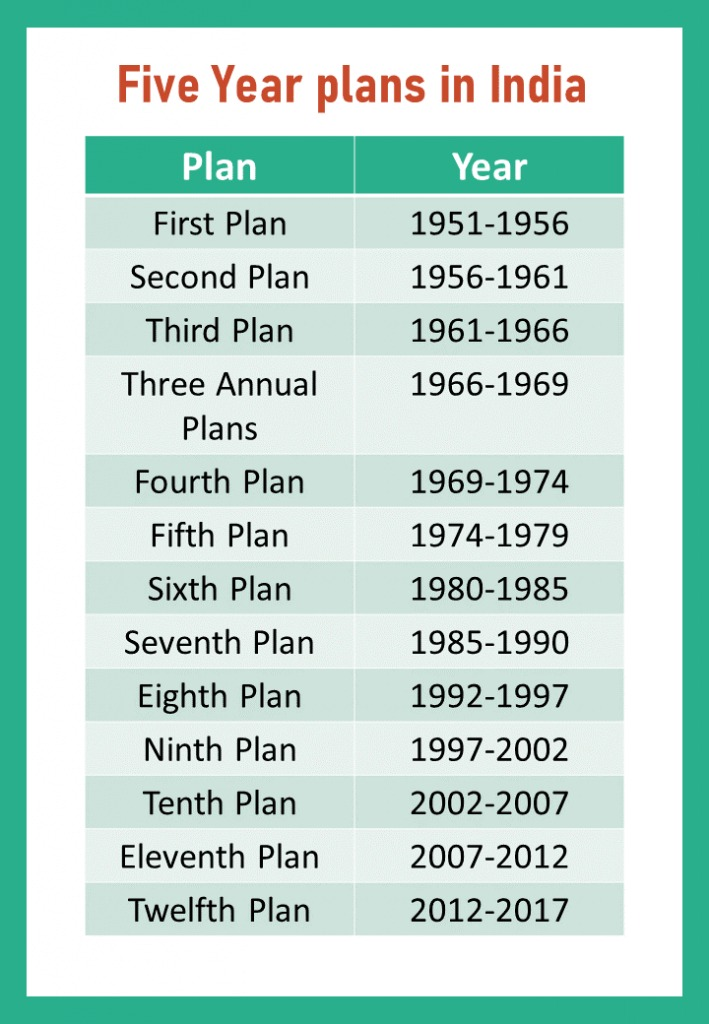
Describe development of health & nursing in five year plan (Describe the development of health and nursing in the five year plan.)
First Five Year Plan (1951-1956)
The Diploma Course in Community Health Nursing was started by the Nursing College Delhi in 1952. The Central Council of Health was formed in 1953. The National Programme on Malaria Central Smallpox Eradication and Family Planning was initiated, the Filaria Central Programme and the Prevention of Food Adulteration were passed.
Second Five Year Plan(Second Five Year Plan)(1956- 1961)
1956 Central Bureau of Health Education established. National Malaria Eradication Program launched. National Tuberculosis Institute Bangalore was established.
Third Five Year Plan (1961 -1966)
Publication of Mudaliyar Committee, establishment of Central Family Welfare Organization, eradication of smallpox, Goiter Central, start of National School Health Program, establishment of National Communicable Diseases Delhi, Central Program in Trucks and report of Chadah Committee on eradication of malaria were present during this period. The Mukherjee Committee Report on the Strategy for F.P. and the Junglewala Committee Report on Health Services (1967) were also published.
Annual Plan (Annual plan) (1966-1969)
Year 1966 :
A separate Department of Family Planning was set up in the Union Ministry of Health to coordinate the Family Planning Programme at the Centre and States.
Year 1967 :
Mukherjee Committee appointed to review the performance of the Malaria Eradication Programme was.
The Central Council of Health recommended compulsory payment for patients coming to the hospital, i.e. a minimum charge of 10 paise per patient and 25 paise per day of stay in the hospital.
A Committee on Small Family Norms was constituted to recommend suitable incentives for those who adopt Small Family Norms and practice family planning.
Year 1968 :
The Birth and Death Registration Bill was approved by Parliament for compulsory birth and death registration.
A Medical Education Community was appointed to study various aspects of medical education within the framework of national needs and resources.
Fourth Five Year Plan (1969 -1974)
The National Minimum Needs Programme was a health service and based on the recommendations of the Kartar Singh Committee, training in multi-purpose health was started.
Fifth Five Year Plan (1974 – 1979)
The report of the Shrivastava Committee on providing three-tier health services in rural areas was presented.
During this period, India was declared free from smallpox.
The Integrated Development Child Services (ICDS) were established. The National Institute of Health and Family Planning and India adopted the “Health for All” concept. (Alma Declaration).
Sixth Five Year Plan (Sixth Five Year Plan)(1880-1985):
The Government of India’s Safe Drinking Water, Air Pollution Prevention Act and National Health Policy were also announced and the Bhopal Gas Tragedy Register was registered.
Seventh Five Year Plan (1985-1990):
The World Bank launched the Universal Immunization Program (1985) and the Safe Motherwood Program worldwide. The National AIDS Central Program was launched.
Eighth Five Year Plan( Eighth Five year plan)(1992-1997):
“Health for All” Govt Special attention was given to providing health services to the poor society. More facilities were provided for health education. Child survival and safe motherhood programs were started. The government had started the Basic BSC (m) programme three years before. Ninth Five year plan (1997- 2002):
The Ninth Five Year Plan aims to improve the health needs of female adolescent children, improve the quality of services and increase coverage. It gives special attention to the growth of basic structures, increase the number of medical and nursing personnel, and provide training and trainers at the national and district levels in Information Education Communication (IEC).
Tenth Five Year Plan (2002- 2007):
Number of new schemes and projects by Planning Commission India.
Improve the health care system.
Develop human resources for health. Better utilization of AYUSH services.
Prevention and management of communicable and non-communicable diseases.
Strengthening production and supply of medicines for communicable diseases.
Adequate health care finance, quality assurance and priority medical research etc.
Eleven Mo Five Year Plan(Eleventh Five year plan)(2007- 2012):
>>>
of the primary health care system Improvement Health Campaign Service.
Mental Health Care Elderly Care and Fertility Regulation.
Increase the use of Indigenous (AYUSH) system for care of the disabled.
Effective implication of flagship (NRHM) program.
Twelfth Five Year Plan (2012- 2017):
Nutrition in children in the 0-3 age group has decreased to less than half of the NFHS -3 level.
Reduce IMR to 25.
Make MMR 100 and TFR 2:1.
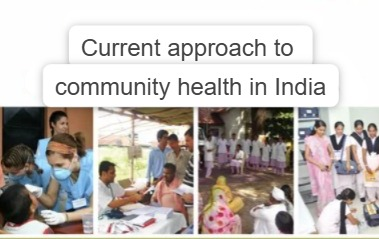
Current approach to community health in India :
The current approach to community health in India is focused on strengthening universal health services and providing quality, affordable and accessible healthcare to all citizens. For this, several initiatives and programs have been implemented by the government and various organizations.
1. Strengthening Primary Healthcare:
Ayushman Bharat Health Infrastructure Mission:
Under this scheme, 17,788 rural and 11,024 urban health and welfare centres have been established, which provide health services at the primary level.
2. Digital Health Initiatives:
Ayushman Bharat Digital Mission:
This initiative strengthens the digital health infrastructure, ensuring citizens easy access to their health data and efficient use of health services.
E-Sanjeevani:
This is an initiative to deliver healthcare to remote areas through telemedicine services.
3. Epidemic control and vaccination:
Covid-19 vaccination campaign:
India has launched a massive vaccination campaign, which has also helped more than 100 countries.
Pneumococcal vaccination:
The pneumococcal vaccine is being administered across the country, which aims to prevent 50,000 child deaths every year.
4. Development of health infrastructure:
Critical Care Hospital Blocks:
Establishment of Critical Care Hospital Blocks in 602 districts, so that critical patients can get immediate and quality treatment.
Biosafety laboratories:
The research and control of infectious diseases has been improved by the establishment of 9 Biosafety Level III laboratories.
5. Sanitation and Environmental Health:
Swachh Bharat Abhiyan:
This campaign has been launched to make India free from open defecation and to maintain cleanliness, which is important in improving health.
Steps for clean air:
Rs. 2,217 crore has been allocated to control air pollution in 42 urban centres.
6. Training and recruitment of health personnel:
ASHA workers:
Primary healthcare has been strengthened by appointing health workers in villages.
Training of medical and paramedical staff:
Emphasis has been placed on training of medical and paramedical staff to enhance the quality of health services is.
7. Health Insurance Plans :
Ayushman Bharat Prime Minister’s Public Health Scheme (PM-JAY):
Under this scheme, Rs. 1000 per family per year will be provided. Free treatment facility up to Rs 5 lakh has been provided, covering more than 10 crore poor and lower income families.
8. Social Health Policies:
Mission Indradhanush:
A vaccination campaign is being run to protect children from 12 diseases.
Ayushman Bharat Health Accounts (ABHA):
Health through digitization of citizens’ health data Efforts to improve the convenience and quality of services.
9. Digital and technological health services: Telemedicine: Providing healthcare facilities in rural areas through teleconsultation. Digital Health Platform: –>
Plan to strengthen health records for citizens.
The current approach to community health in India is to strengthen universal health facilities, which have become more accessible and affordable through digital technology and improvements in primary healthcare. These steps will bring about significant changes in the country’s health equity and healthcare in the coming decades.
💚Primary Health Care:
In September 1978, under the joint efforts of WHO and UNICEF, the 30th World Health Assembly of WHO at the International Conference clarified some basic and fundamental principles for the development of health services. The declaration of this formula Health for All has become world famous and according to the policy implemented in this regard by AD 2000, it is determined that all citizens of the world should achieve a new level of health in the world that can help them to produce economically and live a socially useful life. The ideas presented through the approach of primary health are not only this, but also be achieved with a sense of social justice. It is considered essential, through primary health care, the first contact with people, with the individual family and the community, national health can be achieved. In which health can be created for the people and health by the people. Therefore, the cooperation of the people is very important for health care. The following definition was given in the Alma Ata conference held in 1978.
💚Definition of Primary health Care:
Primary health care is an essential health care that is made universally accessible to everyone and acceptable to everyone through full participation in it and primary health care should be affordable to the community and the country.
OR
Primary health care is a very essential health care. Primary health care is the health services that can be provided practically and scientifically everywhere through methods and technology accepted by the individual, family and society with the full support of the individual, family and society, and that can be afforded by the country.
💚Elements of Primary health care :
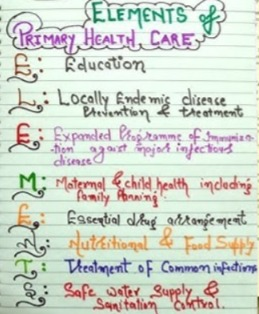
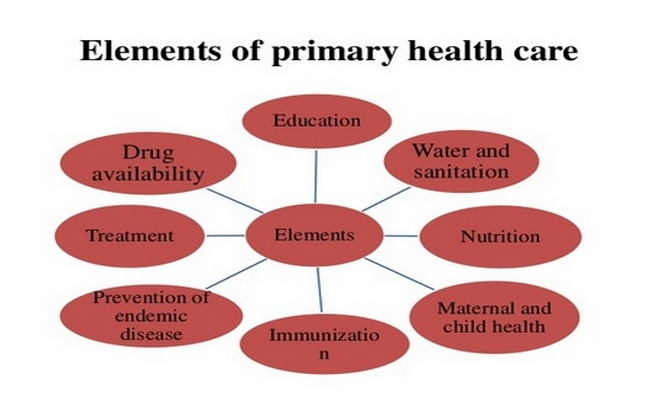
There are 8 essential elements of primary health care which are as follows:
ELEMENTS (elements):
1) E : Ensure Safe Water Supply,
2) L: Locally Endemic Disease Control
3) E: Education
4) M: Maternal And Child Health (Immunization Against Infectious Diseases)(Maternal And Child Health)
7) T: Treatment of Minor Alignment (Treatment of Minor Alignment)
8) S: School Health Services(School health Services)
1) E : Ensure Safe Water Supply
The supply of adequate amounts of safe drinking water and sanitation are essential for good health and are an important factor in an environment. Access to safe drinking water is essential for preventing waterborne diseases and promoting overall health. Primary health care includes efforts to ensure that communities have access to clean and safe water sources, which is fundamental for disease prevention and health promotion.
2) L: Locally Endemic Disease Control
The main focus of primary health care is to control any endemic diseases in a particular region or community. It involves surveillance, preventive measures (such as vaccination and vector control) and early detection and treatment of locally prevalent diseases. Prevention and control of locally and endemic diseases to reduce morbidity rates.
3) E: Education(Education)
Health education is a key component of primary health care. Its aim is to equip individuals and communities with the knowledge and skills to take charge of their health. To empower people to make informed decisions. Education covers a wide range of topics including hygiene practices, nutrition, family planning, sexual health, and prevention of disease. To provide education to people about health and current health problems. To control and prevent these health problems, certain measures are formulated and people are made aware of the health services available to them so that they can use them when needed.
4) M: Maternal and Child Health (Immunization against Infectious Diseases)(Maternal And Child Health)
Mothers and children are the most vulnerable groups to health problems and account for a large percentage of the population. Primary health care places significant emphasis on maternal and child health services. This involves prenatal care, safe childbirth, proper postnatal care, newborn care, immunization, growth monitoring, and nutrition to ensure healthy development during critical stages of life. Protecting mothers and children from illness and other risks ensures good health of families and communities.
Immunization Against Infectious Disease:
Provide proper immunization to children to protect them from major infectious diseases such as,
Poliomyelitis,
Diphtheria,
Tetanus,
Measles,
5) E: Environmental Sanitation:
Environmental sanitation is essential to prevent diseases caused by poor hygiene and environmental conditions. Primary health care should improve sanitation, properly dispose of waste materials, and provide education on hygienic practices to reduce the risk of communicable diseases in the community.
6) N:Nutrition(Nutrition)
Good nutrition is essential for health and for the growth and development of a child. People should be encouraged to pay attention to a balanced diet. Nutrition is the foundation of primary health care, which identifies both malnutrition and overnutrition as issues. It involves promotion of balanced diet, micronutrients, supplementation, support breastfeeding, and nutritional counseling to improve health outcomes and prevent nutritional deficiencies. It is necessary to provide knowledge on food preparation and preserving nutrients present in the diet.
7) T : Treatment of Minor Alignment
Primary health care is a common Provides accessible and timely treatment for health conditions and minor ailments. Primary health care is provided by trained health care personnel to manage illnesses (such as respiratory infections, diarrhea, skin conditions, and minor injuries). There should be easy availability of drugs.
8. Provision of Essential Medicines:
Make essential medicines available for common ailments at health centres free of cost or at low cost.
Ensure availability of essential medicines at primary level.
Thus, a total of 8 elements are involved in primary health care.
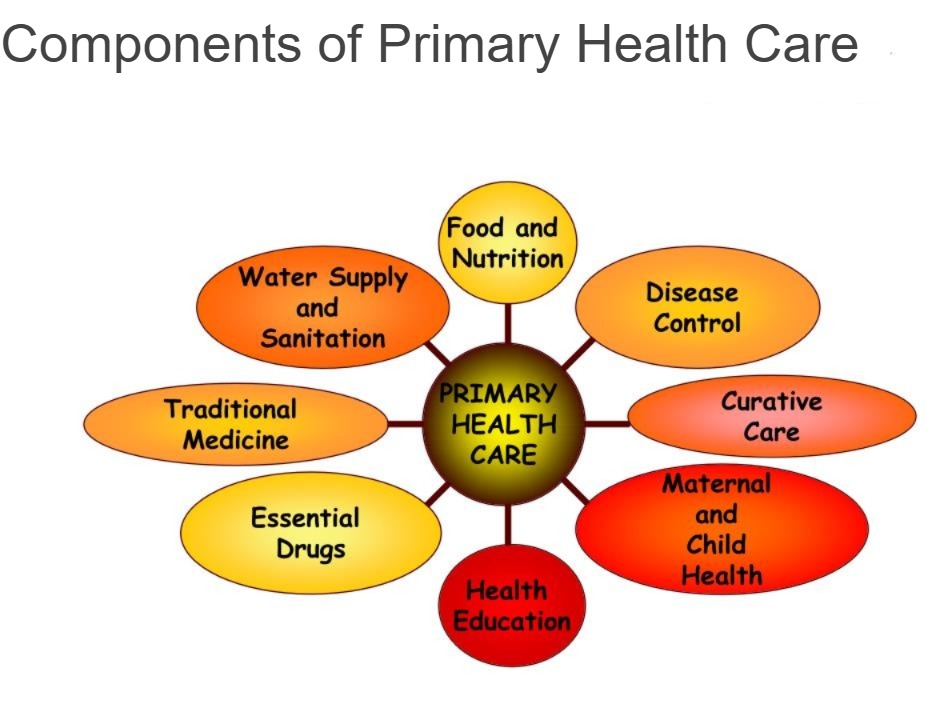
Components of Primary Health Care:
The components of primary health care are to provide affordable, accessible and equitable healthcare to the people. are designed to provide facilities. These components were defined under the Alma Ata Declaration (1978) and are crucial for achieving a holistic approach to health services.
1. Health Promotion:
Spreading health awareness and promoting healthy lifestyles.
Providing education for mental, physical and social health.
Campaigns to prevent lifestyle diseases (such as diabetes, heart disease).
2. Disease Prevention:
Primary diagnosis and control of communicable and non-communicable diseases.
Measures to prevent disease outbreaks such as malaria, TB, and measles.
Preventing disease outbreaks through vaccination.
3. Primary Treatment:
First-level immediate treatment for common ailments.
Arrangements for the control of marked diseases in health centres.
Providing medicines at low cost or free of cost.
4. Maternal and Child Healthcare:
Safe pregnancy and maternity services.
Special arrangements for newborn and child health.
Family planning services and nutrition approaches.
5. Nutrition Improvement:
Supplemental nutrition for preventing malnutrition: Padisizram.
Creating awareness for breastfeeding and balanced diet.
Focusing on nutrition-sensitive programs.
6. Safe Drinking Water and Sanitation:
Availability of drinking water sources.
Implementation of sanitation and hygiene standards.
Proper waste management and environmental health.
7. Provision of Essential Medicines:
Provide essential medicines for common ailments at health centres free of cost or at subsidised rates.
Ensure availability of essential medicines at primary level.
8. Training and Support for Health Workers:
Required training for health workers (ASHA, ANM) to provide health services.
Continuous education and support for workers.
9. Social and Environmental Health:
Measures to prevent environment-related diseases (such as dengue, malaria).
Planning and effective implementation of environmental sanitation.
10. Community Participation:
Awareness of the people and inclusion of all sections of the society in health programmes.
Ensuring healthcare services through collective responsibility.
These components of primary healthcare form a comprehensive system that helps in delivering quality and accessible health services to the people. These components are the key foundations for achieving the goal of “Health for All”.
The aim is to bring about equity and sustainability for health. These principles create a strong healthcare system for the benefit of the individual and the community.
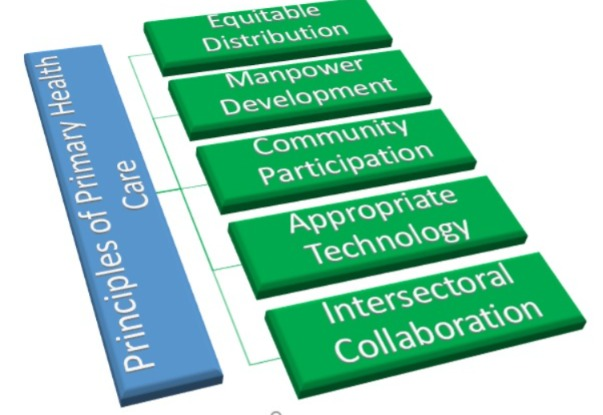
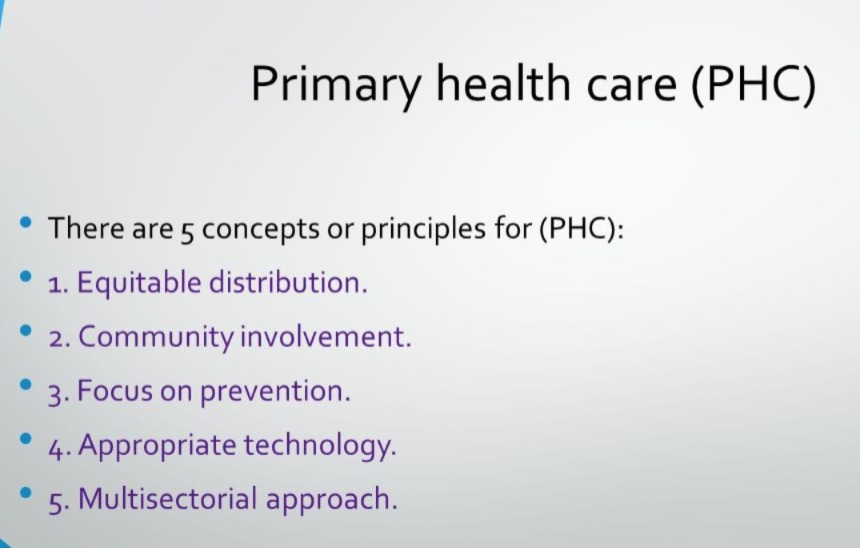
💚Principle of Primary Health Care (Primary Health Care Principles):
There are 5 main principles of primary health care.
1) Equitable Distribution ,
2) Community Participation,
3) Appropriate Technology,
4) Focus on Prevention,
5) Intersectoral Coordination
1) Equitable Distribution:
Health services and resources should be distributed equally in the community. Primary health care should be available to all without any discrimination of caste, creed and gender, religion, rich, poor, urban or rural. According to this principle, primary health care should be available to every individual, family and community. It is based on social justice. People living in rural areas are the main target of primary health care.
2) Community Participation:
It is difficult to achieve the goal of primary health care without community involvement.
Continuous efforts are being made to get community involvement in the planning, implementation, and maintenance of health services. Efforts should be made.
Local health workers of villages like village health guides, anganwadi workers, ASHA, trained midwives overcome any communication barriers and culture and provide health services. This is done in a way that makes it acceptable to the community.
3) Appropriate Technology:
The technology used in primary health care should be scientifically appropriate, It should be safe, socially acceptable, suitable for local requirements and financially viable and should be available at the local level. Ex : Use of ORS is an example for the treatment of diarrhea.
4) Focus on Prevention:
The main focus of primary health care is not to treat disease but to prevent disease and promote health. Primary health care emphasizes health education.
5) Intersectoral Coordination:
For the successful implementation of primary health care, coordination of other sectors is necessary such as agriculture, sanitation, housing, nutrition, public workers, communication and education etc.
Thus, primary health care is mainly Principals are involved.
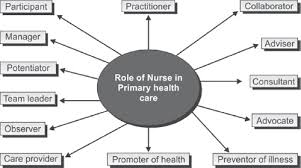
💚Role of Nursing in Primary Health Care :
Introduction:
Primary healthcare is the first and most fundamental link in healthcare for patients. Preventive, promotive, curative and rehabilitative care is provided here. Nurses play an important role in primary health care and work to maintain, restore and improve the health of patients. The role of nurses is described in detail in various aspects below.
1.Health Educator: Nurses provide information to patients and community members on nutrition, hygiene, vaccination, reproductive health, family planning, and communicable diseases. Nurses motivate people to adopt health-promoting behaviors through IEC (Information, Education and Communication) programs.
2.Care Provider: Nurse provides immediate first aid to the patient, which includes monitoring vital signs, dressing, administering injections or oral medication, and assessing the patient.
3.Immunization Coordinator: Nurse administers BCG, Responsible for administering vaccines like OPV, DPT, Pentavalent, MR. Nurse maintains cold chain and takes immediate action for AEFI (Adverse Events Following Immunization).
4.Community Surveyor: Nurse goes to patient’s house and assesses health status through home visit. It prepares registers like Eligible Couple Register (Eligible Couple Register), MCH Register (MCH Register) and Immunization Register (Immunization Register).
5.Disease Identifier and Referral Agent (Disease Identifier and Referral Agent): The nurse makes primary identification of diseases like TB, Leprosy, Malaria, Diabetes, Hypertension and provides high level referral to the patient as per the requirement.
6.Maternal and Child Health Provider (Maternal and Child Health Provider): Nurse Antenatal Care , Intranatal Care and Postnatal Care. It provides guidance for Breastfeeding , Growth Monitoring, Weaning and Immunization.
7.Family Planning Counselor: The nurse guides the patient about contraceptive methods like IUCD, Oral Contraceptive Pills , Condoms , Injectables. Also provides counseling for Sterilization.
8.Communicable Disease Controller: Nurse performs duties for surveillance, awareness, and prevention in epidemic situations like Cholera, Dengue, Measles etc.
9.Health Record Keeper and Reporter: Nurse records all health records related to the patient, such as Immunization Card, ANC Card, Referral Slip etc. The nurse sends this information as a report to the local health office.
10.Program Implementer: Nurses implement various national health programs like NRHM, RCH, UIP, NACP RMNCH+A at the grassroots level.
Special Responsibilities of Nurse in Primary Healthcare:
Working with ASHA and ANM workers.
Birth and Death Registration.
For implementation of Government Health Programmes.
Expanded operations for typical epidemics (epidemics) such as malaria, cholera.
In primary health care, the nurse is the first point of contact for the patient. She plays a vital role not only in treatment but also in health maintenance, disease prevention, medical service delivery and patient satisfaction. The nurse is the cornerstone of the health system, ensuring the best and comprehensive health care to the patient at the primary level.
In primary health care, the nurse is the strong pillar of the health system. They play a vital role in improving people’s health, preventing epidemics and making health services accessible. Their various responsibilities lead people to sustainable development in the health sector.
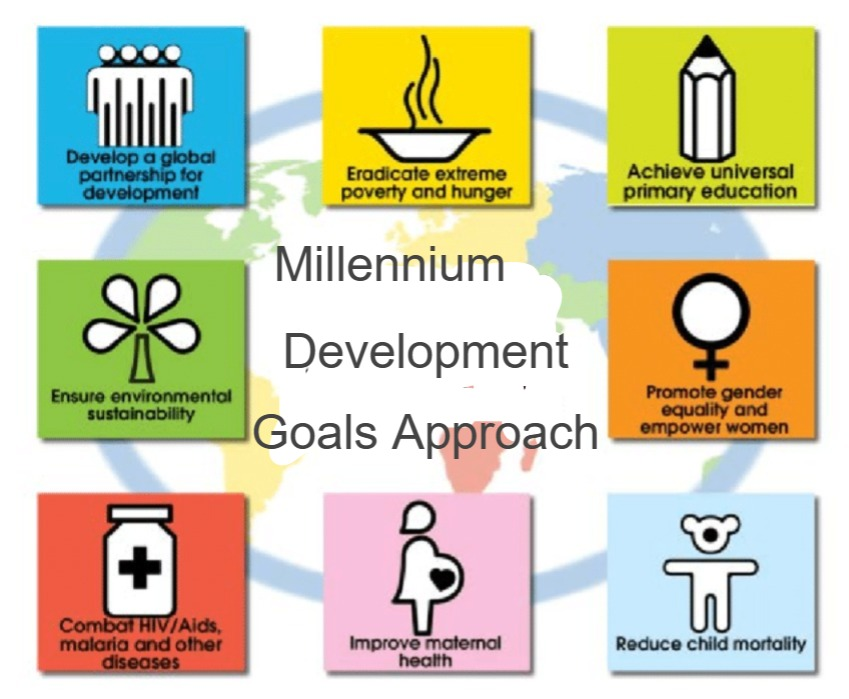
Millennium Development Goals (MDGs)
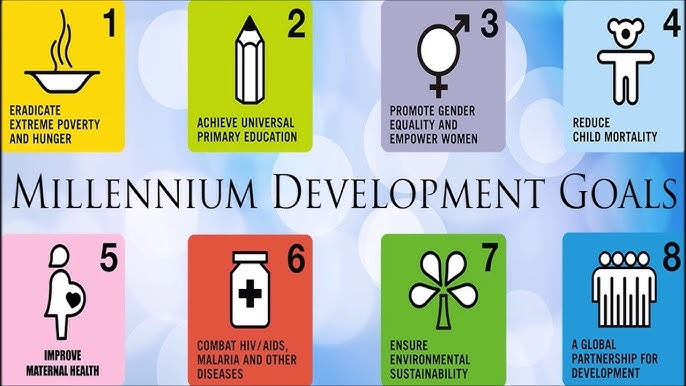
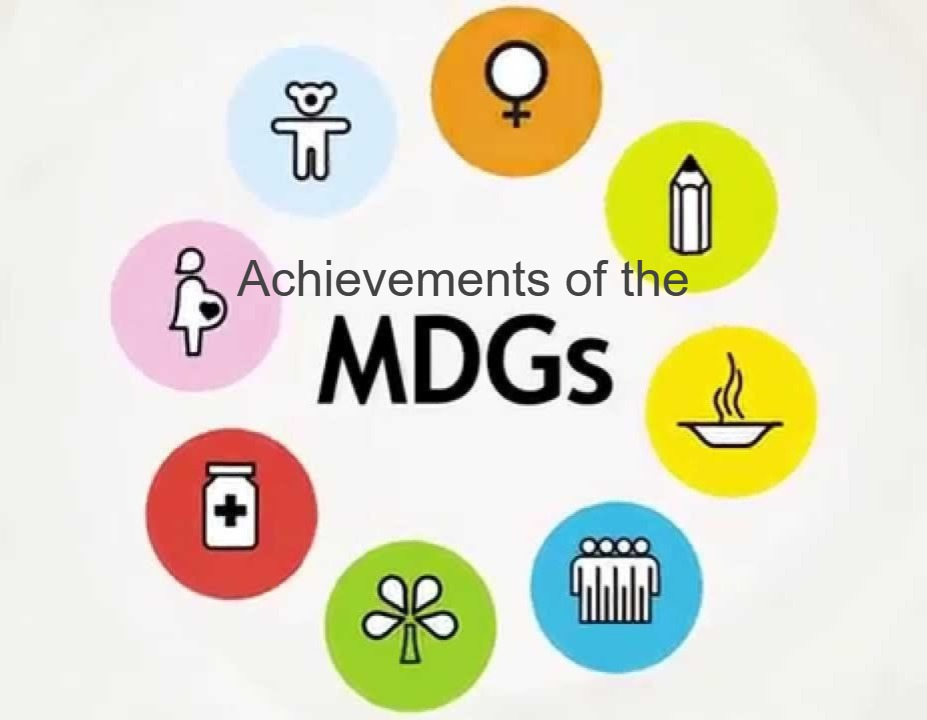
The Millennium Development Goals (MDGs) are 8 goals set for global development at the beginning of the 21st century, which were adopted by the member states of the United Nations in 2000. The main purpose of these goals was to reduce poverty, improve health, bring about improvements in education, and create a guide for global cooperation. The MDGs were set to be completed by 2015.
The 8 main goals of the Millennium Development Goals:
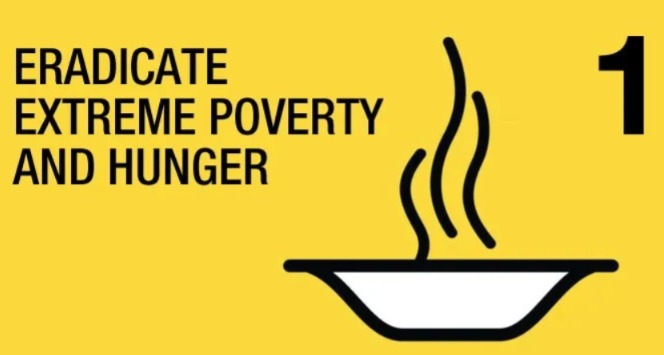
1. Eliminating poverty and hunger (Eradicate Extreme Poverty and Hunger):
Main Target :
Reduce by half the number of people living in extreme poverty.
Address the challenges of hunger.
Criterion::
Reduce the percentage of people living on less than $1.25 a day.
2. Achieve Universal Primary Education:
Main Target:
Provide primary education to every child.
Criterion:
Increase the percentage of children entering and completing school.
3. Promote Gender Equality and Empower Women:
Main Target:
Establish gender equality between women and men.
Create equal opportunities for women in health, education and employment.
Criterion:
Increase the presence of women in schools and employment.
4. Reduce Child Mortality:
Main Target (Main Target):
Reduce the mortality rate of children under 5 years of age by 2/3.
Criterion:
Improve health services through innovation.
5. Improving Maternal Health (Improve Maternal Health):
Main Target:
Reduce maternal mortality by 3/4.
Take steps to improve health during pregnancy and childbirth.
Criterion:
Ensuring the best health services for every mother.
6. Combat HIV/AIDS, Malaria, and Other Diseases:
Main Objectives Target):
Launch a campaign to stop the spread of HIV/AIDS, malaria, and other infectious diseases.
Criterion:
Provide access to treatment for diseases such as malaria and TB.
7. Making the environment sustainable (Ensure Environmental Sustainability):
Main Target (Main Target):
Sustainable use of natural resources.
Increase in access to clean drinking water and sanitation facilities.
Criterion:
Inclusion of green activities for environmental enhancement.
8. Strengthening partnership for global cooperation (Develop a Global Partnership for Development):
Main Target(Main Target):
Cooperating with developing countries on health, trade and technology.
Debt relief for poor countries and technology transfer.
Millennium Development Goals Approach:
Human development: Reducing poverty and expanding human space.
Equality: Thinking about achieving goals equally for every citizen.
Economic growth: growth: The increase in economic resources in developing countries.
Resource utilization: The sustainable and balanced use of natural resources.
Achievements of the Millennium Development Goals:
There has been a significant reduction in poverty.
There has been a reduction in infant mortality and epidemics like HIV/AIDS.
Success in providing clean drinking water.
The Millennium Development Goals laid a solid foundation for improving health, education, poverty and the environment globally. These goals have laid the foundation for the post-2015 “Sustainable Development Goals (SDGs)”, which aim to advance sustainable development.
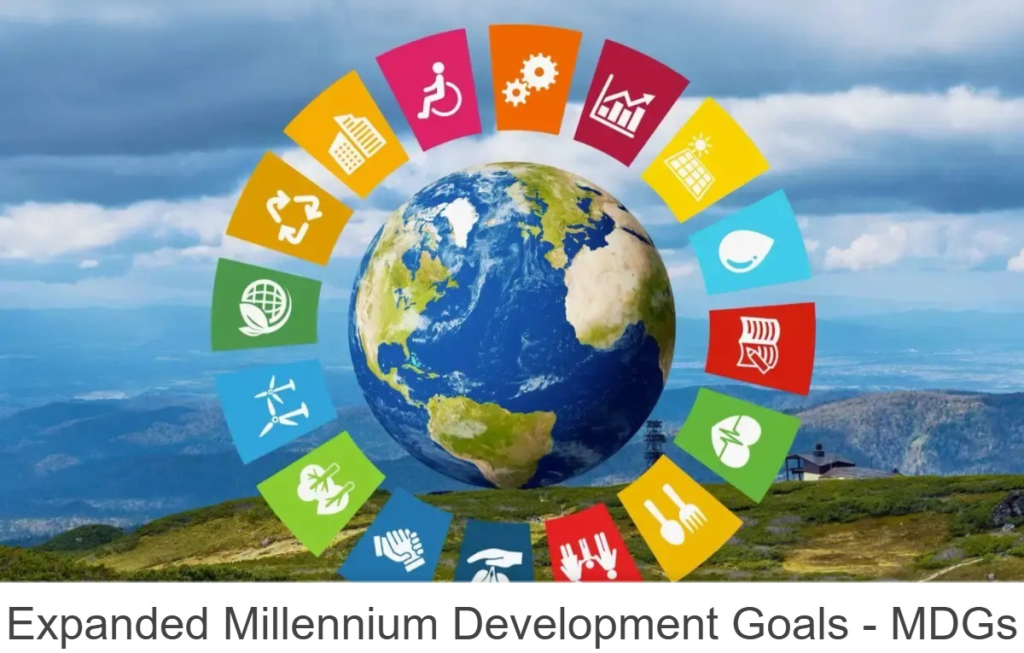
Expanded Millennium Development Goals (MDGs)
The Millennium Development Goals (MDGs) were expanded into the Sustainable Development Goals (SDGs) in 2015 for sustainable development. These expanded goals focus more broadly on global development, social equity, environmental protection, and economic development.
Major changes in extended goals:
1. Number of targets increased from 8 to 17:
The 8 goals of the MDGs were expanded to 17 goals in the SDGs.
With these new goals, the sustainable development of the planet was given importance along with individual progress.
2. Broader Scope:
MDGs were mainly focused on poverty reduction and health facilities.
SDGs cover education, nutrition, gender equality, environment, economy, and global partnership along with health.
3. More attention to the environment:
The MDGs had only one target for the environment (making the environment sustainable).
The 4 targets in the SDGs are for the environment, water conservation, land conservation and climate change.
4. Target completion period: The MDGs were set to run from 2000 to 2015. The SDGs are set to run from 2015 to 2030. The SDGs are set to run from 2015 to 2030. Expanded areas and human rights:
MDGs: Focus on poverty and health.
SDGs: Include goals for human rights, peace, justice and strong institutions.
Examples of areas (Expanded Goals Examples):
1. Poverty and Hunger:
MDGs target: Reduce poverty and hunger by half.
SDGs target: End poverty and hunger.
2. Health:
MDGs target: Improve maternal health and reduce child mortality.
SDGs target: Ensure universal health coverage for all, including mental health and non-communicable diseases.
3. Environment and Climate Change:
MDGs Goal: To make the environment sustainable.
SDGs Goal: Specific goals to prevent climate change, sustainable development for the ocean and land.
4. Education:
MDGs Goal: Universal Primary Education.
SDGs Goal: Ensure quality education and lifelong learning opportunities.
5. Gender Equality:
MDGs Goal: Gender equality in education.
SDGs Goal: Ensure gender equality in all sectors and promote women’s rights.
Expanded participation and implementation :
Global Collaboration: Set goals for greater global collaboration and partnership in the SDGs.
Stronger coordination between the private and public sectors.
Social justice: Special focus on social justice and human rights in the SDGs.
Goals to ensure equal opportunities for all.
Reform for the environment: International agreements and coordination to prevent climate change.
Policy changes for sustainable use of natural resources.
Importance of stretch goals:
Global progress: Reducing poverty, improving health, and strengthening economies.
Environmental protection: A direction for sustainable development with aggressive action for the environment.
Gender equality and peace: Promoting women’s rights and peaceful coexistence.
Expanded MDGs (SDGs) are a set of expanded and sustainable goals, which guide not only individual development but also a sustainable future for the world. These goals are helpful in eradicating poverty, improving health, protecting the environment and building strong societies based on equality.
Sustainable Development Goals (SDGs)
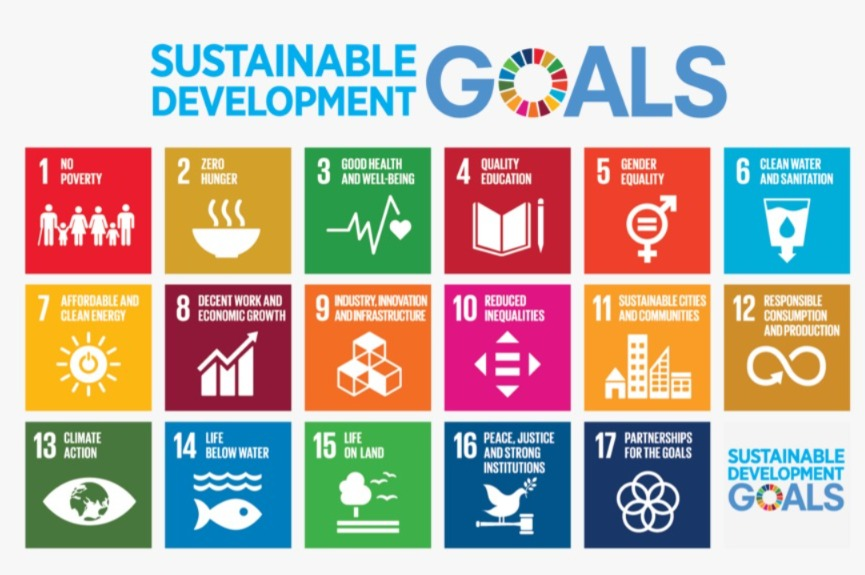
The Sustainable Development Goals (SDGs) were adopted by the United Nations (UN) in 2015. The SDGs are 17 goals set to achieve sustainable development by 2030, focusing on humanity, the environment and global development. These goals are part of a global effort to ensure a better future for all.
The 17 goals of the SDGs:
1. Ending poverty (No Poverty):
To completely eliminate the number of people living in poverty.
To achieve economic equality.
2. Zero Hunger:
No one should go hungry.
Addressing malnutrition and promoting sustainable agriculture.
3. Good Health and Well-being:
Providing access to quality healthcare for all.
Lifestyle-related health promotion and maintenance are two important components of the health system, which strengthen the lifestyle, health outlook and ability of individuals, communities and society as a whole to prevent epidemics. These processes are integrated with the long-term objectives of improving and maintaining health.
Preventing and reducing maternal and infant mortality.
4. Quality Education:
Ensure quality and inclusive education for all.
Creating spaces for lifelong learning.
5. Gender Equality:
Ensure equal space between women and men.
Ending gender-based violence.
6. Clean Water and Sanitation:
Ensure access to clean drinking water and sanitation for all.
Using water resources sustainably and systematically.
7. Affordable and Clean Energy:
Providing free, affordable and environmentally friendly energy for all.
8. Decent Work and Economic Growth:
Creating work space for human space with sustainable economic growth.
Focus on developing innovation tools.
9. Industry, Innovation, and Infrastructure:
Promoting sustainable industrialization and infrastructure development.
Developing new technologies.
10. Reduced Inequalities:
Reducing Income Inequalities.
Providing equal space to every citizen.
11. Sustainable Cities and Communities:
Developing livable and sustainable cities and villages for people.
12. Responsible Consumption and Production:
Sustainably and responsibly use natural resources.
13. Climate Action:
Take immediate action to reduce the impact of climate change.
Protecting the environment.
14. Conservation of Ocean and Water Resources (Life Below Water):
Reducing Pollution in the Ocean.
Ensuring sustainable development for aquatic life.
15. Life on Land:
Conserve forests and improve land use.
Try to preserve animals and trees.
16. Peace, Justice, and Strong Institutions:
Building a peaceful and just society.
Developing strong institutions and policy mechanisms.
17. Global Partnership for the Goals:
Strengthening global cooperation to achieve all the Goals.
Key features of the SDGs ( Key features of the SDGs) :
Holistic approach: These goals are based on the three dimensions of social, economic and environmental.
Sustainable development: Global development is based on a sustainable and sustainable system.
For humanity Work for humanity: Alleviating poverty, hunger and inequality.
Importance of SDGs:
Every United Nations member state must formulate and implement policies to achieve these goals.
The SDGs make a significant contribution to bringing about equality in the world’s health, education, economic development and environment.
Sustainable Development Goals (SDGs) are a strong guide for global development in the 21st century. The main objective of these 17 goals is to ensure a better quality of life, equity and environmentally friendly development for all citizens of the world.
Promotion and Maintenance of Health
Health promotion and maintenance are two important components of a health system, which strengthen the lifestyle, health outlook and ability of individuals, communities and society as a whole to prevent epidemics. These processes are integrated with the long-term objectives of improving and maintaining health.
1. Health Promotion (Promotion of Health):
Meaning of health promotion:
This is the process by which individuals and communities are empowered to maintain and improve their health. The main focus of health promotion is on preventing epidemics and developing a positive attitude towards health among people.
Key Frameworks for Health Promotion:
A. Health Education:
Disseminating information about the knowledge, skills and proper lifestyle required for health.
Example: Conduct health awareness campaigns through schools, community meetings, and media.
B. Health Promotion Programs (Health Promotion Programs):
Inspiration for a healthy lifestyle:
Controlling harmful habits such as smoking, alcohol consumption, and unhealthy eating habits.
Promoting healthy eating and regular exercise.
Cleanliness Campaign:
Government efforts such as “Swachh Bharat Abhiyan”.
C. Disease Prevention Strategies:
Vaccination campaign:
Programs like Mission Indradhanush.
Disease outbreak control:
Implementing policies for the prevention of diseases like malaria, tuberculosis.
D. Environmental Improvements:
Steps to improve health through clean drinking water, sanitation facilities and green initiatives.
E. Social and Community Participation:
People from the local community are involved in health promotion and its programs.
Bringing awareness through ASHA workers and health workers.
F. Policy-Oriented Approach:
F. Policy-Oriented Approach:
Example for Health Promotion:
Cleanliness Campaign: Swachh Bharat Abhiyan.
International Day: Spreading awareness on World Health Day for health.
Health Camps: Health Camps in Rural Areas.
2. Health Maintenance (Maintenance of Health):
Meaning of Maintenance of Health :
This includes activities and services that are used to maintain health, prevent epidemics, and prevent the loss of life. The goal of health maintenance is to connect patients and healthy people with health services.
Main Elements for Maintenance of Health:
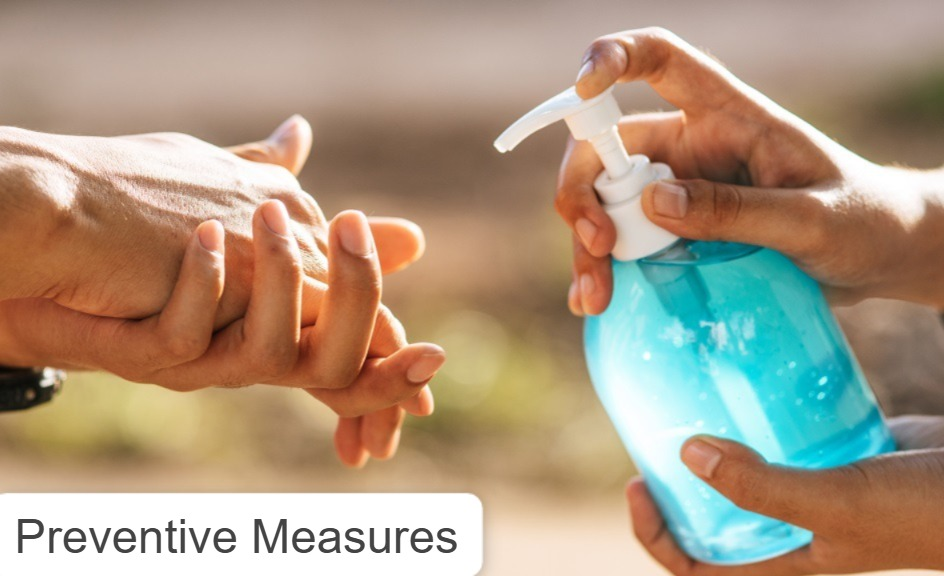
A. Preventive Measures to Prevent Epidemic:
Regular health check-up :
Early diagnosis of diseases like diabetes, high blood pressure.
Vaccination for infectious diseases:
Giving vaccines like polio, smallpox, measles.
Public Health Services:
Accessibility of primary health centres in urban and rural areas.
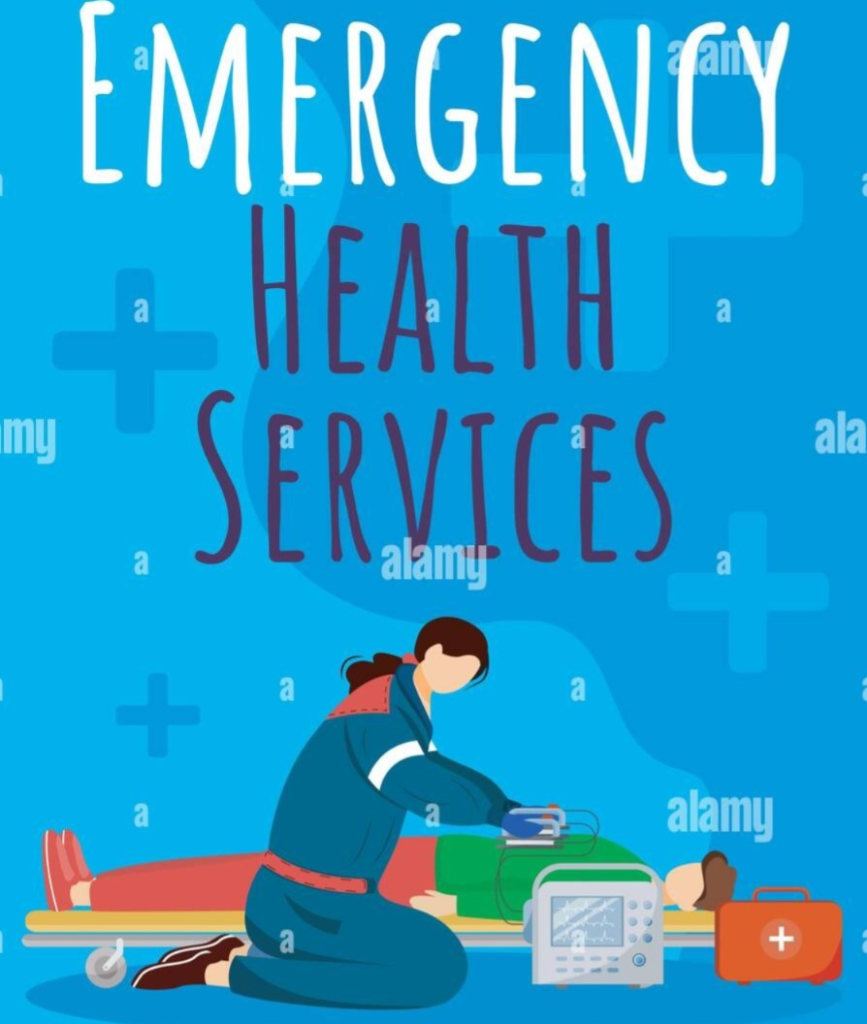
B. Emergency Health Services:
Ambulance Services:
Available in times of urgent need.
Referral System:
Sending critically ill patients to high-strength hospitals for specialized treatment.
C. Chronic Disease Management:
Care for unknown diseases:
Care for diabetes, arthritis, heart disease.
Medical treatment for conflict resolution:
Regular care to prevent lifestyle-based epidemics.
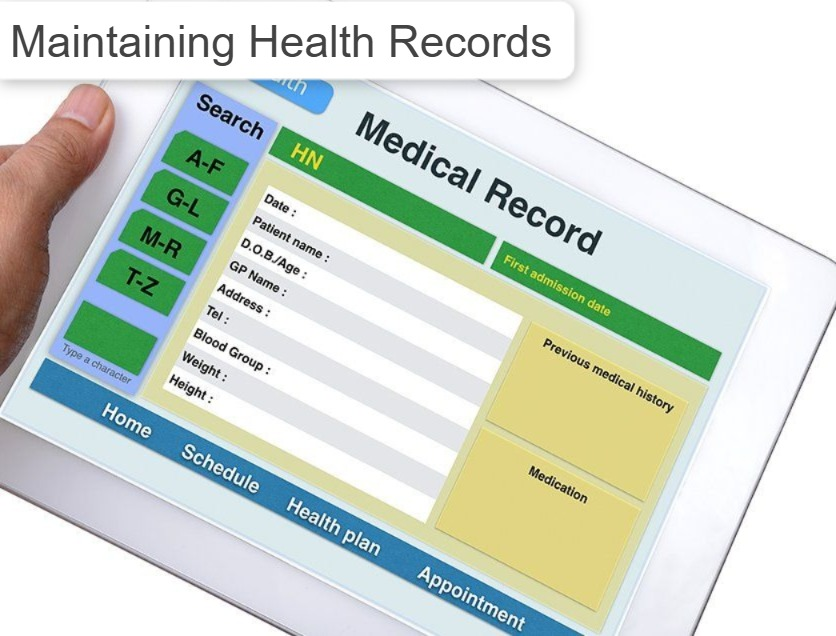
D. Maintaining Medical Records (Maintaining Health Records):
Digital Health Mission:
Digitalization of health data of every citizen.
Diseases Tracking:
Management of epidemic activities based on health services.
E. Social Support in Healthcare:
ASHA workers and health workers:
Providing healthcare for low-income families.
Education to prevent diseases:
Bringing awareness for mental health and addiction.
Example for Health Maintenance:
Vaccination: Vaccination programs for diphtheria, tetanus.
Regular check-up:Annual medical check-up for health.
Disease Treatment for Complex Diseases: Term Care for Cancer or Heart Disease.
Difference between health promotion and maintenance:
Health Promotion (Health Promotion)
Health Maintenance
Improving health and developing a positive lifestyle.
Maintaining health and preventing epidemics.
A motivational approach to disease prevention.
Early diagnosis and treatment of disease.
Lifestyle-based approach.
Medical-based Treatment.
Environmental improvement and awareness campaigns.
Immediate and long-term health services
Health promotion and maintenance are two complementary parts of health services. Health promotion makes people aware of health, while health maintenance maintains their health in the long term. Both of these directions are important pillars for the broader mission of healthcare.
FOR UNLOCK 🔓 FULL COURSE NOW. MORE DETAILS CALL US OR WATSAPP ON- 8485976407
To unlock the full course 🔓 or for more information, contact or whatsapp the following number.- 8485976407