🟢P.B.Sc.-PSYCHOLOGY LOGY SAU.UNI 2023 NOVEMBER (PAPER NO.6 UPLOAD)
P.B.Sc.-PSYCHOLOGY LOGY SAU.UNI 2023 NOVEMBER
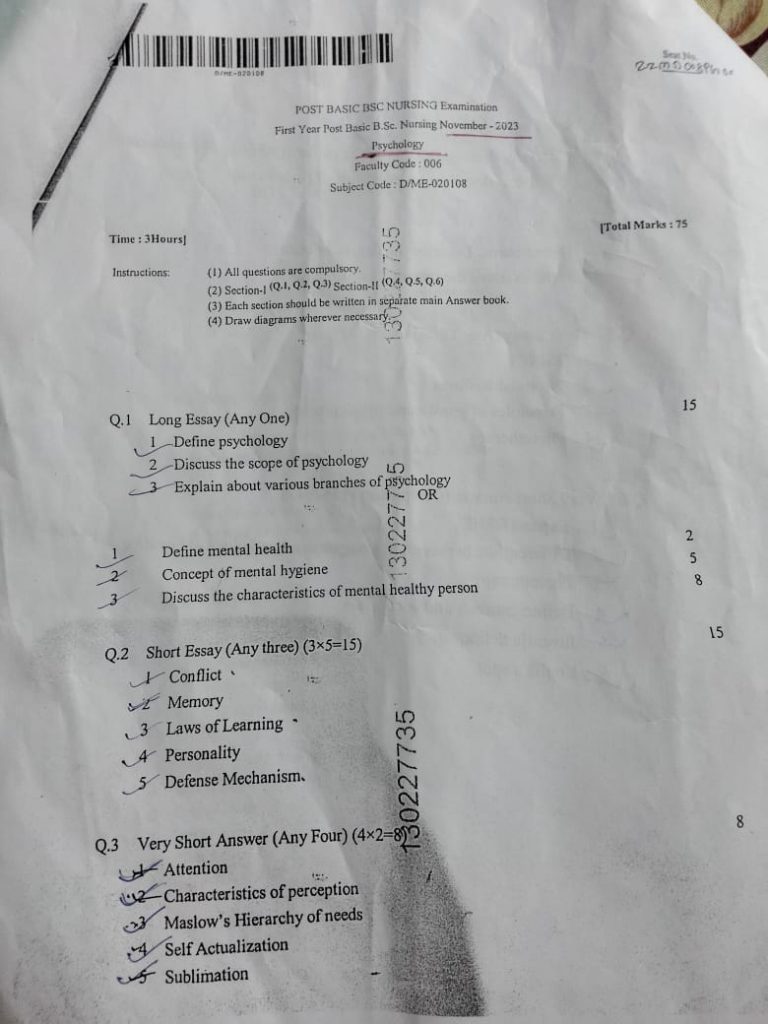
⏩Q.1 Long Essay (Any One) 15
🔸1.Define psychology
Definition of Psychology:
Psychology is the scientific study of behavior and mental processes. It encompasses the examination of individual and group behavior, emotions, cognition, development, and various mental phenomena. Psychologists use scientific methods to understand, explain, predict, and sometimes control behavior and mental processes.
🔸2 Discuss the scope of psychology
Scope of Psychology:
The scope of psychology is vast and includes various aspects of human behavior, mental processes, and applications in different fields such as:
- Research: Conducting experiments and studies to explore human behavior and mental processes.
- Clinical Psychology: Diagnosing and treating mental health disorders.
- Counseling Psychology: Helping individuals deal with personal and interpersonal issues.
- Educational Psychology: Studying how people learn and designing effective learning strategies.
- Developmental Psychology: Examining psychological growth and changes across the lifespan.
- Social Psychology: Investigating how social influences shape behavior and attitudes.
- Industrial-Organizational Psychology: Applying psychological principles to workplace settings to improve productivity and employee well-being.
- Health Psychology: Studying psychological factors affecting physical health and illness.
- Forensic Psychology: Applying psychological principles in legal contexts, such as criminal investigations and court proceedings.
🔸3.Explain about various branches of psychology
Branches of Psychology:
1.Clinical Psychology:
- Focuses on diagnosing and treating mental, emotional, and behavioral disorders.
- Clinical psychologists often work in hospitals, clinics, or private practice.
- They use therapies such as cognitive-behavioral therapy (CBT) to help clients.
2.Counseling Psychology:
- Similar to clinical psychology but often focuses on less severe psychological issues.
- Counselors work in schools, community centers, and private practice to help people cope with life challenges.
3.Developmental Psychology:
- Studies psychological growth and changes throughout the lifespan.
- Focuses on areas like cognitive development, social development, and emotional development.
4.Social Psychology:
- Investigates how social interactions, group dynamics, and cultural influences shape behavior and attitudes.
- Topics include conformity, prejudice, persuasion, and group behavior.
5.Educational Psychology:
- Applies psychological principles to understand and improve educational processes.
- Studies learning theories, motivation, instructional methods, and assessment techniques.
6.Industrial-Organizational Psychology:
- Applies psychological theories and methods to workplace settings.
- Topics include employee motivation, organizational behavior, leadership, and human resources.
7.Health Psychology:
- Examines psychological factors related to physical health and illness.
- Focuses on behaviors like smoking cessation, stress management, and adherence to medical treatments.
8.Forensic Psychology:
- Applies psychological principles to legal and criminal justice settings.
- Involves assessing criminal behavior, providing expert testimony, and working with law enforcement.
9.Neuropsychology:
- Studies the relationship between brain function and behavior.
- Often involved in assessing and rehabilitating individuals with brain injuries or neurological disorders.
10.Experimental Psychology:
- Focuses on conducting research to understand fundamental psychological processes.
- Includes areas like perception, memory, learning, and cognition.
Each branch of psychology contributes unique insights into human behavior, mental processes, and applications in diverse fields, reflecting the broad scope and interdisciplinary nature of the discipline.
🔸OR🔸
🔸1.Define mental health
Mental health refers to a person’s emotional, psychological, and social well-being. It impacts how individuals think, feel, and act, influencing their ability to handle stress, relate to others, and make choices
🔸2.Concept of mental hygiene
The concept of mental hygiene refers to practices and habits aimed at maintaining and improving mental health. It involves activities and strategies that help manage stress, enhance emotional well-being, and prevent mental health issues. Just as physical hygiene is essential for bodily health, mental hygiene is crucial for psychological health.
Key Components of Mental Hygiene
- Self-Care: Engaging in activities that promote relaxation and enjoyment, such as hobbies, exercise, and adequate sleep.
- Stress Management: Techniques like mindfulness, meditation, deep breathing exercises, and time management help reduce stress.
- Healthy Relationships: Building and maintaining supportive relationships with friends, family, and colleagues.
- Positive Thinking: Cultivating a positive mindset through gratitude, positive affirmations, and focusing on strengths rather than weaknesses.
- Professional Support: Seeking help from mental health professionals, such as therapists or counselors, when needed.
- Balanced Lifestyle: Maintaining a balance between work, rest, and leisure activities to prevent burnout and overwork.
- Nutrition and Exercise: Eating a balanced diet and engaging in regular physical activity to support overall well-being.
- Mental Stimulation: Keeping the mind active through learning new skills, reading, and engaging in intellectually stimulating activities.
Importance of Mental Hygiene
- Prevention of Mental Illness: Regular mental hygiene practices can help prevent the onset of mental health disorders such as depression and anxiety.
- Improved Quality of Life: Good mental health enhances one’s ability to enjoy life, maintain fulfilling relationships, and perform well at work or school.
- Resilience: Individuals with strong mental hygiene are better equipped to handle life’s challenges and recover from setbacks.
- Physical Health: Mental health is closely linked to physical health, and maintaining mental hygiene can positively impact overall health.
Strategies for Practicing Mental Hygiene
- Routine Establishment: Creating a daily routine that includes time for relaxation, physical activity, and hobbies.
- Mindfulness and Meditation: Practicing mindfulness and meditation regularly to stay grounded and reduce anxiety.
- Social Interaction: Making time for social activities and maintaining connections with loved ones.
- Limiting Stressors: Identifying and minimizing sources of stress, such as overcommitment or toxic relationships.
- Seeking Help: Not hesitating to seek professional help when experiencing persistent mental health issues.
By incorporating these practices into daily life, individuals can maintain good mental hygiene, leading to better mental health and overall well-being.
🔸3 Discuss the characteristics of mental healthy person
1.Emotional Resilience:
- Definition: The ability to adapt to challenges, cope with stress, and bounce back from adversity.
- Characteristics: Maintaining a balanced emotional state, being able to manage and express emotions constructively, and having a positive outlook despite setbacks.
2.Positive Relationships:
- Definition: Having healthy, supportive connections with others.
- Characteristics: Forming and maintaining close relationships, being empathetic and understanding of others’ perspectives, and effectively resolving conflicts.
3.Autonomy and Independence:
- Definition: Having a sense of self-control and the ability to make decisions independently.
- Characteristics: Being self-aware, assertive but not aggressive, and capable of setting and achieving personal goals.
4.Purpose and Meaning in Life:
- Definition: Having a sense of direction and goals that give life meaning.
- Characteristics: Feeling motivated and engaged in activities that provide fulfillment, having a sense of purpose beyond oneself, and finding joy in contributing to others’ well-being.
5.Effective Stress Management:
- Definition: The ability to manage and reduce stress in healthy ways.
- Characteristics: Using coping mechanisms such as relaxation techniques, physical activity, and seeking social support when needed, and maintaining a balance between work, leisure, and rest.
6.Self-acceptance and Realism:
- Definition: Having a positive self-image and an accurate perception of oneself and the world.
- Characteristics: Being comfortable with one’s strengths and weaknesses, having realistic expectations and self-esteem, and being able to learn from mistakes without excessive self-criticism.
7.Adaptability and Flexibility:
- Definition: The capacity to adjust to change and manage uncertainty.
- Characteristics: Being open to new ideas and experiences, adapting to new situations, and being able to problem-solve effectively in different contexts.
8.Respect for Others:
- Definition: Valuing and respecting diverse perspectives and individuals.
- Characteristics: Being tolerant, non-judgmental, and treating others with empathy and compassion, fostering a supportive and inclusive environment.
9.Healthy Lifestyle Choices:
- Definition: Making choices that promote physical and mental well-being.
- Characteristics: Prioritizing adequate sleep, nutrition, exercise, and avoiding harmful substances, recognizing the mind-body connection in overall health.
10.Seeking Help When Needed:
- Definition: Recognizing when assistance is needed and being willing to seek professional support.
- Characteristics: Understanding when symptoms or challenges require professional intervention, and being proactive in accessing appropriate mental health resources and treatments.
⏩Q.2 Short Essay (Any three) (3×5=15)
🔸1.Conflict
- Definition: Conflict in psychology refers to the mental struggle or discord arising from opposing demands, motives, needs, or impulses within an individual.
- Types of Conflict:
- Intrapersonal Conflict: Conflict within oneself, such as when a person experiences competing desires or beliefs.
- Interpersonal Conflict: Conflict between individuals or groups, often involving disagreements, competition, or incompatible goals.
- Intragroup Conflict: Conflict within a group, which may arise due to differences in opinions, values, or roles.
- Intergroup Conflict: Conflict between different groups, often characterized by rivalry, prejudice, or competition for resources.
Causes of Conflict:
- Cognitive Dissonance: Psychological discomfort caused by holding conflicting beliefs or attitudes simultaneously.
- Competing Motives: Situations where an individual faces conflicting goals or desires.
- Stress: Conflict can arise from stressful situations, such as when demands exceed coping abilities.
- Perceptual Differences: Conflicts may stem from differences in how individuals perceive situations or interpret others’ actions.
Effects of Conflict:
- Emotional Distress: Conflict can lead to anxiety, frustration, anger, or guilt.
- Behavioral Changes: Individuals may exhibit avoidance, aggression, or withdrawal in response to conflict.
- Resolution or Escalation: Conflict can either be resolved constructively through negotiation or communication, or escalate into more serious disputes.
Conflict Resolution Strategies:
- Negotiation: Finding a mutually acceptable solution through discussion and compromise.
- Mediation: Involving a neutral third party to facilitate communication and resolution.
- Conflict Management Techniques: Developing skills in communication, empathy, and problem-solving to manage conflicts effectively.
These points provide a concise overview of the concept of conflict in psychology, covering its definitions, types, causes, effects, and strategies for resolution.
🔸2.Memory
- Memory Encoding: The process of transforming sensory information into a form that can be stored in memory.
- Memory Storage: The retention of encoded information over time.
- Memory Retrieval: The process of accessing stored information when it is needed. – Types of Memory:
- Sensory Memory: Brief storage of sensory information (e.g., visual, auditory) before it is passed to short-term memory.
- Short-Term Memory: Limited-capacity memory system involved in the retention of information for brief periods.
- Long-Term Memory: The relatively permanent and limitless storehouse of the memory system that includes knowledge, skills, and experiences.
Memory Processes:
- Attention: Selective focusing on a portion of sensory input.
- Encoding: Processing of information into memory.
- Storage: Maintenance of encoded information over time.
- Retrieval: Process of bringing stored information back into consciousness.
Understanding these aspects helps in comprehending how memory functions, from initial perception to long-term retention and retrieval of information.
🔸3 Laws of Learning
The “Law of Effect” in psychology, formulated by Edward Thorndike, outlines principles of learning based on the consequences of behavior.
- Principle of Effect: Behavior that leads to positive outcomes or rewards is likely to be repeated, while behavior that leads to negative outcomes is less likely to be repeated.
- Trial and Error: Learning occurs through a process of trial and error, where individuals try various responses to a situation and learn from the consequences.
- Law of Exercise: Connections between a stimulus and response are strengthened through practice or exercise. The more frequently a connection is made, the stronger it becomes.
- Law of Readiness: Learning is facilitated when an individual is ready to learn or when they are motivated and prepared to respond to a stimulus.
- Law of Primacy: The principle that states initial learning is better remembered than later learning, suggesting that first impressions or initial learning experiences have a significant impact on future behavior.
These points encapsulate the core aspects of the Law of Effect and its implications in understanding how behaviors are learned and reinforced in psychology.
🔸4 Personality
- Definition: Personality refers to individual differences in characteristic patterns of thinking, feeling, and behaving. It encompasses the unique traits, emotions, motivations, and behaviors that distinguish one person from another.
- Theories: There are several theories of personality, including:
- Trait Theories: Emphasize identifying and measuring specific, stable traits that compose personality (e.g., Big Five personality traits).
- Psychodynamic Theories: Focus on unconscious processes and childhood experiences shaping personality (e.g., Freud’s psychoanalytic theory).
- Behavioral Theories: View personality as learned patterns of behavior through conditioning and reinforcement (e.g., Skinner’s behaviorism).
- Humanistic Theories: Highlight personal growth, self-actualization, and subjective experiences (e.g., Maslow’s hierarchy of needs).
- Cognitive Theories: Explore how thought processes influence personality development and behavior (e.g., Bandura’s social cognitive theory).
- Assessment: Psychologists use various methods to assess personality, such as self-report inventories (e.g., MMPI, NEO-PI-R), projective tests (e.g., Rorschach inkblot test, Thematic Apperception Test), behavioral observations, and interviews. These tools help in understanding an individual’s unique psychological makeup and predicting behavior across different situations.
These points provide a concise overview of the concept of personality in psychology, covering its definition, major theories, and methods of assessment.
🔸5 Defense Mechanism.
- Definition: Defense mechanisms are unconscious psychological strategies that individuals employ to cope with anxiety, stress, or internal conflict.
- Function: They operate to reduce or manage psychological discomfort by distorting reality, thereby protecting the ego from unpleasant feelings.
- Types: There are several types of defense mechanisms identified by Freud and later theorists, including repression, denial, projection, displacement, rationalization, sublimation, and others.
- Unconscious Process: Individuals are typically unaware of using defense mechanisms since they occur automatically and involuntarily.
- Adaptive and Maladaptive: While some defense mechanisms can be adaptive by allowing individuals to function despite stress, others can be maladaptive if they lead to unhealthy behaviors or hinder personal growth.
These mechanisms are crucial in understanding how individuals navigate psychological challenges, shaping their perceptions and behaviors in response to internal and external pressures.
⏩Q.3 Very Short Answer (Any Four) (4×2=8)
🔸1.Attention
Attention in psychology refers to the cognitive process of selectively concentrating on one aspect of the environment while ignoring other things. It’s crucial for perception, learning, memory, and other cognitive processes. Here are some key points:
- Selective Focus: Attention allows us to focus on specific stimuli or tasks while filtering out others. This selectivity helps in prioritizing important information.
- Components of Attention:
- Sustained Attention: The ability to maintain focus over an extended period.
- Selective Attention: Choosing to focus on specific stimuli while ignoring others.
- Divided Attention: Attending to multiple tasks or stimuli simultaneously.
Theories of Attention:
- Early Selection Theory: Filters information early in the processing stream based on physical characteristics before deeper processing.
- Late Selection Theory: All stimuli are processed to some extent before selection occurs based on relevance or meaning.
Factors Affecting Attention:
- Bottom-up Factors: Stimulus-driven factors like salience, novelty, and intensity.
- Top-down Factors: Goal-driven factors influenced by expectations, interests, and motivations.
🔸2.Characteristics of perception
Perception in psychology refers to the process of organizing and interpreting sensory information from the environment. Here are the key characteristics of perception:
- Selective: Perception involves selecting certain stimuli for further processing while ignoring others. This selectivity helps in focusing attention on important information.
- Organized: Perceptual processes organize sensory information into meaningful patterns and structures. This organization allows us to make sense of the world around us.
- Interpretive: Perception is interpretive in nature, meaning that it involves making sense of sensory information based on past experiences, expectations, and cultural factors.
- Subjective: Perception is influenced by individual differences such as beliefs, attitudes, motivations, and emotions. This subjectivity means that different people may interpret the same sensory information differently.
🔸3.Maslow’s Hierarchy of needs
Maslow’s hierarchy of needs is a theory in psychology proposed by Abraham Maslow in 1943. It suggests that human needs can be arranged in a hierarchical order, from basic physiological needs to higher-level psychological needs:
- Physiological Needs: These are the basic biological requirements for human survival, such as food, water, air, shelter, and sleep.
- Safety Needs: Once physiological needs are met, the focus shifts to safety and security, including personal and financial security, health, and protection from physical harm.
- Love and Belongingness Needs: After safety needs, humans seek social connection, love, and a sense of belonging through relationships with family, friends, and community.
- Esteem Needs: These include the desire for self-respect, recognition from others, achievement, confidence, and independence.
- Self-Actualization: At the top of the hierarchy, self-actualization refers to realizing one’s full potential, achieving personal growth, and fulfilling one’s aspirations.
🔸4.Self Actualization
Self-actualization, in the context of psychology, refers to the process of fulfilling one’s potential and becoming the best version of oneself. Here are some key points about self-actualization:
- Definition: It was coined by Abraham Maslow, describing it as the desire for self-fulfillment, to become everything that one is capable of becoming.
- Hierarchy: Maslow included self-actualization as the highest level in his hierarchy of needs, above physiological, safety, love/belonging, and esteem needs.
- Characteristics: Individuals who are self-actualized typically exhibit characteristics such as creativity, spontaneity, problem-solving abilities, and a strong sense of morality.
- Motivation: Self-actualized people are motivated by growth, exploration of their potential, and the pursuit of personal goals rather than external rewards or pressures.
- Personal Growth: It involves continuous personal growth and development, striving towards personal goals, and achieving a sense of purpose and meaning in life.
🔸5.Sublimation
- Definition: Sublimation is a defense mechanism proposed by Freud where socially unacceptable impulses or energies are redirected into socially acceptable activities or behaviors.
- Purpose: It serves as a mechanism to channelize potentially harmful or unacceptable desires, such as aggression or sexual impulses, into productive or constructive outlets.
- Example: For instance, an individual with aggressive tendencies might channel that energy into sports, competitive activities, or creative pursuits like art or music.
- Psychological Function: Sublimation allows individuals to cope with inner conflicts by transforming negative emotions or desires into positive and socially valued actions.
- Freudian Perspective: According to Freud, sublimation represents a higher level of defense mechanism compared to repression or denial, as it involves the transformation of impulses rather than their outright suppression.
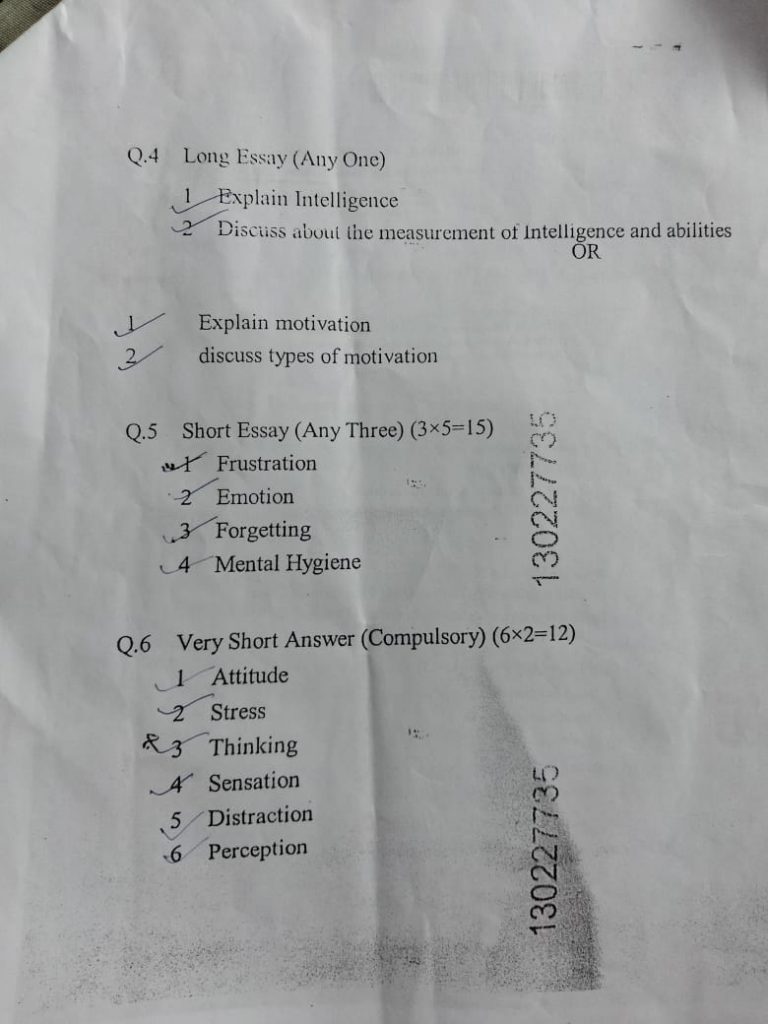
⏩Q.4 Long Essay (Any One)
🔸1 Explain Intelligence
ntelligence is a complex and multifaceted concept that refers to the ability to acquire and apply knowledge and skills. Here’s a detailed point-wise explanation about intelligence, its measurement, and related abilities:
1.Definition of Intelligence:
- Intelligence can be defined as the capacity for learning, reasoning, problem-solving, and adapting to new situations.
- It involves the ability to comprehend complex ideas, learn from experiences, and use knowledge to adapt to different contexts.
🔸2.Discuss about the measurement of Intelligence and abilities
1.Theories of Intelligence:
- General Intelligence (g Factor): Proposed by Charles Spearman, suggests that intelligence is a single general factor that underlies all cognitive abilities.
- Multiple Intelligences: Howard Gardner proposed multiple types of intelligences, including linguistic, logical-mathematical, spatial, musical, bodily-kinesthetic, interpersonal, intrapersonal, and naturalistic intelligences.
- Triarchic Theory: Robert Sternberg’s theory includes analytical intelligence (problem-solving), creative intelligence (novel ideas), and practical intelligence (everyday tasks).
2.Measurement of Intelligence:
- Intelligence Quotient (IQ): A standardized test score that compares an individual’s performance with that of others in their age group, typically assessing reasoning abilities, problem-solving skills, and linguistic comprehension.
- Types of IQ Tests: Examples include the Stanford-Binet Intelligence Scales and the Wechsler Adult Intelligence Scale (WAIS), which measure different aspects of cognitive abilities.
- Critiques of IQ Testing: Criticisms include cultural bias, reliance on linguistic and logical-mathematical skills, and limited scope in measuring all types of intelligence.
3.Factors Influencing Intelligence:
- Genetic Factors: Studies suggest that genetics play a significant role in determining intelligence.
- Environmental Factors: Socioeconomic status, education, nutrition, and cultural experiences also impact intelligence development.
- Interactionist Perspective: Both genetics and environment interact to influence intelligence.
4.Abilities Related to Intelligence:
- Problem-Solving: The ability to analyze information, identify solutions, and make decisions.
- Critical Thinking: Evaluating information objectively and making reasoned judgments.
- Creativity: Generating novel ideas and solutions.
- Memory: Retaining and recalling information.
- Social Intelligence: Understanding social situations and interactions.
5.Practical Applications of Intelligence:
- Education: IQ tests help in educational placement and identifying learning disabilities.
- Occupational Settings: Certain jobs require specific cognitive abilities, which can be assessed through intelligence tests.
- Personal Development: Understanding one’s cognitive strengths and weaknesses can aid in personal growth and career planning.
6.Cultural Perspectives:
- Cultural Variability: Notions of intelligence vary across cultures, influencing how intelligence is perceived and measured.
- Cross-Cultural Studies: Highlight differences in cognitive development and the impact of cultural context on intelligence.
🔸OR🔸
🔸1.Explain motivation
Motivation in psychology refers to the processes that initiate, direct, and sustain goal-directed behavior. There are several types of motivation that psychologists study, each characterized by different underlying mechanisms and influences. Here’s a point-wise explanation of types of motivation:
🔸2 discuss types of motivation
Types of motivation:
- Intrinsic Motivation:
- Definition: Intrinsic motivation refers to engaging in a behavior because it is personally rewarding or enjoyable.
- Characteristics: Activities pursued out of intrinsic motivation are inherently satisfying, and individuals typically engage in them for the inherent satisfaction or pleasure they derive.
- Example: Painting because you find it creatively fulfilling, or reading because you enjoy learning new things.
2.Extrinsic Motivation:
- Definition: Extrinsic motivation involves engaging in a behavior in order to earn external rewards or avoid punishment.
- Characteristics: The motivation stems from outside factors rather than internal desires. It can be driven by tangible rewards (like money or prizes) or social rewards (like praise or recognition).
- Example: Working overtime to earn a bonus, or studying hard to get good grades and avoid parental disapproval.
3.Biological Motivation:
- Definition: Biological motivations are driven by physiological needs necessary for survival and well-being.
- Characteristics: These motivations are essential for maintaining homeostasis and include drives such as hunger, thirst, and sleep.
- Example: Eating when hungry, drinking when thirsty, or seeking shelter when cold.
4.Achievement Motivation:
- Definition: Achievement motivation refers to the drive to excel, succeed, or accomplish something significant.
- Characteristics: Individuals high in achievement motivation set challenging goals, persist in the face of obstacles, and strive for mastery in their endeavors.
- Example: A student aiming for top scores in exams, or an athlete striving to break personal records.
5.Social Motivation:
- Definition: Social motivation involves the desire to connect with others, gain approval, or avoid rejection.
- Characteristics: This type of motivation is influenced by social norms, relationships, and the desire for acceptance or belonging.
- Example: Joining clubs or teams to make friends, or volunteering to contribute positively to society.
6.Cognitive Motivation:
- Definition: Cognitive motivation relates to the pursuit of knowledge, understanding, and mental stimulation.
- Characteristics: It involves curiosity, exploration, and the intrinsic satisfaction of learning and problem-solving.
- Example: Researching a topic of interest, engaging in puzzles or intellectual challenges.
Understanding these different types of motivation helps psychologists and individuals alike comprehend why people behave the way they do in various situations and contexts.
⏩Q.5 Short Essay (Any Three) (3×5=15)
🔸1.Frustration
- Definition: Frustration refers to the emotional response to the blocking of a goal or desire. It involves feelings of dissatisfaction, annoyance, or disappointment when one’s efforts are thwarted.
- Causes: Frustration can arise from various sources such as external obstacles (like physical barriers or rules), internal conflicts (conflicting goals or desires), or even interpersonal situations (disagreements or competition).
- Psychological Effects: It can lead to negative emotional states such as anger, stress, or depression. Persistent frustration without effective coping mechanisms can contribute to mental health issues over time.
- Behavioral Reactions: Individuals may respond to frustration in different ways, ranging from passive behaviors like withdrawal or giving up, to more active responses such as aggression or persistence in trying to overcome obstacles.
- Coping Strategies: Effective coping strategies include problem-solving, emotional regulation, seeking social support, and adjusting goals or expectations. Developing resilience and flexibility in dealing with setbacks is crucial in managing frustration constructively.
These points outline the psychological aspects of frustration, highlighting its impact and ways individuals can manage and mitigate its effects.
🔸2 Emotion
Definition and Components:
- Emotion is a complex psychological state that involves physiological arousal, expressive behaviors, and subjective experiences.
- Components include physiological changes (like heart rate increase), expressive behaviors (facial expressions), and subjective feelings (such as happiness or fear).
Functions of Emotion:
- Adaptive Function: Emotions help individuals respond quickly to environmental challenges and opportunities, enhancing survival and reproduction.
- Social Function: Emotions facilitate communication and social bonding, aiding in relationships and group cohesion.
Theories of Emotion:
- James-Lange Theory: Emotions arise from physiological arousal. Specific patterns of arousal lead to specific emotions (e.g., racing heart leads to fear).
- Cannon-Bard Theory: Emotion-provoking stimuli simultaneously trigger physiological responses and subjective emotional experiences independently.
- Schachter-Singer Theory (Two-Factor Theory): Emotions involve both physiological arousal and cognitive appraisal. Emotional experience depends on how arousal is labeled cognitively.
Cultural and Individual Differences:
- Emotions can be influenced by cultural norms and individual experiences. Certain cultures may emphasize or suppress certain emotions differently.
- Individual differences in emotional responses can vary based on personality traits, upbringing, and personal experiences.
Emotion Regulation:
- Techniques and strategies individuals use to manage their emotional experiences. This can include cognitive reappraisal (changing how one thinks about a situation) or expressive suppression (hiding emotional reactions).
🔸3 Forgetting
- Encoding Failure: Information is not adequately encoded into memory due to distractions, lack of attention, or insufficient processing.
- Storage Decay: Memories fade over time if they are not rehearsed or used frequently, known as the decay theory.
- Interference: Forgetting occurs due to competition between old and new information in memory:
- Proactive Interference: Previously learned information interferes with the ability to remember new information.
- Retroactive Interference: New information interferes with the ability to remember previously learned information.
- Retrieval Failure: Information is stored in memory but cannot be accessed due to inadequate retrieval cues or context-dependent memory.
- Motivated Forgetting: People may intentionally or unintentionally forget unpleasant or traumatic memories through mechanisms like repression (unconsciously blocking memories) or suppression (consciously avoiding thinking about memories).
🔸4 Mental Hygiene
Mental hygiene, often referred to as mental health hygiene or psychological hygiene, focuses on practices and habits that promote mental well-being and prevent mental illness. Here are some key points about mental hygiene in psychology:
- Self-awareness: Understanding one’s own emotions, thoughts, and behaviors is crucial. This awareness helps individuals recognize signs of stress or mental health issues early on.
- Stress management: Learning effective stress management techniques, such as deep breathing, meditation, exercise, and time management, can significantly reduce the impact of stress on mental health.
- Healthy relationships: Maintaining positive relationships and boundaries with others is essential for mental well-being. Healthy social connections provide support during tough times and contribute to overall happiness.
- Healthy lifestyle: Regular physical activity, balanced nutrition, adequate sleep, and avoiding harmful substances like drugs and excessive alcohol are vital for maintaining mental and physical health.
- Coping skills: Developing adaptive coping mechanisms to deal with challenges and setbacks is crucial. This includes problem-solving skills, resilience, and the ability to seek help when needed.
- Mindfulness and relaxation: Practicing mindfulness and relaxation techniques helps individuals stay present, reduce anxiety, and improve overall emotional regulation.
- Self-care: Engaging in activities that promote self-care and self-compassion, such as hobbies, leisure time, and setting aside time for relaxation, is essential for mental hygiene.
- Seeking professional help: Knowing when to seek help from mental health professionals, such as therapists or counselors, is important. Early intervention can prevent the escalation of mental health problems.
- Work-life balance: Balancing work, study, or other responsibilities with leisure and relaxation time helps prevent burnout and supports mental well-being.
- Positive mindset: Cultivating a positive outlook on life and practicing gratitude can improve mental resilience and emotional well-being.
⏩Q.6 Very Short Answer (Compulsory) (6×2=12)
🔸1 Attitude
- Definition: Attitude is a psychological construct that represents an individual’s evaluation or feelings toward an object, person, group, issue, or event.
- Components:
- Affective Components: For example, liking or disliking someone.
- Behavioral Component: This relates to how an attitude influences one’s behavior towards the object.
- Cognitive Component : It includes beliefs, ideas, and knowledge about the object.
- Formation: Attitudes can be formed through various processes such as direct experience, socialization, and exposure to information or persuasion.
- Measurement: Attitudes can be measured using various methods such as self-report scales ex
🔸2 Stress
- Definition: Stress is the body’s response to any demand placed upon it, which can be physical, mental, or emotional.
- Types of Stress:
- Eustress: Positive stress that can motivate and energize.
- Distress: Negative stress that can be harmful and overwhelming.
- Stressors: Events or situations that trigger stress. They can be acute (short-term) or chronic (long-term).
- Management and Prevention: Effective stress management involves recognizing triggers, building resilience, and adopting healthy lifestyle habits.
🔸3 Thinking
- Cognitive Processes: Thinking involves mental processes like perception, attention, memory, and problem-solving.
- Decision Making: How individuals make choices based on available information and personal preferences.
- Problem Solving: Strategies and approaches individuals use to solve problems, such as trial and error, algorithms, heuristics, and insight.
- Creativity: The ability to generate novel ideas and solutions.
- Critical Thinking: Evaluating information and arguments logically and objectively.
🔸4 Sensation
Definition and Process:
- Sensation is the process of detecting external stimuli through sensory receptors and transmitting this information to the brain for interpretation.
- It involves converting physical stimuli (such as light, sound, or chemicals) into neural signals that the brain can understand and respond to.
Key Components:
- Sensory Receptors: Specialized cells in our sensory organs (like eyes, ears, skin, taste buds) that detect specific types of stimuli.
- Neural Transmission: The process by which sensory information is carried as neural impulses along sensory pathways to the brain, where perception occurs.
🔸5 Distraction
Distraction can be classified into different types:
- External Distraction: External stimuli like noise, movement, or interruptions draw attention away.
- Internal Distraction: Thoughts, emotions, or memories within one’s mind divert attention.
- Technological Distraction: Distraction caused by devices like phones or computers.
Effects of distraction include:
- Impaired Performance: It can reduce efficiency and accuracy in tasks.
- Increased Errors: Divided attention can lead to mistakes or oversights.
- Reduced Productivity: Difficulty in maintaining focus can hinder completing tasks.
🔸6 Perception
- Definition: Perception refers to the process by which individuals organize and interpret sensory information to give meaning to their environment. It involves selecting, organizing, and interpreting sensory input to understand the world around us.
- Factors Influencing Perception: Perception can be influenced by various factors such as past experiences, expectations, motivations, and context. These factors shape how individuals perceive and interpret sensory stimuli, leading to subjective and sometimes biased interpretations of reality.